

Bees in a Tree: Can a Honeybee Colony in a Hollow Tree Be Saved?
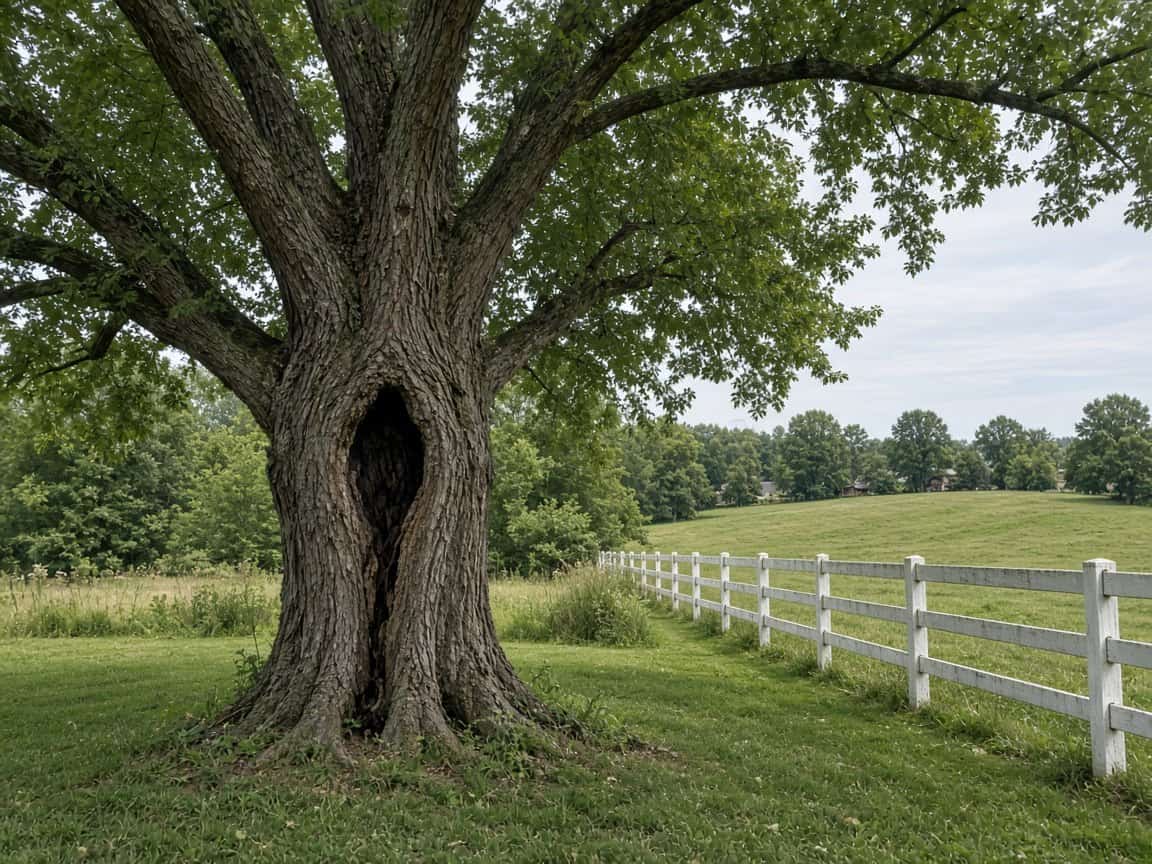
If you’ve spotted bees in a tree going in and out of a knothole or crack, you’re looking at honeybees living the way they did long before beekeepers. UGA Extension notes that the natural nest site of honeybees is a hollow inside an old tree (UGA Extension C824). Most of the time, that’s good news. A tree colony can often stay right where it is. Sometimes, though, the tree or the location makes a move the better choice.
Why Bees in a Tree Are Natural
Research on how swarms choose a home found that scout bees prefer cavities of roughly 40 liters, with a small entrance near the bottom, often facing south, and several meters off the ground (Seeley and Morse, 1978). An old hollow trunk fits that description well. The same research suggests bees prefer cavities that were used before, so a good tree may host colonies year after year.
When a Tree Colony Can Stay
- The entrance is away from traffic. UGA suggests a leave-alone approach when a colony’s entry point is far from people and pets.
- The tree is healthy and staying. MAAREC notes that for nests in trees, removal usually isn’t necessary (MAAREC Publication 3.6).
- Nobody nearby has a sting allergy. If someone does, talk to us. See sting allergies.
When It Makes Sense to Move Them
- The tree is coming down. If an arborist is scheduled to remove a dead or dangerous tree, call before the cut. Felling a tree with a live colony inside is dangerous for the crew and usually fatal for the bees.
- The flyway crosses a path, patio or play area. UGA calls that a more serious situation.
- Mowing or trimming nearby. USDA ARS warns that bees are alarmed by the vibration and noise of mowers, trimmers and chain saws (USDA ARS).
How a Beekeeper Approaches a Tree Colony
Every tree is different. We start with photos and a look at the trunk, the entrance and the tree’s condition. A thermal camera can help show where the warm comb sits inside the wood. Then we talk through the options with you, including leaving the colony alone. When a colony does need to move, the goal is the same as with a wall: rescue the bees and the comb they’ve built, and take them to The Mindful Beekeeper.
Frequently Asked Questions
Is it a swarm or a colony?
A cluster hanging on the outside of a branch is a swarm. Bees flying into the trunk mean a colony. See swarm of bees or wasps? and honeybee swarms.
Could it be wasps or hornets?
Yellowjackets sometimes nest in hollow trees too. See honeybee vs. yellowjacket.
What’s inside?
See inside a wild honeybee nest.
Have a Bee Tree?
Honeybees are always relocated, never exterminated. Rescued colonies go to The Mindful Beekeeper, pass through an inspection station, and then join Apiary #1 in Loudon Township. Honeybee relocation from walls and other structures is being scheduled for Spring 2027. Call or text 419-614-6445 or use our contact page to tell us what you are seeing, and read about humane honeybee removal and relocation.