
Inside a Wild Honeybee Nest: Comb, Brood and Honey Explained
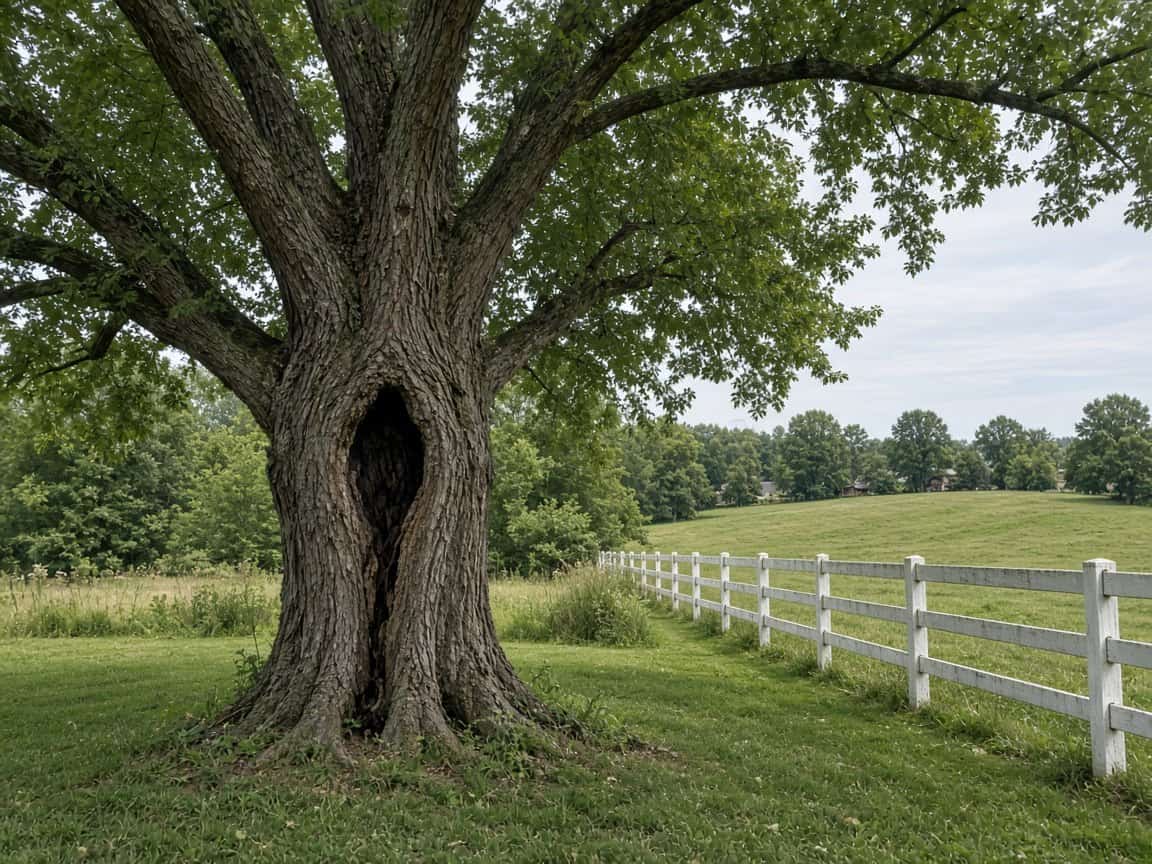
When we open a wall or a hollow tree, the first thing people see is a mass of bees. Under them is a whole structure. A wild honeybee nest is built from sheets of wax comb, and each part of that comb has a job: raising young bees, storing pollen, or holding honey. Here’s a beekeeper’s tour of what’s inside and how each part is handled during a rescue.
The Comb: How a Wild Honeybee Nest Is Built
Worker bees make beeswax from glands on their bodies. MAAREC Publication 3.9 explains that the wax scales are molded into a hexagonal pattern, with six-sided cells facing opposite directions from a central midrib. New wax is white and darkens over time from pollen and traffic. In a wall or tree, bees hang several sheets of comb side by side, with just enough space between them for bees to work.
Brood: The Next Generation
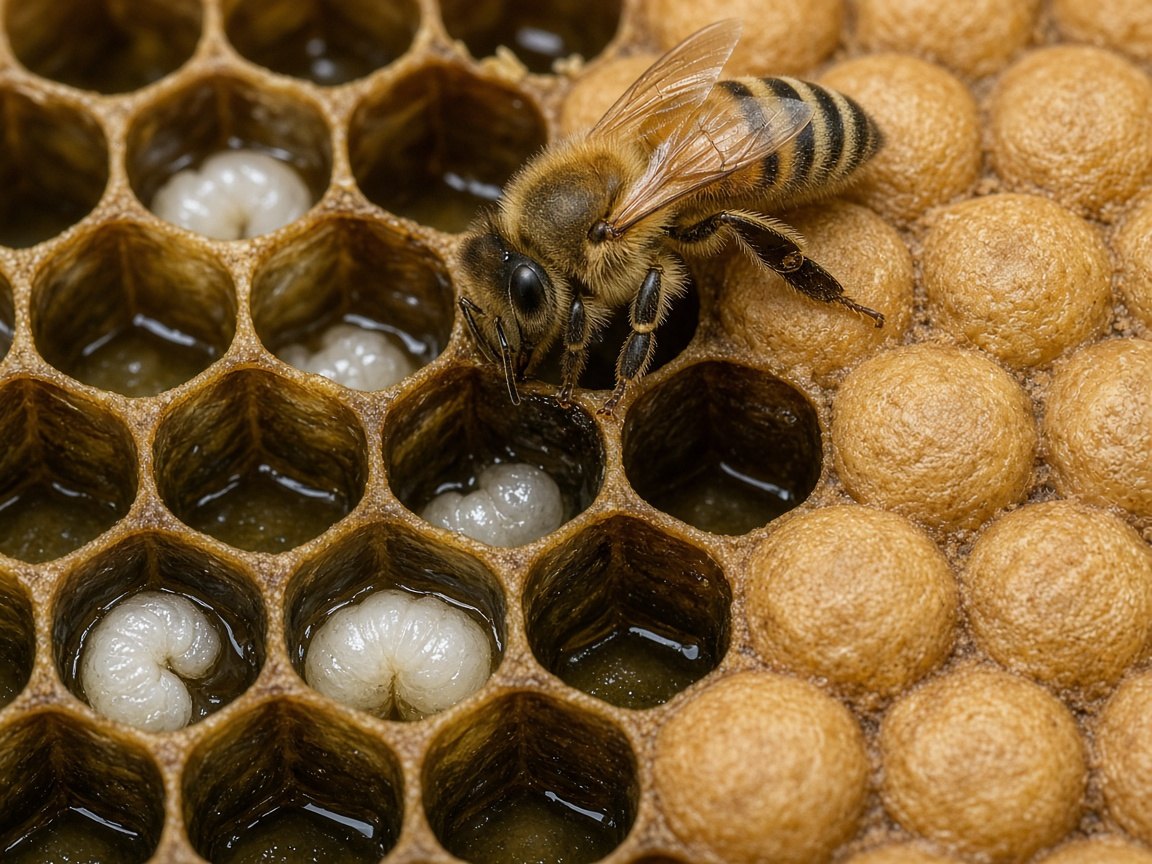
Brood means eggs, larvae and pupae. MAAREC notes that larvae hatch from eggs in about 3 days, and a queen in peak season may lay up to 1,500 eggs a day. The University of Arkansas Cooperative Extension notes workers feed the young and cap the cells of mature larvae for pupation. Capped brood looks like tan, slightly domed cells. Open brood shows white, curled larvae.
Pollen and Honey
- Pollen is the colony’s protein. The University of Arkansas notes egg-laying begins in early spring when the first fresh pollen comes in, and continues as long as pollen is available. Stored pollen shows up as cells packed with yellow, orange or brown.
- Honey is made from nectar the workers collect, and it’s sealed under pale wax cappings. UF/IFAS says a northern colony needs about 90 pounds of honey to get through winter (UF/IFAS IN1006).
How Each Part Is Handled in a Rescue
- Brood comb is the priority. We cut it out carefully and secure it into frames so the colony keeps raising its young.
- Honey comb comes out too. Left behind, MAAREC warns it attracts pests and can soak into and stain walls (MAAREC Publication 3.6).
- The queen needs to come along. Without her, a colony can’t carry on normally.
- Leftover wax is cleaned off so the cavity doesn’t attract the next swarm.
On our Fostoria grain bin job in July 2025 there were seven layers of comb and more than 20,000 bees relocated alive (The Mindful Beekeeper).
Frequently Asked Questions
How many bees live in one?
Can the honey from a wall be eaten?
We don’t recommend it. Comb from walls may have been exposed to sprays, insulation or debris.
Is it different from a wasp nest?
Very. Wasps build paper, not wax. See identify a wasp nest by shape.
Wild Colony in Your Wall or Tree?
Honeybees are always relocated, never exterminated. Rescued colonies go to The Mindful Beekeeper, pass through an inspection station, and then join Apiary #1 in Loudon Township. Honeybee relocation from walls and other structures is being scheduled for Spring 2027. Call or text 419-614-6445 or use our contact page to tell us what you are seeing, and read about humane honeybee removal and relocation.