
How to Identify a Wasp Nest by Its Shape: Paper, Ground, Mud and Hollow-Wall Nests
The fastest way to know what you are dealing with is often the nest itself. Before you get close to the insects, you can usually identify a wasp nest by its shape, material and location. That tells you whether you have native paper wasps that should be relocated, yellowjackets that need removal, harmless mud daubers, or even honeybees that need a beekeeper. Here is a simple field guide for homeowners in Northwest Ohio, Eastern Indiana and Southern Michigan.
Step 1: What Is the Nest Made Of?
- Gray or tan paper: Made from chewed wood fiber. Paper wasps, yellowjackets, bald-faced hornets, aerial yellowjackets and European hornets all build paper nests.
- Mud: Mud daubers and potter wasps.
- Wax: Honeybees build sheets of beeswax comb. Bumblebees make small, irregular wax pots.
Step 2: Identify a Wasp Nest by Its Shape
Open Umbrella Comb: Paper Wasps
A single, flat or slightly cupped comb hanging from one short stalk, with the hexagonal cells exposed and facing down or sideways. There is no outer covering. Sizes range from a few cells in spring to the size of a dinner plate by late summer. You will find them under eaves, deck railings, grill lids, mailboxes and playsets. Native paper wasps are always relocated, while European paper wasps may be removed. See native vs. European paper wasps.
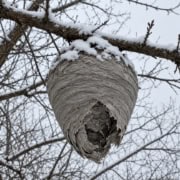
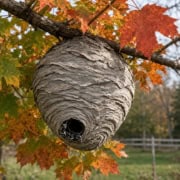
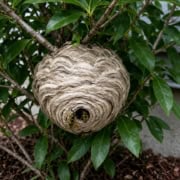
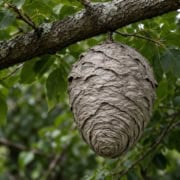
Enclosed Paper Ball or Teardrop: Bald-Faced Hornets and Aerial Yellowjackets
A round or football-shaped nest wrapped in layers of gray, scalloped paper, usually with one entrance hole near the bottom. These hang in trees, shrubs, under eaves and on sheds. Learn more in our articles on bald-faced hornets and aerial yellowjackets.
Hidden Paper Nest With One Entrance: Yellowjackets
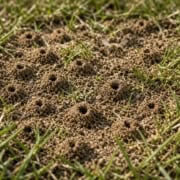
Ground and wall-nesting yellowjackets build a layered paper nest inside a cavity, so all you usually see is a hole with a steady stream of wasps. Inside are several horizontal tiers of comb wrapped in a fragile paper envelope. Look for them:
- In the ground, often in old rodent burrows or under steps and decks
- Inside wall voids, soffits and attics
- In landscape timbers, retaining walls and hollow trees
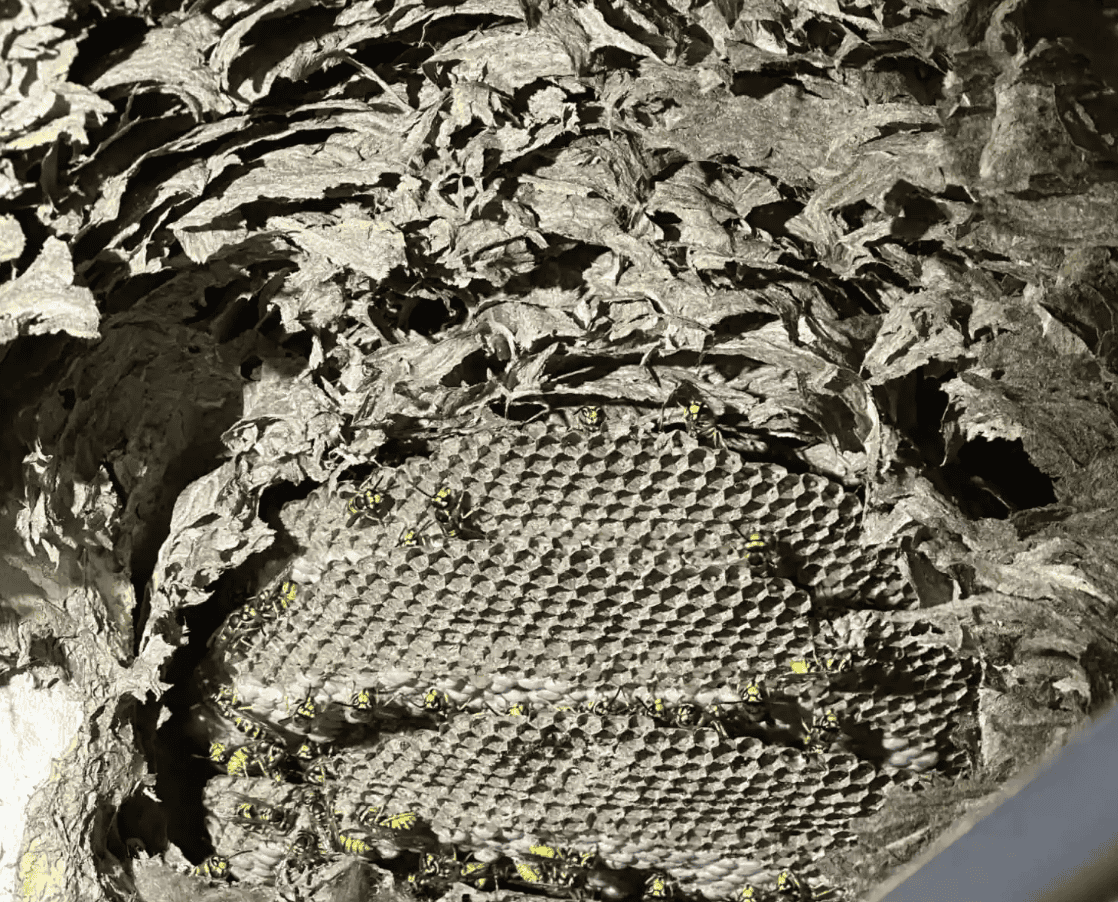
See our guide to yellowjacket ground nests for warning signs.
Brown, Fragile Paper in a Cavity: European Hornets
European hornets usually nest in hollow trees, barns, attics and wall voids. Their nests are made of brittle, brownish paper, and the entrance is often higher off the ground. They are also active at night and come to lights.
Mud Tubes or Mud Clumps: Mud Daubers
- Organ-pipe mud daubers: Long, parallel mud tubes side by side.
- Black-and-yellow mud daubers: Lumpy clumps of mud cells, often plastered together.
- Blue mud daubers: Often reuse old mud dauber nests instead of building their own.
Mud daubers are solitary and rarely sting. Small, round mud “jugs” on twigs or siding are usually made by potter wasps, another gentle solitary group.
Flat Wax Sheets: Honeybees
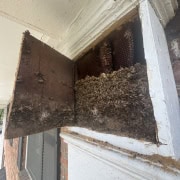
Honeybee comb is made of beeswax, not paper. It hangs in parallel vertical sheets, and the cells are filled with honey, pollen and brood. You will rarely see the comb from outside. Instead, you will see bees coming and going from a gap in a wall, soffit, chimney or tree. Honeybee colonies are permanent and can survive for years in a structure.

Honeybees are always relocated, never exterminated. Our sister company, The Mindful Beekeeper, specializes in live honeybee removal. You can also read about honeybees in walls.
Messy Wax Pots in Insulation or a Burrow: Bumblebees
Bumblebee nests look like a loose cluster of small, round wax pots, often tucked into old rodent nests, insulation or birdhouses. They are small and last only one season. See Ohio bumblebee species.
Step 3: Check the Location and Time of Year
- Spring: Small paper combs or golf-ball-sized starter nests built by a single queen.
- Summer: Nests grow fast. Paper wasp combs widen, and enclosed nests swell.
- Late summer to fall: Yellowjacket and hornet nests reach peak size and are most defensive.
- Winter: Paper nests are empty. See what happens to wasp nests in winter.
Why Identification Matters for Wasp Nest Removal
The right approach depends on what built the nest. Native paper wasps, honeybees and bumblebees are always relocated. Yellowjackets, hornets and European paper wasps near people may need pesticide-free wasp nest removal. Mud daubers and other solitary wasps usually need nothing at all. Getting it right protects pollinators and keeps your family safe.
Frequently Asked Questions
Is a nest without visible wasps safe?
Not always. Enclosed nests can hide hundreds of wasps inside. Watch from a distance on a warm afternoon for activity before going near it.
What if I only see a hole?
A hole with steady traffic usually means yellowjackets, European hornets or honeybees. Do not plug it. Text us a photo or video.
Need Help Identifying a Nest?
Call or text a photo to Northwest Ohio Wasp Removal at 419-614-6445 or visit our contact page. We serve Northwest Ohio, Eastern Indiana and Southern Michigan.