Stinging Insect Safety for Workers: Roofers, Painters and Landscapers
Roofers, painters, gutter crews and landscapers find wasp nests every summer, usually by accident and often on a ladder. Stinging insect safety for workers is about habits that prevent stings and plans for the moment a crew finds a nest mid-job. Our team holds OSHA 30-Hour and NFPA 70E training, and this is how we think about it.
Why Stinging Insect Safety for Workers Matters
OSHA Fatal Facts No. 17 reports that CDC data show 1,109 deaths in the U.S. from bee, hornet and wasp stings from 2000 to 2017. It also cites Bureau of Labor Statistics data showing 83 worker deaths from insects, arachnids and mites from 2003 to 2010, most commonly in farming, construction and landscaping.
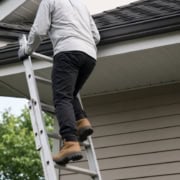
There’s also the fall risk. CDC NIOSH ladder safety guidance says ladder-related injuries are common, and about 40% happen because the ladder slides out at the base from an incorrect setup angle. Add a surprise swarm at the top, and a sting becomes a fall.

Jobsite Habits That Prevent Stings
CDC NIOSH recommends:
- Look before you work. Nests can be in trees, under eaves and even on equipment such as ladders. Watch for wasps flying in and out of one spot.
- Dress for it. Wear light-colored, smooth-finished clothing and cover as much of the body as possible. OSHA’s Fatal Facts adds clothing that seals at the wrists and ankles.
- Skip scents. Avoid perfumed soaps, shampoos and deodorants.
- Keep the site clean. Social wasps thrive where food is discarded, so cover drinks and bag lunch trash.
- Plan for allergies. Workers with a known sting allergy should carry an epinephrine auto-injector and wear medical ID, and employers should train workers.
When a Crew Finds a Nest
- One wasp: NIOSH says stay calm and still. Swatting makes it worse.
- Several attacking: NIOSH says run and get indoors or into shade, and don’t jump into water.
- On a ladder: climb down steadily rather than swatting. CDC NIOSH lists overreaching and carrying objects while climbing as common ladder mistakes.
- In a vehicle: stop slowly and open the windows.
- Stings: NIOSH advises staying with the worker, washing the area, scraping a stinger out rather than squeezing it, and using ice. Watch for allergic reactions. See sting allergies and multiple wasp stings.
When to Stop and Call
Stop work and call if the nest is at a roofline or soffit you have to work beside, inside a wall or attic, in shrubs being trimmed, or near electrical equipment. Don’t open electrical panels or meter boxes to chase a nest. Spraying a nest from a ladder combines the sting risk and the fall risk. See DIY wasp spray mistakes, wasps in attics and soffits and commercial wasp and bee removal.
Frequently Asked Questions
Are honeybees handled differently?
Yes. Honeybees, bumblebees and native paper wasps are always relocated, never exterminated.
Do you remove nests with pesticides?
No. Yellowjacket, hornet and European paper wasp nests are removed by hand or vacuum.
Nest on Your Jobsite?
Native paper wasps are relocated, and yellowjacket, hornet and European paper wasp nests are removed without pesticides. Call or text Northwest Ohio Wasp Removal at 419-614-6445, or use our contact page, and send a photo if you can. See wasp and hornet nest removal.