Why We Take Opossums to a Wildlife Rehabber: Ohio Rules and Reasons
When we rescue an opossum, our job ends at the door of a licensed wildlife rehabber. Ohio law and plain good sense both point the same way: injured and orphaned wild animals do best with people who are trained and permitted to care for them. Here’s what a rehabilitator does and why we don’t raise or release opossums ourselves.
Wildlife Rehabber, Ohio Edition: What Rehabilitators Do
A licensed wildlife rehabilitator takes in injured, sick or orphaned wild animals, treats and raises them, and returns them to the wild when they’re ready. The Ohio Division of Wildlife explains that rehabilitators go through training on how to raise and treat young and injured wildlife. It also notes that each animal’s nutritional, housing and handling needs are very specific and must be met if it is to have any chance of survival.
The Division of Wildlife publishes a list of permitted wildlife rehabilitators, organized by county.

Why Not Just Keep It or Release It?
- It’s the law. The Ohio Division of Wildlife says it is illegal to possess, restrain or keep any wild animal without a permit. The purpose is to protect wild animal populations and to protect people from disease and injury.
- Disease and parasites. ODNR notes wild animals can carry diseases and parasites, some of which can pass to people or pets.
- Habituation. ODNR warns that an animal that becomes habituated to humans cannot be returned to the wild.
- Feeding mistakes. ODNR says never give food or water to injured or orphaned wildlife, because inappropriate food can lead to sickness or death.
When a Young Opossum Is an Orphan
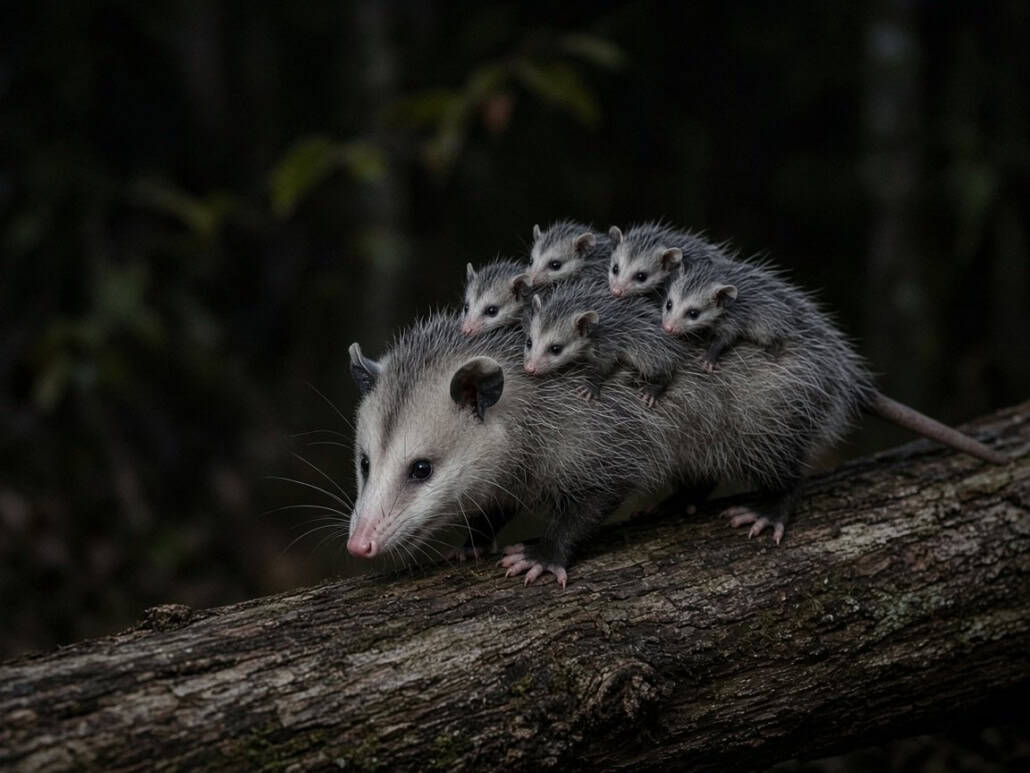
Wisconsin DNR explains that young opossums ride on their mother’s back once they’re about 3 to 4 inches long. Occasionally one falls off, and if it doesn’t catch up and climb back on, it’s left behind. They become independent at about 4 months, when they’re roughly 7 to 9 inches from snout to rump.
Tufts Wildlife Clinic gives a simple rule: an opossum over 7 inches long, not counting the tail, is old enough to be on its own. One under 7 inches is an orphan and should go to a licensed rehabilitator. Our opossum rescue page also lists young opossums alone, especially if they are cold, weak or covered in flies, as a sign help is needed.
Our Part
We safely contain the opossum in a ventilated carrier and drive it to a licensed wildlife rehabilitator. The rehabilitator handles care and release. If you can, note exactly where the animal was found, because location matters for release. See how to keep an injured opossum safe.
Frequently Asked Questions
Can I drive it to a rehabber myself?
You can contact a permitted rehabilitator on the state list directly. If you’re not comfortable containing or transporting the animal, call us.
Do you rescue other wildlife?
No. Opossums are the only mammals we rescue.
Found an Orphaned or Injured Opossum?
Our Opossum Rescue & Transport service is for opossums that are injured, orphaned or trapped. Call or text 419-614-6445 with a photo and your location, or use our contact page. We contain the animal gently in a ventilated carrier, never with bare hands, and drive it to a licensed wildlife rehabilitator for care. See opossum rescue. Opossums are the only mammals we rescue.