Opossum Playing Dead: What to Do When an Opossum Plays Possum
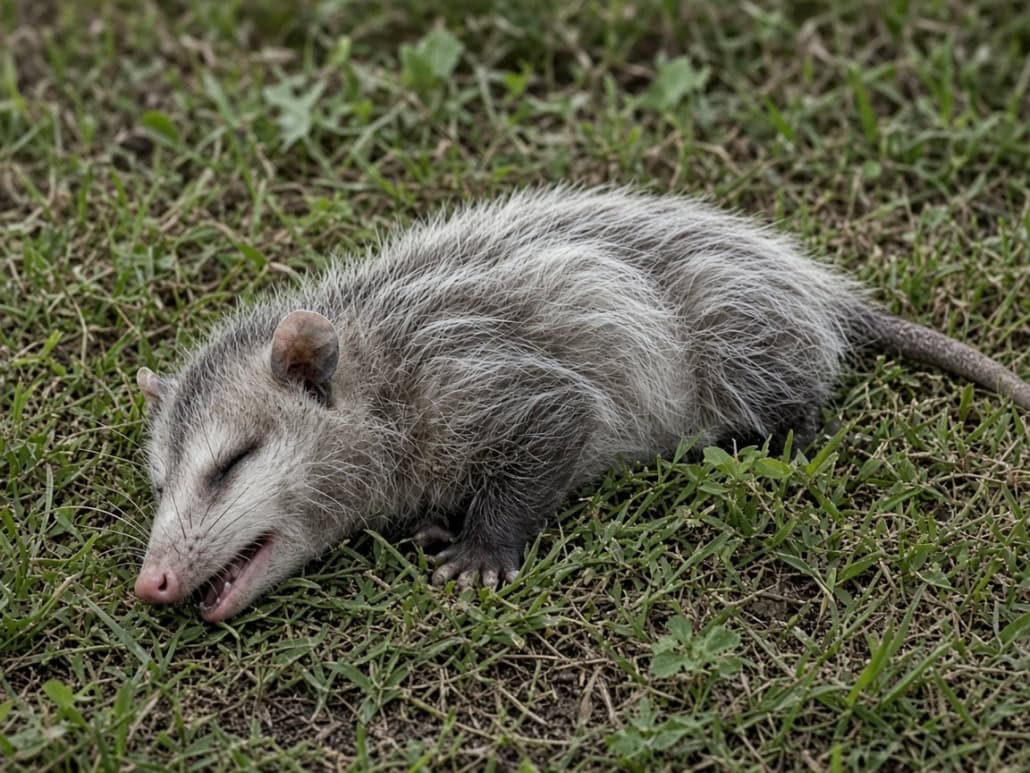
You find an opossum lying on its side in the yard, mouth open, not moving. The dog is circling. Is it dead? Maybe not. An opossum playing dead is one of the strangest defenses in the animal world, and the best thing you can do is usually to give it space and quiet.
Why an Opossum Playing Dead Looks So Real
The Missouri Department of Conservation describes the sequence: a threatened opossum first bares its teeth and drips saliva, then rolls onto its side with its tongue out while its heartbeat slows. The Florida Fish and Wildlife Conservation Commission describes the same catatonic state: the animal goes completely limp, breathing and heart rate drop, and it may give off a foul smell.
The Ohio Division of Wildlife Mammals of Ohio field guide says the opossum essentially passes out when confronted with danger, then wakes up a short time later and goes about its business. It isn’t a choice in the way people imagine “faking it.” It’s an involuntary response to fear.

How Long Does It Last?
The Cornell Wildlife Health Lab says opossums can stay in this state from minutes to as long as 6 hours. The Massachusetts Division of Fisheries and Wildlife says several minutes to several hours. Most come around once the threat, often a dog, a cat or curious people, has left.
What to Do
- Don’t pick it up. FWC says if an opossum appears dead, do not try to pick it up. It may be playing dead to escape a larger predator, which includes you and your pets.
- Bring pets inside and keep kids back.
- Leave it quiet. Turn off bright lights and step away where you can watch from a distance.
- Check again later. If it’s gone, it was just frightened.
When It Needs Help
Call if the opossum is still there after several hours, or if you see blood, a wound, or it can’t walk normally once it gets up. Also call if a dog or cat caught it, even if it looks fine. Our opossum rescue page lists these signs. If it’s a mother hit on the road, young may still be in her pouch. See injured opossum: how to keep it safe.
Frequently Asked Questions
Will it bite if I touch it?
It might, and Tufts Wildlife Clinic advises never using bare hands with wild mammals. Don’t touch it.
Is it sick if it’s out during the day?
Not necessarily. Massachusetts wildlife officials note opossums are mostly nocturnal but sometimes come out in daylight, especially when food is scarce. One that seems confused or unable to move away may need help.
Is playing dead a sign it’s dangerous?
No. It’s a defense. See are opossums dangerous?
Opossum Still Down or Hurt?
Our Opossum Rescue & Transport service is for opossums that are injured, orphaned or trapped. Call or text 419-614-6445 with a photo and your location, or use our contact page. We contain the animal gently in a ventilated carrier, never with bare hands, and drive it to a licensed wildlife rehabilitator for care. See opossum rescue. Opossums are the only mammals we rescue.
Sources
- Missouri Department of Conservation Field Guide: Virginia Opossum
- Florida Fish and Wildlife Conservation Commission: Living with Opossums (PDF)
- Ohio Division of Wildlife: Mammals of Ohio Field Guide, Pub 344 (PDF)
- Cornell Wildlife Health Lab: Weird and Wonderful Wildlife, the Opossum
- Massachusetts Division of Fisheries and Wildlife: Learn About Opossums
- Tufts Wildlife Clinic: What to Do If You Found a Sick or Injured Baby Opossum