Stinging Insects on Farms, Orchards and Campgrounds in NW Ohio
Wide-open spaces come with plenty of wasps and bees. Barns, equipment, fruit trees, picnic shelters and campsites give stinging insects on farms, orchards and campgrounds more places to nest and more food to find than almost anywhere else. For farm families, orchard owners, market growers and campground operators across Northwest Ohio, Eastern Indiana and Southern Michigan, that means more stings for workers, customers, guests and animals. Here is what to watch for and how to manage it without harming the pollinators your land depends on.
Why Rural Properties Attract So Many Stinging Insects
- Lots of shelter: Barns, pole buildings, sheds, hollow posts, equipment, pavilions and outhouses all offer nest sites.
- Plenty of food: Fruit, cider, livestock feed, garbage, picnic food and countless insects for wasps to hunt.
- Undisturbed ground: Field edges, fencerows and rodent burrows make ideal yellowjacket nest sites.
- Seasonal use: Buildings, campsites and equipment that sit idle for weeks let nests grow unnoticed.
Stinging Insects on Farms
On working farms, the biggest risks are nests hidden in places people and animals bump into:
- Yellowjacket ground nests in pastures, hayfields, field edges and around buildings. Mowers, tractors and livestock can disturb them. See yellowjacket ground nests.
- Paper wasps and bald-faced hornets on barn rafters, door headers, equipment and fence lines.
- European hornets in barn walls, hollow trees and old outbuildings.
- Wasps inside equipment: Tractor cabs, mower decks, combines and seldom-used trailers.
Our article on wasp nests in sheds, barns and pole buildings covers outbuildings in detail.
Stinging Insects in Orchards and Market Gardens
Orchards have two very different groups of stinging insects:
The Pollinators You Want
Honeybees, bumblebees and native bees such as mining bees are essential for apples, pears, cherries, berries, pumpkins and many other crops. Many growers rely on honeybee hives during bloom. These bees are always protected and relocated, never exterminated. See sweat bees and mining bees and Ohio bumblebee species.
The Wasps That Cause Trouble
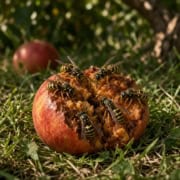
In late summer and fall, yellowjackets switch to sugary foods. Ripe and fallen fruit, cider and sweet drinks draw them in large numbers, right when pick-your-own customers and harvest crews are busiest. Bald-faced hornets and aerial yellowjackets also hang nests in fruit trees at head height. See aerial yellowjacket nests.

Stinging Insects at Campgrounds and Parks
- Paper wasp nests under picnic tables, pavilion rafters, signs, playground equipment and bathhouse eaves
- Yellowjackets at trash cans, dumpsters, fire rings and campsite food
- Ground nests along trails, near fire rings and in mowed areas
- Nests inside unused cabins, storage sheds and camper hookups
Guests, especially children, are often stung while sitting down at a table or grabbing a drink. A quick inspection of every site before guests arrive goes a long way.
Practical Tips for Property Owners
- Inspect in spring. Walk buildings, pavilions and equipment in April and May when nests are small. See spring wasp queens.
- Manage fallen fruit. Pick up dropped fruit regularly, especially near customer areas.
- Control trash. Use lidded cans, empty them often and keep them away from seating areas.
- Mark ground nests with flags so mowers and workers avoid them until they are handled.
- Train staff to spot nests, avoid them and report them.
- Have a plan for stings. Know who on site has a sting allergy and where epinephrine is kept. See sting allergies and emergency removal.
Why Pesticide-Free Wasp Removal Matters on Farms
Broad insecticide use around barns, orchards and campgrounds can harm honeybees, bumblebees and other pollinators, and leave residue on feed, equipment, picnic tables and play areas. Our pesticide-free approach targets the problem nest while protecting the beneficial insects your crops and land rely on. Native paper wasps are relocated. Yellowjackets, hornets and European paper wasps in high-traffic areas are removed.
Frequently Asked Questions
Can wasps harm livestock?
Animals that disturb a ground nest or a nest in a stall can be stung many times. Check stalls, feeders and pasture edges, and keep animals away from known nests.
Should I remove bumblebees from my orchard?
Only if a nest is right where people work. Bumblebees are valuable pollinators, and we relocate them.
Can you help with more than one building or site?
Yes. Call or text us to talk through your property and the nests you are seeing.
Need Help With Wasps on Your Farm or Campground?
Call or text Northwest Ohio Wasp Removal at 419-614-6445 or visit our contact page. We serve farms, orchards, campgrounds and homes across Northwest Ohio, Eastern Indiana and Southern Michigan.