Wasp Nests in Sheds, Barns and Pole Buildings
Outbuildings are some of the busiest wasp real estate in the countryside. Open doors, exposed rafters, quiet corners and hollow framing make wasp nests in sheds, barns, garages and pole buildings extremely common across Northwest Ohio, Eastern Indiana and Southern Michigan. Because many of these buildings are used only now and then, nests often grow large before anyone notices. Here is what tends to move in, where to look and when to call for wasp nest removal.
Why Wasps Love Outbuildings
- Shelter: Roofs keep rain off, and rafters, purlins and trusses give solid attachment points.
- Easy access: Open doors, gaps under eaves, missing siding screws and vent openings let wasps in and out freely.
- Little disturbance: A shed you open once a month or a barn loft nobody climbs into is ideal for a queen starting a nest.
- Building material: Weathered wood on old barns and fences is a source of fiber for paper nests.
- Food: Fields, gardens, livestock areas and fruit trees provide plenty of insects and sugars.
Common Wasp Nests in Sheds and Barns
Paper Wasps
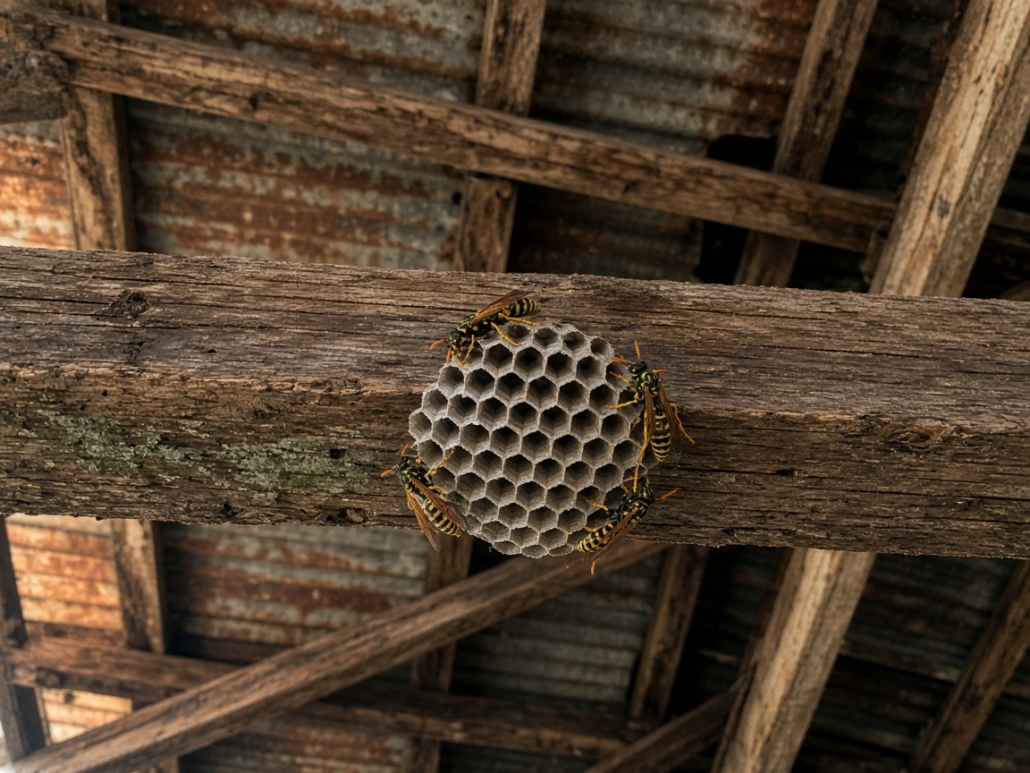
Paper wasps build open, umbrella-shaped combs on the underside of rafters, door headers, window frames and roof edges. Inside barns, you may find many small combs spread through the rafters. Native paper wasps are always relocated, and European paper wasps may be removed. See our article on native vs. European paper wasps.
Bald-Faced Hornets
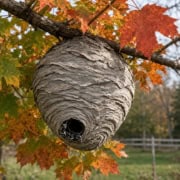
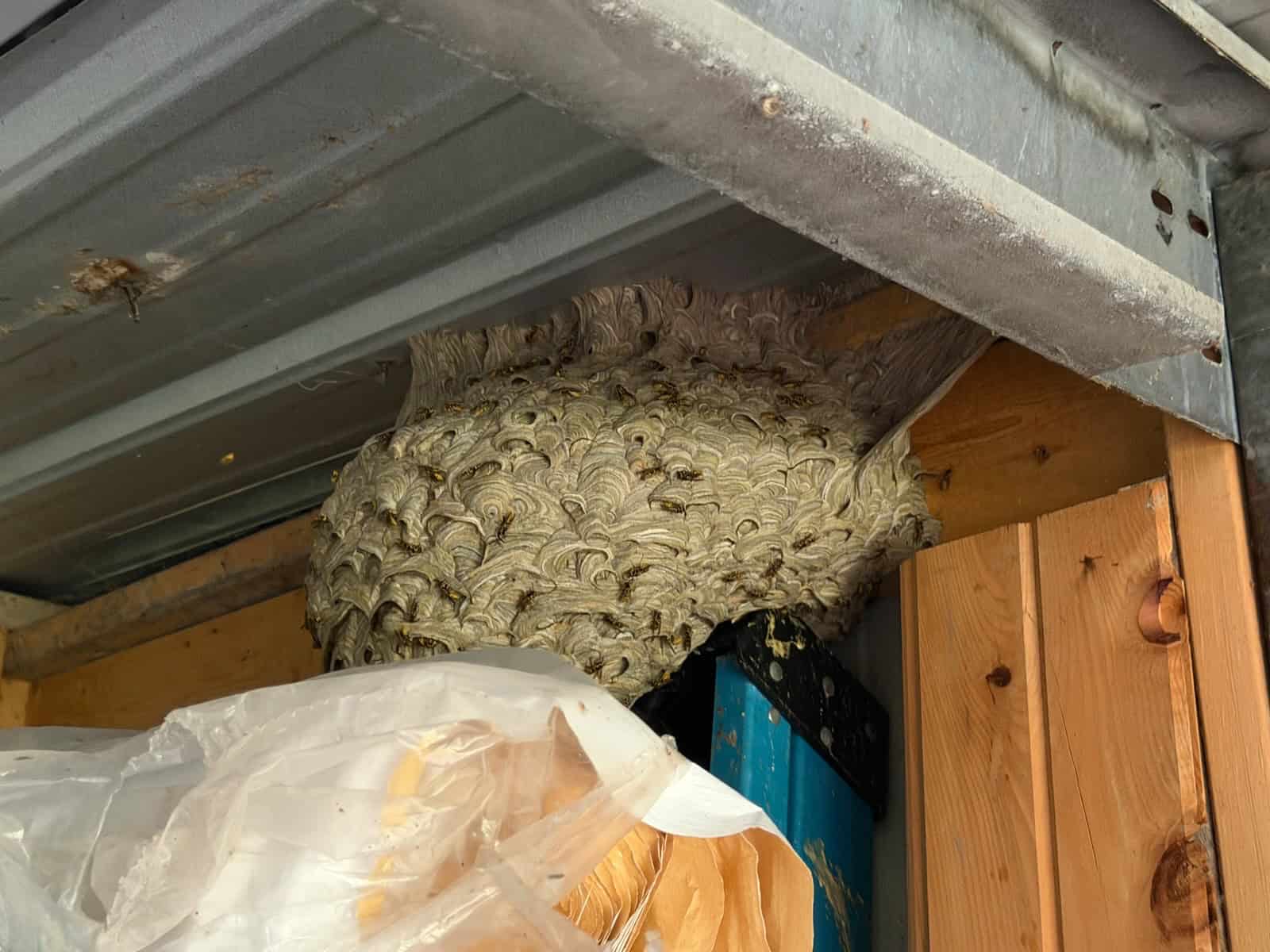
Large gray paper nests can hang from rafters inside open sheds and lean-tos or under the eaves outside. They can hold hundreds of defensive hornets by late summer. Learn more about bald-faced hornet nests.
European Hornets
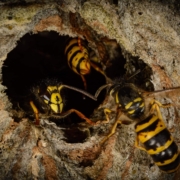
Barns are classic European hornet territory. They nest in wall cavities, hollow posts, hay lofts and gaps in old siding. They are large, active at night and can be very defensive near the nest. See our page on European hornets.
Yellowjackets
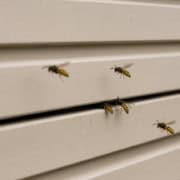
Yellowjackets nest in the ground around building foundations, in old rodent burrows under sheds, and inside wall voids of pole buildings. A steady line of wasps going into a gap in the siding is a common sign.
Mud Daubers
Mud tubes and mud clumps on rafters and walls are the work of mud daubers. They are solitary, rarely sting and do not need removal in most cases. See mud daubers and cicada killers.
Where to Look in Sheds, Barns and Pole Buildings
- Rafters, purlins and truss webs, especially near the peak
- Above door tracks, sliding door headers and window frames
- Inside hollow metal or wood framing and post caps
- Under eaves and overhangs on the outside
- Inside stored equipment: mower decks, tractor cabs, boats, campers, kayaks, empty buckets and tarps
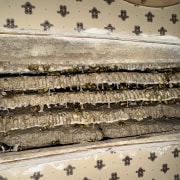
- In wall cavities and between steel siding and girts in pole buildings
- Around the base of the building and under floors of sheds on skids
Safety Tips Before You Walk In
- Open doors slowly and pause to look and listen before stepping inside, especially in late summer.
- Look up first. Most nests are overhead.
- Check equipment before starting it. Vibration from engines can set off a nest inside.
- Avoid ladders near active nests. A sting while on a ladder can lead to a dangerous fall.
- Do not spray nests in enclosed spaces. It can drive wasps toward you and leave pesticide residue on stored tools, feed and equipment.
Preventing Wasp Nests in Outbuildings
- Walk through sheds and barns in April and May, when nests are tiny and built by a lone queen. Our article on spring wasp queens explains why timing matters.
- Keep doors closed when you can, and repair gaps in siding, eaves and vents during the off-season.
- Screen vents and open gable ends with fine mesh.
- Keep trash, feed spills and sweet drinks cleaned up.
For more prevention ideas, see how to wasp-proof your home.
When to Call for Wasp Nest Removal
Call us when nests are in a building you use regularly, near doors and work areas, inside equipment you need to run, or in a barn with livestock or visitors. Large nests high in rafters, and hidden nests in walls, are best handled by professionals. Our pesticide-free approach is ideal for barns, workshops and storage buildings where you do not want chemical residue on feed, tools or stored items. Farms with many outbuildings may also want to read stinging insects on farms, orchards and campgrounds.
Frequently Asked Questions
Why are there so many paper wasp nests in my barn?
Barns offer many sheltered attachment points, and several queens may start nests in the same building each spring.
Is it safe to leave nests in an unused shed?
If no one goes in, the colony will die by late fall. Be careful opening the shed in late summer, when nests are largest.
Wasps Taking Over Your Shed or Barn?
Call or text Northwest Ohio Wasp Removal at 419-614-6445 or visit our contact page. We serve Northwest Ohio, Eastern Indiana and Southern Michigan.