Paper Wasp Relocation: How We Move a Native Paper Wasp Nest
Native paper wasps eat caterpillars and other garden pests, so we don’t spray them. Paper wasp relocation means moving the nest, wasps and all, away from your door, deck or play area. We’ve already covered why we relocate native paper wasps and remove European ones. This post covers how it works.
Step 1: Confirm It’s a Native Paper Wasp
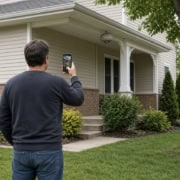
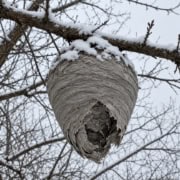
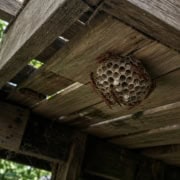
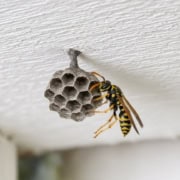
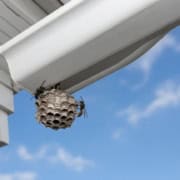
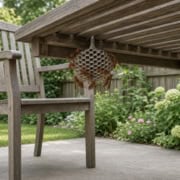
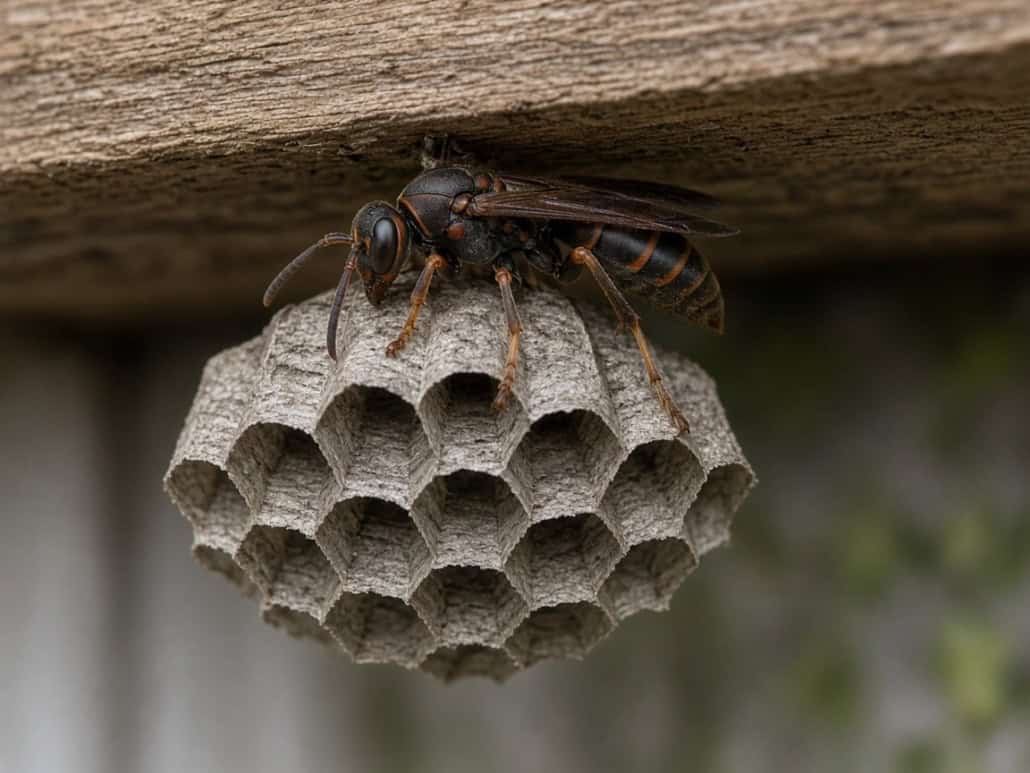
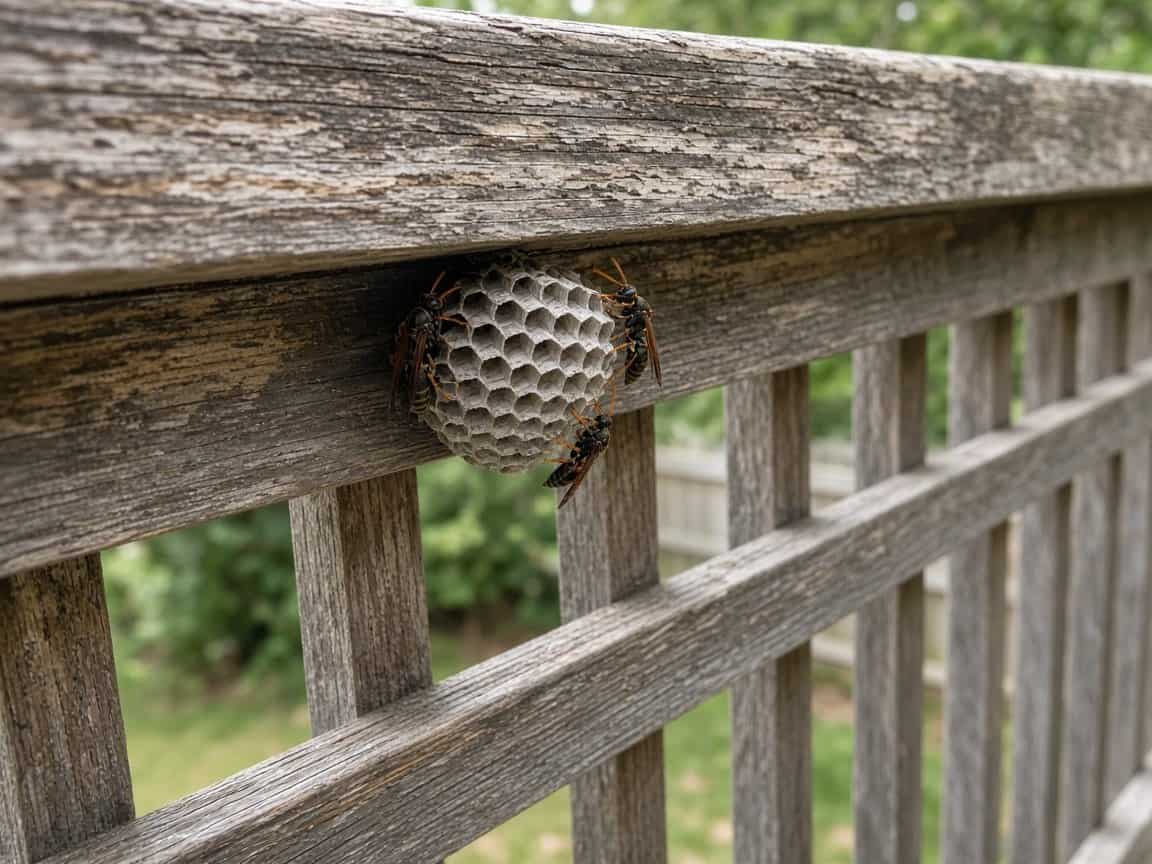
Everything starts with a photo. Clemson Extension describes paper wasp nests as umbrella-shaped paper combs with open cells on the underside. They’re often found on porch ceilings, window and door frames, roof overhangs, and under decks or railings. Virginia Tech Extension notes there are more than 20 species in North America, many reddish-brown with yellow or dark markings.
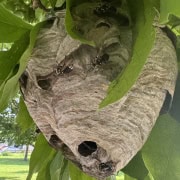
We need to know which paper wasp it is. Native paper wasps are relocated. European paper wasps are an introduced species and are removed. Paper wasps also get confused with yellowjackets. See yellowjacket vs. paper wasp.
Step 2: Timing a Paper Wasp Relocation
Clemson notes that in early evening all the wasps are on the nest, and Virginia Tech notes that paper wasps return to the nest at night. Timing matters for relocation: moving the nest when the colony is home means the workers go with it instead of circling back to an empty spot.
Step 3: Move the Nest
The nest is carefully detached and moved, with the wasps, to a spot where they can keep hunting garden pests away from people. No pesticides are used. Virginia Tech calls paper wasps excellent predators of caterpillars and says their presence in the garden should be tolerated, which is exactly why we move them rather than kill them.
Please don’t spray the nest before we arrive. Spraying can scatter angry wasps, and it kills the colony we’re trying to save. If the nest is right by a door, use another entrance for a day and keep kids and pets away from it.
Step 4: Make the Spot Less Inviting
Clemson notes that queens overwinter in protected spots like cracks and crevices around buildings, and several queens often start a new nest together in spring. Sealing gaps, especially near doors, and knocking down tiny starter nests early helps. See how to wasp-proof your home and spring wasp queens.
Why Not Just Leave It?
If a native paper wasp nest is out of the way, leaving it is fine. Clemson notes paper wasps aren’t aggressive, but they can sting, especially near the nest. A nest by a door, grill, swing set or railing where hands go is where relocation makes sense. See keeping kids and pets safe around nests.
Frequently Asked Questions
Can I move a paper wasp nest myself?
We don’t recommend it. Paper wasps defend their nest, and many nests sit high enough that you’d be on a ladder while they do.
Will they come back?
Clemson notes new nests are started by queens each spring, and they often choose the same kind of sheltered spot. Sealing gaps helps.
Do you relocate yellowjackets?
No. Yellowjacket, hornet and European paper wasp nests are removed by hand or vacuum, without pesticides.
Paper Wasps by the Door?
Native paper wasps are relocated, and yellowjacket, hornet and European paper wasp nests are removed without pesticides. Call or text Northwest Ohio Wasp Removal at 419-614-6445, or use our contact page, and send a photo if you can. See wasp and hornet nest removal.