
Cicada Killer vs Yellowjacket: Why Size Doesn’t Equal Danger
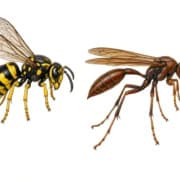
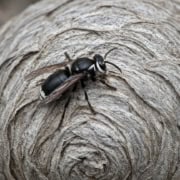
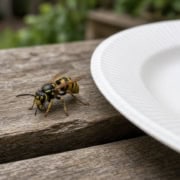
When a wasp nearly 2 inches long buzzes across the lawn, it’s natural to assume it’s the most dangerous thing in the yard. But in the matchup of cicada killer vs yellowjacket, the big one is usually the gentle one. Size and danger don’t line up. Here’s how to tell them apart and which one actually needs a call.
Cicada Killer vs Yellowjacket at a Glance
- Size. University of Kentucky Entomology says female cicada killers can be nearly 2 inches long and males about 1.5 inches. OSU Extension HYG-2075 describes a typical yellowjacket worker as about 1/2 inch long.
- Colony. Cicada killers are solitary. Each female digs and stocks her own burrow. Yellowjackets live in annual colonies that, OSU says, reach about 4,000 to 5,000 workers by August and late September.
- Food. OSU Buckeye Yard and Garden onLine notes cicada killers feed exclusively on annual cicadas. Yellowjackets hunt insects and, in late summer, switch to sweets, which is why they crash picnics.
- Sting risk. OSU calls stinging encounters with cicada killers extremely rare and says the females aren’t aggressive. Yellowjackets, OSU notes, can sting repeatedly and often do near the nest.

Reading the Holes
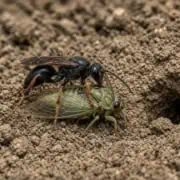
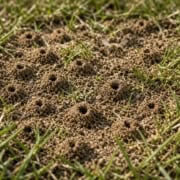
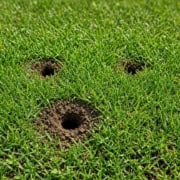
Both can nest in the ground, so the hole itself is the best clue. Cicada killer burrows are about finger-width, often with a fan of loose soil, in sunny, bare or sandy spots. You’ll often see several in one area, each used by a single female. A yellowjacket nest usually has one entrance with a steady stream of small wasps going in and out, and OSU notes these nests are often in grassy areas and mulched beds. See holes in the lawn and ground bees vs. yellowjackets.
Why the Big One Is Calmer
A cicada killer has no colony to defend. UKY says they aren’t considered stinging hazards unless directly disturbed, and the big wasps hovering at eye level are usually males, which can’t sting at all. See male cicada killers. A yellowjacket colony has thousands of workers guarding brood. Run a mower over the entrance and they come out fighting. See yellowjacket ground nest removal.
What We Do About Each
Cicada killers are relocated away from walkways, patios and play areas, with no poison in the soil. Yellowjacket nests are removed by hand or vacuum, without pesticides. Either way, start with a photo from a safe distance.
Frequently Asked Questions
Could it be a hornet?
OSU Extension ENT-0102 notes cicada killers are often mistaken for European hornets and even northern giant hornets. See giant hornets in Ohio.
Are cicada killers beneficial?
OSU considers them beneficial insects and does not recommend insecticides for them.
Which is worse for a kid with an allergy?
A yellowjacket nest, by far. See sting allergies.
Not Sure Which One You Have?
We relocate cicada killers instead of putting poison into the soil where people and pets walk. Call or text Northwest Ohio Wasp Removal at 419-614-6445, or use our contact page, and send a photo of the wasps or burrows if you can. See cicada killer relocation for how it works.