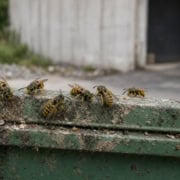

What Happens to Wasp Nests in Winter? Do Wasps Come Back to the Same Nest?
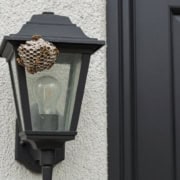
When the leaves drop, many homeowners suddenly notice a big gray nest in a tree or under the eaves that was hidden all summer. That leads to two of the most common questions we get: what happens to wasp nests in winter, and will the wasps come back to the same nest next year? Here is how the yearly cycle works for wasps in Northwest Ohio, Eastern Indiana and Southern Michigan.
What Happens to Wasp Nests in Winter?
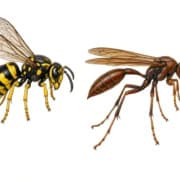
For the social wasps in our region, including yellowjackets, bald-faced hornets, aerial yellowjackets, European hornets and paper wasps, a colony lives for only one season. Here is how it ends:
- Late summer: The colony switches from raising workers to raising new queens and males.
- Fall: New queens and males leave the nest and mate.
- After hard frosts: The old queen, the workers and the males die. Food runs out and cold weather finishes off the colony.
- Winter: The nest is left empty.
Only the newly mated queens survive. Each one finds a sheltered spot to spend the winter alone, in a state of dormancy, until spring.
Where Do Wasp Queens Spend the Winter?
- Under loose bark and inside rotting logs and stumps
- In leaf litter and soil
- In cracks and crevices in buildings
- Inside attics, wall voids, sheds and garages
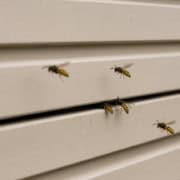
- Behind shutters, siding and window trim

Queens that overwinter inside homes sometimes become active on warm winter days or when the heat comes on, and wander into living spaces. Our article on wasps inside your house in fall and winter explains why.
Do Wasps Come Back to the Same Nest?
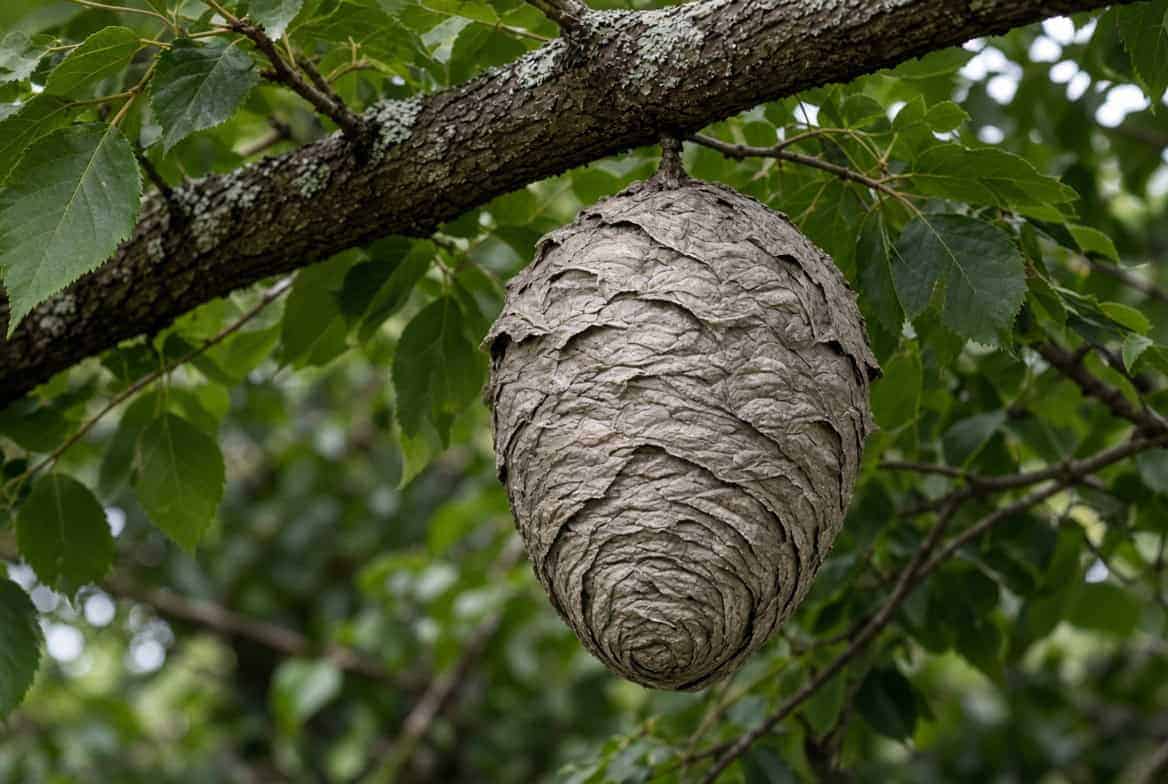
No. Yellowjackets, hornets and paper wasps do not reuse old nests. Each spring, a queen starts a brand-new nest from scratch. An old, empty nest left on your house will not “wake up” in spring.
That said, wasps may build near the same spot again. The same features that attracted last year’s queen, such as shelter, a gap in the soffit or a quiet corner of the porch, attract new queens too. Some new queens also overwinter close to where they were raised. That is why the same eave or shed can have a nest year after year, even though the old nest is never reused.
What About Bees in Winter?
- Honeybees are the big exception. A honeybee colony survives the winter as a cluster inside its hive, eating stored honey and keeping warm. A honeybee colony in a wall or chimney stays active year after year. See honeybees in walls.
- Bumblebees follow the wasp pattern. The colony dies in fall, and new queens overwinter alone, usually in the soil.
Should You Remove an Empty Nest in Winter?
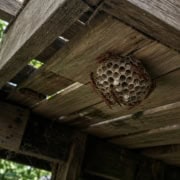
An old paper nest in a tree or on the eaves is usually harmless once the colony has died. It will slowly break down in the weather, and birds sometimes tear nests open looking for leftover larvae. You can leave it or take it down. Before you do:
- Make sure it is truly empty. Wait until after several hard frosts. On a mild fall day, a late colony may still be active.
- Make sure it is a wasp nest. Honeybee colonies in walls, soffits or trees are active all winter.
- Use caution on ladders. Take down high nests only if it is safe to do so.
Use Winter to Prevent Next Year’s Nests
Winter is the best time to seal gaps, because colonies are gone and you will not trap active wasps inside:
- Repair soffits, fascia and siding gaps where wasps entered last summer.
- Screen gable, attic and dryer vents.
- Fill holes in the yard used by ground nests once the colony is dead.
- Note where nests were so you can check those spots first in spring.
See how to wasp-proof your home and our wasp season guide for a month-by-month plan.
Frequently Asked Questions
When do wasp colonies die in Ohio?
Usually after the first several hard frosts in fall. The exact timing varies with the weather each year.
Can I get stung in winter?
It is uncommon, but an overwintering queen indoors can sting if handled or stepped on.
Have Questions About an Old or Active Nest?
Call or text Northwest Ohio Wasp Removal at 419-614-6445 or visit our contact page. We serve Northwest Ohio, Eastern Indiana and Southern Michigan.