Found a Wasp Nest? A Calm, Step-by-Step Plan for Homeowners
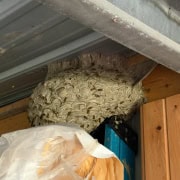
You open the back door, step onto the deck, and there it is: a gray paper nest tucked under the eave, or a steady stream of wasps going in and out of a hole in the lawn. If you’ve just found a wasp nest, take a breath. You don’t need to act fast, and acting fast is usually what gets people stung. Here’s a calm plan for the first half hour.
Step 1: Back Away and Give It Room
Most stings happen right at the nest. Ohio State University Extension explains that yellowjackets mainly sting to protect the nest, and that any noise or disturbance can provoke painful stinging (OSU Extension HYG-2075). So the first step is simply distance. Walk away at a normal pace, and don’t swat. OSU’s advice is to never swat at a yellowjacket flying near you and simply walk away.
Bring kids and pets inside, and close nearby windows and doors. If the nest is near a doorway you use every day, use another door for now. Our guide to keeping kids and pets safe around nests covers the household side.
Step 2: Mark the Spot Without Touching Anything
Make a mental note of exactly where the nest is: which corner of the house, how high, whether it’s under siding, in the ground or hanging in a shrub. For a ground nest, set a lawn chair or bucket a good distance away as a “don’t mow here” reminder. The University of California IPM program notes that wasps flying straight in and out of a single location are probably flying to and from their nest (UC IPM).
Step 3: Identify It From a Distance
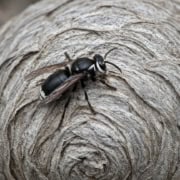
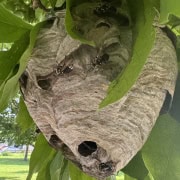
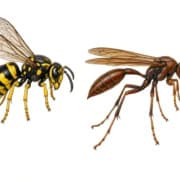
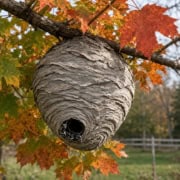
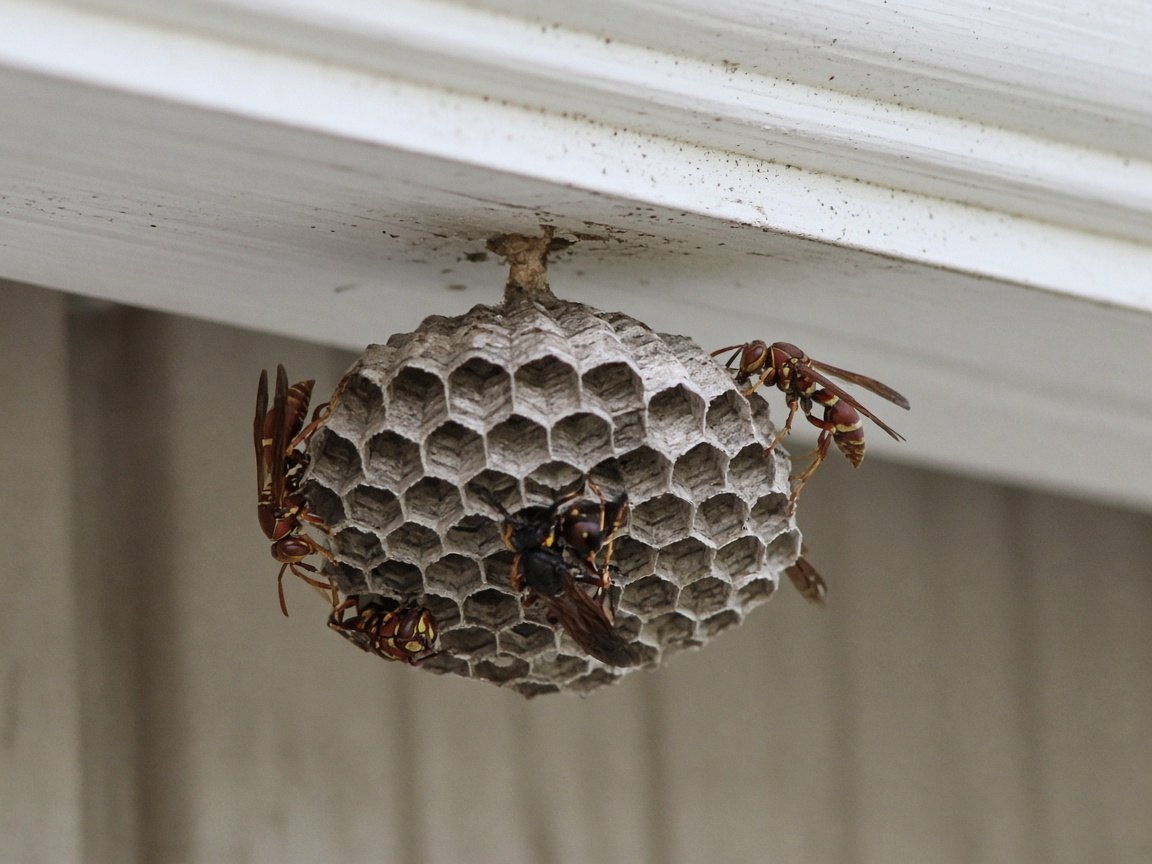
The type of nest tells you a lot. Open, umbrella-shaped comb under an eave usually means paper wasps. A gray, fully enclosed paper ball with one entrance at the bottom points to bald-faced hornets or aerial yellowjackets. Wasps going in and out of a hole in the ground or a gap in siding usually means yellowjackets. Our guide to identifying a wasp nest by shape has more detail, and yellowjacket vs. paper wasp covers the insects themselves.
Step 4: Take a Photo and Send It
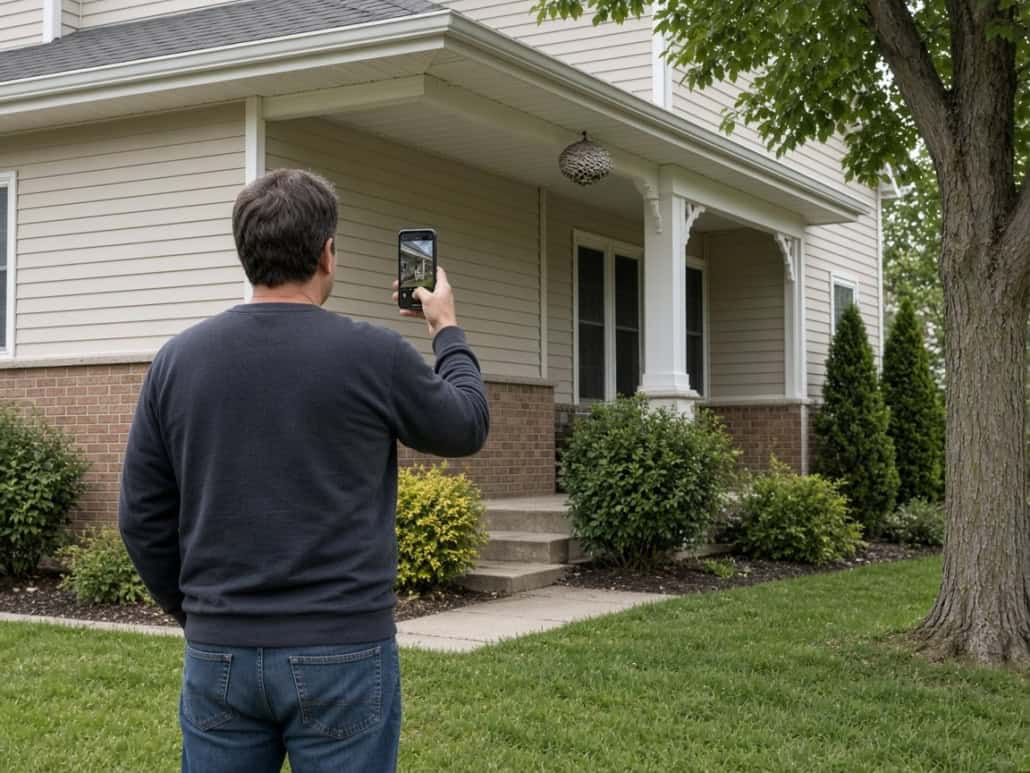
Zoom in with your phone instead of walking closer. A photo of the nest plus one wider shot showing where it sits on the house is ideal. Text it to us and we’ll give you a free virtual quote. The photo also tells us whether it’s a native paper wasp nest we’ll relocate, a nest that needs removal, or a honeybee or bumblebee situation that calls for a different plan.
What Not to Do After You’ve Found a Wasp Nest
- Don’t spray it. Spray often just angers the colony, and in walls it can push wasps indoors. See common DIY wasp spray mistakes.
- Don’t plug the entrance. OSU Extension warns not to plug the entrance of a wall nest, because disturbed wasps may enter the house.
- Don’t mow over it or knock it down. OSU cautions against running the mower over a ground nest or disturbing a nest in a tree or eaves.
- Don’t shine a flashlight at it. OSU notes wasps will fly toward a light source.
Frequently Asked Questions
Is it an emergency?
Usually not. It’s urgent if someone in the home has a sting allergy or the nest is right at a door. See emergency wasp removal for sting allergies.
Will the nest go away on its own?
Ohio wasp colonies are annual, and most die off with the cold. A nest in an out-of-the-way spot can sometimes be left alone. See what happens to wasp nests in winter.
What if they turn out to be bees?
Honeybees and bumblebees are always relocated, never killed. Our humane honeybee removal and relocation page explains how.
Send Us the Photo
Call or text Northwest Ohio Wasp Removal at 419-614-6445, or use our contact page. Our wasp and hornet nest removal is done by hand or vacuum with no pesticides, and native paper wasps are relocated.