Bees Came Back After Removal? Why It Happens and How to Prevent It
The colony is gone, the wall is patched, and then a few weeks or a year later, bees are back at the same spot. If your bees came back after removal, you’re not alone, and it usually has a clear cause. Either something was left behind, or the cavity is still open and still attractive to swarms. Here’s why it happens and how to stop it.
Why Bees Came Back After Removal
1. Stragglers the next day
A few bees hovering the morning after isn’t a return. UGA Extension notes stray workers may be around after a removal and are usually gone within a day (UGA Extension C824). UF/IFAS notes a swarm trap or sticky trap can be left for up to a month to catch stragglers and returning bees (UF/IFAS Extension IN771).
2. Comb or honey left in the wall
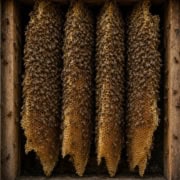
UF/IFAS calls complete comb removal essential. MAAREC says leftover honey and comb attract other insects and animals (MAAREC Publication 3.6). If a previous company sprayed but left the comb, that’s often the source of the problem.
3. A cavity that bees like
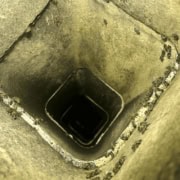
Research on nest-site choice found that swarms prefer cavities that were used before (Seeley and Morse, 1978). UGA says the same thing: cavities that housed bees attract new swarms.

How to Prevent It
- Get all the comb out first. Sealing before the comb is gone traps the problem inside.
- Clean the cavity. We clean off leftover wax so new swarms aren’t drawn back.
- Wash the entry. MAAREC recommends washing the entry area with soapy water, then filling the cavity and blocking the entrance.
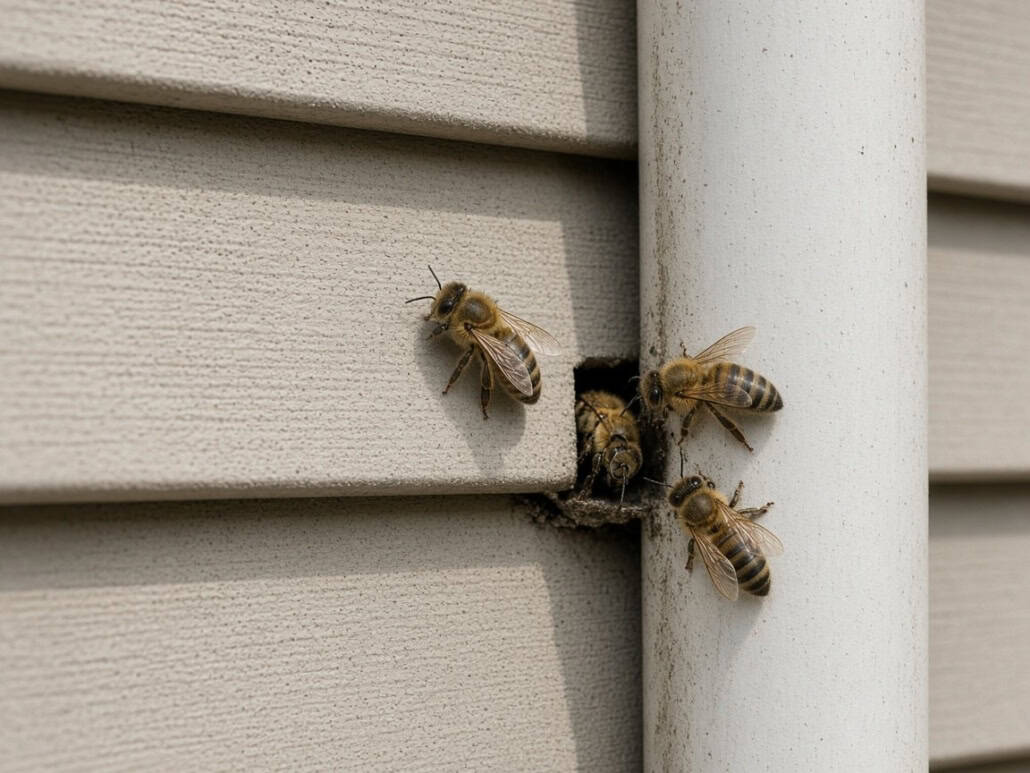
- Seal the gaps. UGA advises caulking likely entry sites such as knotholes, gaps in siding and openings around plumbing or electric wires.
- Watch in swarm season. Spring and early summer is when scouts are out looking. A few bees investigating one spot is the early warning.
Frequently Asked Questions
Is one or two bees at the gap a problem?
Not necessarily. Foragers may visit nearby flowers or water. Bees that keep investigating one particular gap, rather than passing by, may be scouts. If the number climbs, call before a swarm moves in.
When is the best time to seal?
After every piece of comb is out and the cavity is cleaned, and ideally before the next spring swarm season.
Should I spray the spot to keep them away?
Spraying doesn’t remove scent or comb, and it can contaminate bees that would otherwise be rescued. Seal the gap instead.
Could it be wasps this time?
Wasps reuse sheltered spots too. See wasp-proofing your home and after wasp nest removal.
How do I know it’s a new colony?
Steady traffic for more than a day or two means bees are moving in. See will bees leave on their own?
Bees Back at the Same Spot?
Honeybees are always relocated, never exterminated. Rescued colonies go to The Mindful Beekeeper, pass through an inspection station, and then join Apiary #1 in Loudon Township. Honeybee relocation from walls and other structures is being scheduled for Spring 2027. Call or text 419-614-6445 or use our contact page to tell us what you are seeing, and read about humane honeybee removal and relocation.