Wasp, Bee, or Hornet? How to Identify Stinging Insects in Northwest Ohio
Not every buzzing insect around your house calls for the same response. Before you think about wasp removal or bee removal, the most important step is figuring out what you are actually looking at. Across Northwest Ohio, East Indiana, and Southern Michigan, homeowners run into the same handful of stinging insects every year, and each one behaves very differently. This guide walks through how to tell them apart and what each one means for your home.
Our company is owned by a beekeeper, so we look at every call through two lenses: keeping your family safe and protecting the pollinators that deserve protecting. Honeybees, bumblebees, and native paper wasps are always humanely relocated, never exterminated.
Wasp Removal or Bee Removal? Start With the Body
The quickest way to separate bees from wasps is to look at the body.
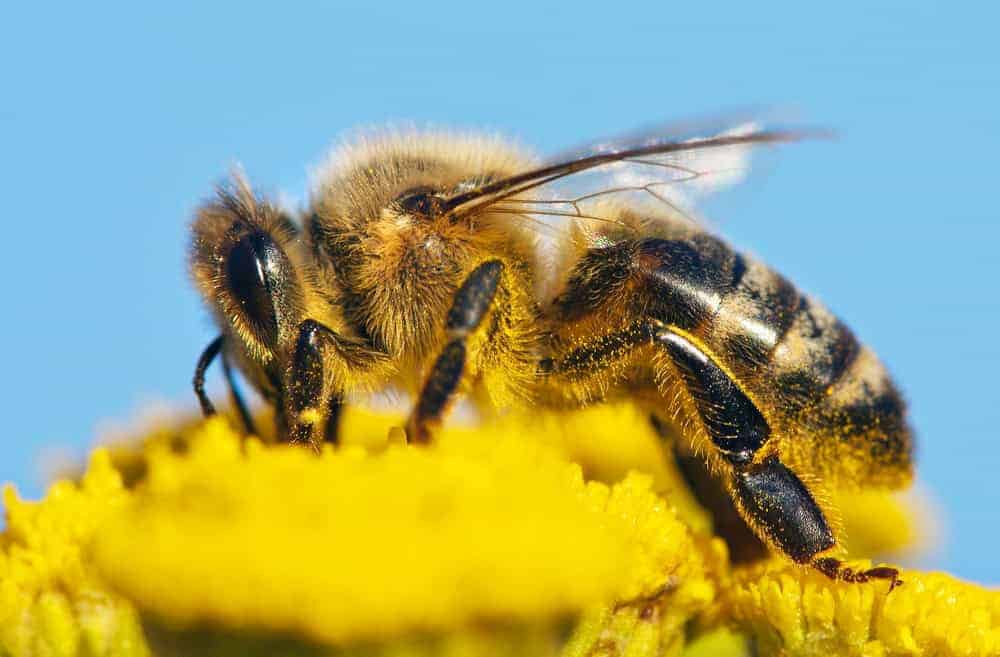
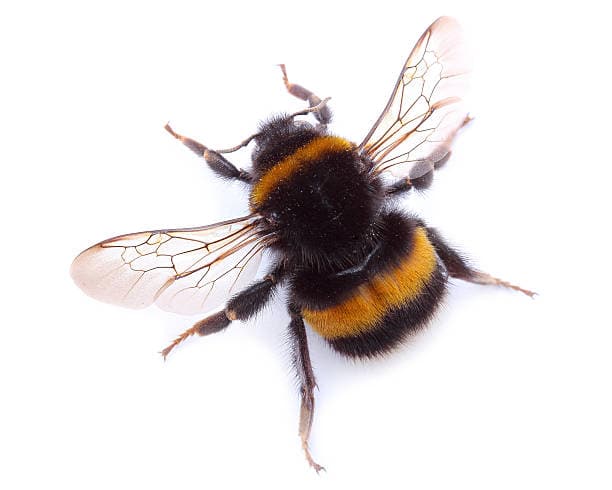
- Bees are fuzzy. Honeybees and bumblebees are covered in branched hairs that collect pollen. They look soft and a little “fluffy,” with thick bodies.
- Wasps are smooth and shiny. Yellowjackets, hornets, and paper wasps have hard, nearly hairless bodies and a narrow “wasp waist” between the thorax and abdomen.
- Bees carry pollen; wasps hunt. If you see yellow or orange clumps on the back legs, that is a bee. Wasps are predators and scavengers, and you will often see them chewing on insects, meat, or sweet drinks.
The Wasps You Will See Most in Northwest Ohio
Yellowjackets
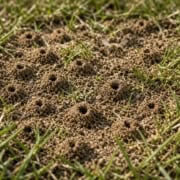
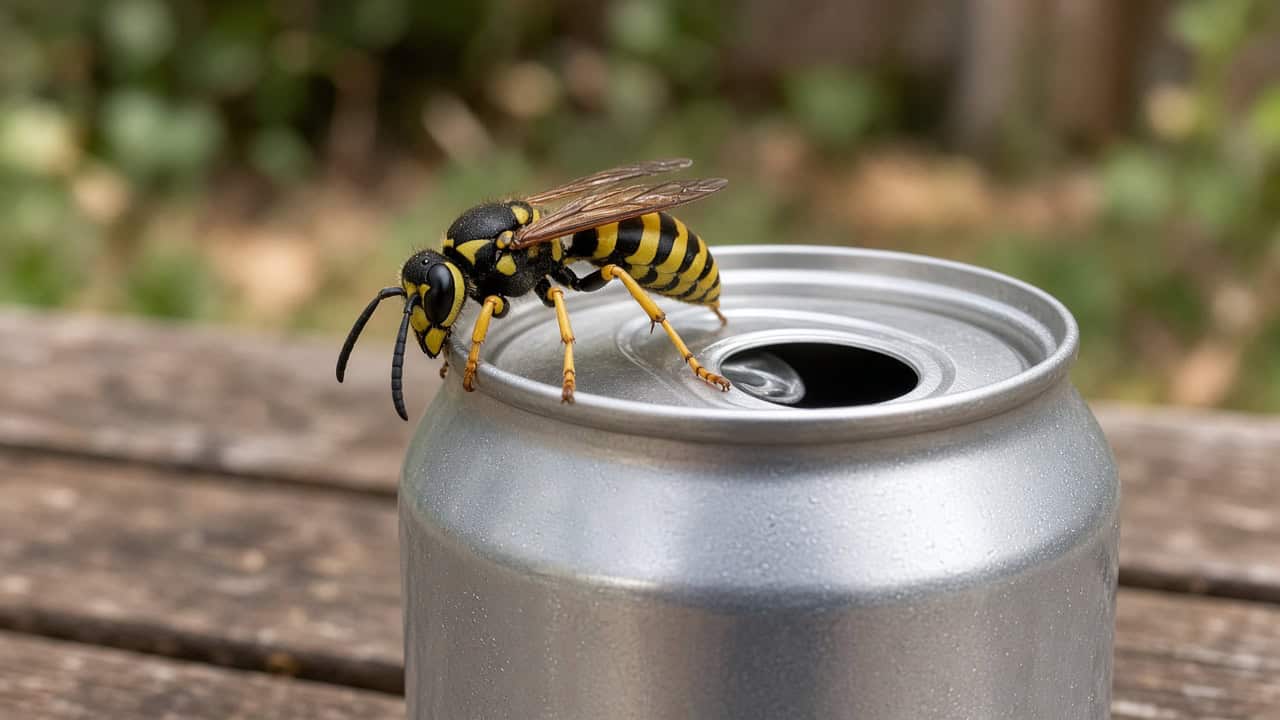
Yellowjackets are the stinging insect we deal with most. They are about half an inch long, bright yellow and black, and fly fast and low. The eastern yellowjacket usually nests underground, while the German yellowjacket often builds inside walls, attics, and other voids. Colonies can reach thousands of workers by late summer, and they defend their nests aggressively. Learn more in our guides to yellowjacket ground nests and yellowjackets in your walls.
Bald-faced hornets
Despite the name, the bald-faced hornet is actually a type of aerial yellowjacket. It is black with a white or ivory face and builds the large, gray, football-shaped paper nests you see hanging from trees, shrubs, and eaves. See our full guide to bald-faced hornets in Ohio.
European hornets
The European hornet is the largest wasp in Ohio and the only true hornet in North America. It is about an inch long, brown and yellow, and is unusual because it flies at night and is drawn to porch lights. Nests are usually hidden in hollow trees or wall voids.
Paper wasps
Paper wasps are slender, with long legs that dangle in flight. They build open, umbrella-shaped combs with exposed cells under eaves, railings, and grills. Native paper wasps are fairly calm and important predators of caterpillars, and we relocate them. The introduced European paper wasp looks much more like a yellowjacket. Our paper wasp guide explains the difference.
Solitary wasps
Mud daubers and cicada killers look intimidating but rarely sting people. They do not have colonies to defend, so they are usually left alone.
The Bees You Will See Most in Northwest Ohio
Honeybees
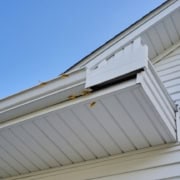
Honeybees are golden-brown to dark with banded abdomens and are slightly smaller than a yellowjacket. You will typically see them as a swarm hanging in a cluster in spring, or as a steady stream of bees going in and out of a gap in siding, a soffit, or a chimney. Honeybee colonies live year-round and build wax comb filled with honey, so a colony in a wall needs a real live removal, not a can of spray.
Bumblebees
Bumblebees are large, round, and very fuzzy, usually black and yellow. They nest in old rodent burrows, under decks and sheds, and sometimes in insulation. They are gentle unless their nest is disturbed, and their colonies end on their own in the fall.
Carpenter bees
Carpenter bees look like bumblebees but have a shiny, bald, black abdomen. They drill perfectly round half-inch holes in wood fascia, decks, and fences. Males hover aggressively but cannot sting.
Quick Comparison Chart
- Fuzzy, carrying pollen, calm around flowers: likely a honeybee or bumblebee.
- Fuzzy head and thorax, shiny black rear, hovering near wood: carpenter bee.
- Smooth, bright yellow and black, fast, attracted to food and trash: yellowjacket.
- Black and white, gray paper “ball” nest: bald-faced hornet.
- Large, brown and yellow, active at night: European hornet.
- Slender, legs dangling, open comb with visible cells: paper wasp.
Why Identification Matters
Getting the species right changes everything about how the situation should be handled:
- Safety: Yellowjackets and hornets defend their nests in large numbers and can sting repeatedly. Honeybees usually sting only once, and swarms are generally calm.
- The right method: Honeybees in a structure need a live cut-out so the bees, comb, and honey are all removed. Spraying them leaves honey and dead bees rotting in your wall.
- Protecting pollinators: Honeybees, bumblebees, and native paper wasps are always relocated by our team. We never exterminate them.
- No unnecessary calls: Some insects, like mud daubers, rarely need any action at all.
Not sure what you have? Take a photo from a safe distance, note where the insects are going in and out, and reach out. Identifying the insect first is part of how we handle every call.
Frequently Asked Questions
How can I tell a honeybee from a yellowjacket?
Honeybees are fuzzy, golden-brown, and usually busy at flowers. Yellowjackets are smooth, shiny, bright yellow and black, and are more interested in your soda, food, and garbage.
Are hornets and wasps the same thing?
Hornets are a type of wasp. In Ohio, the only true hornet is the European hornet. The bald-faced hornet is actually an aerial yellowjacket.
Do you exterminate honeybees or bumblebees?
No. Honeybees, bumblebees, and native paper wasps are always humanely relocated. Our company is owned by a beekeeper, and protecting pollinators is part of what we do.
What areas do you serve?
We serve Northwest Ohio, East Indiana, and Southern Michigan.
Get Help Identifying Your Stinging Insect
If you have a nest or a steady stream of insects around your home and you are not sure what they are, we are happy to help. Visit our contact page to reach Northwest Ohio Wasp Removal and tell us what you are seeing.