
Bees in Your Chimney? What to Know About Bees and Wasps in Chimneys
A loud buzzing in the fireplace, bees crawling out of the damper or a cloud of insects around the top of the chimney on a warm day are all signs of bees in your chimney. Most often these are honeybees that have moved into the flue or chimney cavity, though wasps and hornets sometimes nest in or around chimneys too. As a beekeeper-owned company serving Northwest Ohio, Eastern Indiana and Southern Michigan, we see this every year. Here is what is going on and what to do, and not do, about it.
Why Honeybees Move Into Chimneys
In spring and early summer, healthy honeybee colonies reproduce by swarming. Thousands of bees leave with the old queen and send out scouts to find a new home. Scouts look for a dry, protected cavity of the right size with a small entrance. An unused chimney, especially one without a cap, fits that description well. Masonry chimneys with gaps in the mortar, unused flues and chimney chases on newer homes can all attract a swarm. You can learn more about swarming in our honeybee swarm guide.

Signs of Bees in Your Chimney
- Steady bee traffic at the top of the chimney or a gap in the masonry on warm days
- Buzzing you can hear through the fireplace or the wall around the chimney
- Bees inside the house near the fireplace, wood stove or furnace room
- Bees on windows of rooms next to the chimney
- In established colonies, wax or a sweet smell near the fireplace
Honeybees vs. Wasps in a Chimney
- Honeybees: Fuzzy, golden-brown, and they fly in and out in large numbers. They build wax comb and can stay for years.
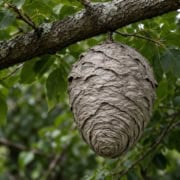
- Yellowjackets and European hornets: Smooth, shiny and more brightly marked. They build paper nests in voids around the chimney, chimney chase or flashing. Their colonies die in late fall.
- Paper wasps: Build open combs under the chimney cap, crown or flashing.
If you are not sure which you have, see our guide to identifying wasps, bees and hornets, or text us a photo.
Do Not Light a Fire to Smoke Them Out
It is a common idea, but lighting a fire under a honeybee colony causes more problems than it solves:
- Heat can melt the wax comb, sending honey and wax down the flue.
- Smoke and heat can drive bees down into your home instead of out of the chimney.
- Beeswax and old comb in a flue add flammable material where you do not want it.
- It kills a valuable colony that could have been saved.
Why Spraying a Chimney Is a Bad Idea
Pouring or spraying pesticide down a chimney rarely reaches the whole colony. Even when it does, the comb, honey and dead bees are left behind. Without bees to tend it, honey can ferment and leak, and the leftover comb attracts robbing bees, wasps, wax moths, ants and rodents. Pesticide residue also stays in the chimney. Our article on why beekeepers never exterminate honeybees explains this in more detail.
Bee Removal From Chimneys: Always Live Relocation
Honeybees are always relocated, never exterminated. Removing a colony from a chimney is a live removal: the bees, the comb and the honey all have to come out, and the bees are moved to a beehive. Depending on where the colony is, that can mean working from the top of the chimney, through the flue, or opening the masonry or chase. The process is very similar to removing honeybees from walls.
Our sister company, The Mindful Beekeeper, specializes in live honeybee removal and relocation, including chimney colonies.
What to Do Until Help Arrives
- Do not use the fireplace or wood stove connected to that flue.
- Close the damper and fireplace doors, and seal the fireplace opening with plastic and tape if bees are coming inside.
- Keep the room closed off from the rest of the house if you can.
- Do not seal the outside entrance. Trapped bees will look for another way out, often into the house.
Preventing Bees in Your Chimney
- Install a chimney cap with a mesh screen on every flue.
- Repair cracked mortar, crowns and flashing.
- Keep dampers closed when the fireplace is not in use.
- Have a chimney sweep inspect the chimney before the first fire of the season.
Seal openings only after any colony has been removed. See how to wasp-proof your home for more ideas.
Frequently Asked Questions
Will bees leave my chimney on their own?
Usually not. Once honeybees build comb and store honey, the colony can stay for years.
Can I use my fireplace after the bees are removed?
After all comb and honey are out, have a chimney professional inspect and clean the flue before using it.
Hearing Buzzing in Your Fireplace?
Call or text Northwest Ohio Wasp Removal at 419-614-6445 or visit our contact page. We help homeowners across Northwest Ohio, Eastern Indiana and Southern Michigan with humane bee removal and pesticide-free wasp removal.