Bees in a Brick Wall: Honeybee Colonies in Older Brick and Stone Homes
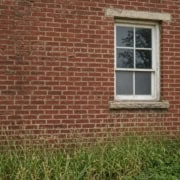
Many homes and farm buildings across our area are brick or stone, some of them well over a century old. When you find bees in a brick wall, they’re usually using a worn mortar joint or a gap around a window or vent as the doorway to a cavity behind. Here’s why older masonry can host a colony for years, why you shouldn’t seal it, and how we plan a removal.
Why Bees in a Brick Wall Can Stay for Years
Honeybees look for a dry, enclosed cavity with a small entrance. Research on nest-site selection found swarms prefer a cavity of roughly 40 liters with a small entrance near the bottom, and that they favor cavities used before (Seeley and Morse, 1978). An old wall with voids between the brick and the interior can offer that. UGA Extension notes bees can live in a structure indefinitely, and a cavity that once held bees attracts new swarms (UGA Extension C824). In other words, an old wall can be reused colony after colony.
Signs to Look For
- Bees flying in and out of one mortar joint or gap, day after day.
- A hum behind interior plaster or drywall on warm afternoons.
- Stains or a sticky spot on the inside of the wall. See can bees damage your house?

Why Not to Patch the Mortar First
It’s tempting to repoint the joint and be done. But sealing traps the colony inside, and the bees may look for another way out, sometimes into the house. MAAREC warns that comb and honey left in a wall attract pests and can soak in and stain (MAAREC Publication 3.6). UF/IFAS calls complete comb removal essential (UF/IFAS IN771).
How a Masonry Removal Is Planned
Every brick or stone wall is built differently, so there’s no one method. We start with photos and a thermal camera scan to find where the warm comb sits. Then we talk through how to reach it, which might be from the inside wall rather than through the masonry, and what repair will look like afterward. On a September 2025 job at an 1800s church in Rudolph, the thermal camera located the colony in two wall channels beneath a window (The Mindful Beekeeper).
Once the comb is out and the cavity is cleaned, the gap can be properly sealed. See bees came back after removal?
Frequently Asked Questions
Do you work on farms and barns?
Yes. See farm and commercial wasp and bee removal.
What about a chimney?
See bees in your chimney.
Bees in Your Masonry?
Honeybees are always relocated, never exterminated. Rescued colonies go to The Mindful Beekeeper, pass through an inspection station, and then join Apiary #1 in Loudon Township. Honeybee relocation from walls and other structures is being scheduled for Spring 2027. Call or text 419-614-6445 or use our contact page to tell us what you are seeing, and read about humane honeybee removal and relocation.