Mason Bees: Ohio’s Gentle Native Bees (and Leafcutter Bees)
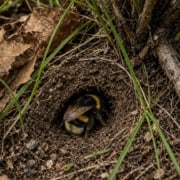
Small dark bees ducking into nail holes, siding gaps or hollow stems in spring and summer are usually gentle native bees. When people search for mason bees Ohio homeowners spot, they often find leafcutter bees too, since both nest in the same kinds of small holes. Neither lives in a hive, neither makes honey, and both rarely sting. Here’s how to tell them apart and when, if ever, they need to move.
Mason Bees, Ohio’s Mud Builders: What They Look Like
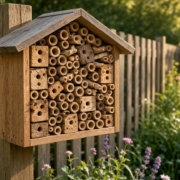
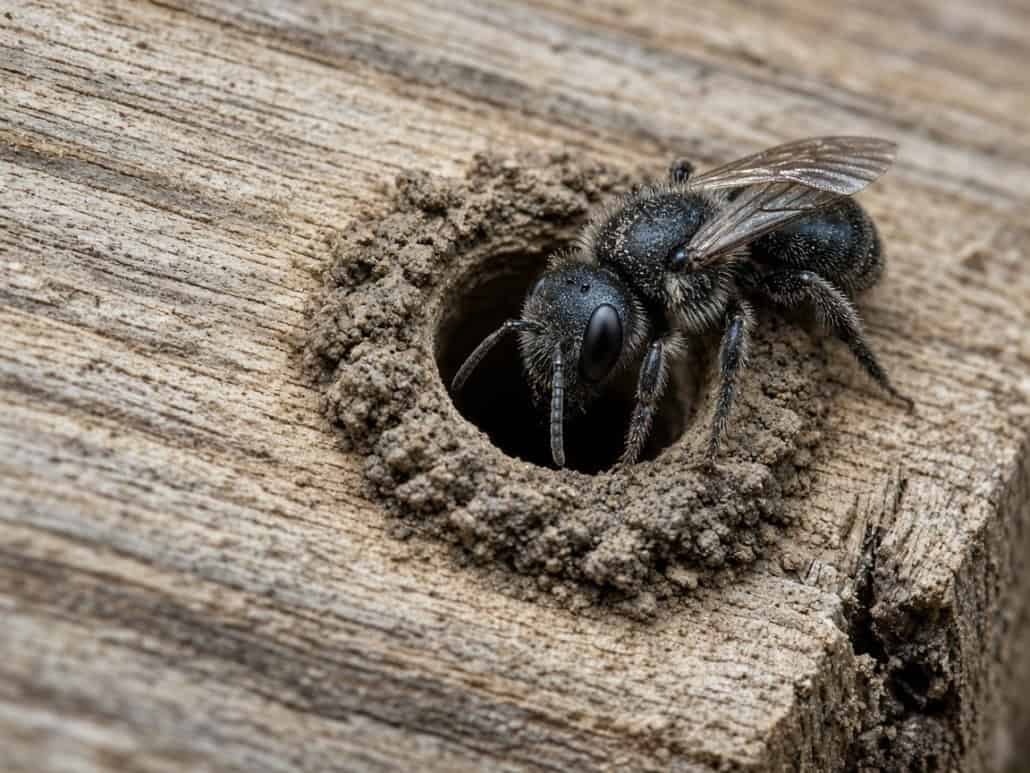
Oregon State University Extension describes the blue orchard bee, a common mason bee, as shiny dark blue-green and about the size of a honeybee. “Mason bee” is a general name for bees that build chambered nests in small crevices or holes using mud. They can’t drill their own holes. They use crevices in siding, old insect tunnels in wood, or nest tubes people put out.
A female packs pollen and nectar into the hole, lays an egg, and walls it off with mud. She repeats this until there are 5 to 8 chambers, then caps the end with mud. That mud plug is the easiest sign of a mason bee nest. Adults are active only for a short time in spring.
Leafcutter Bees
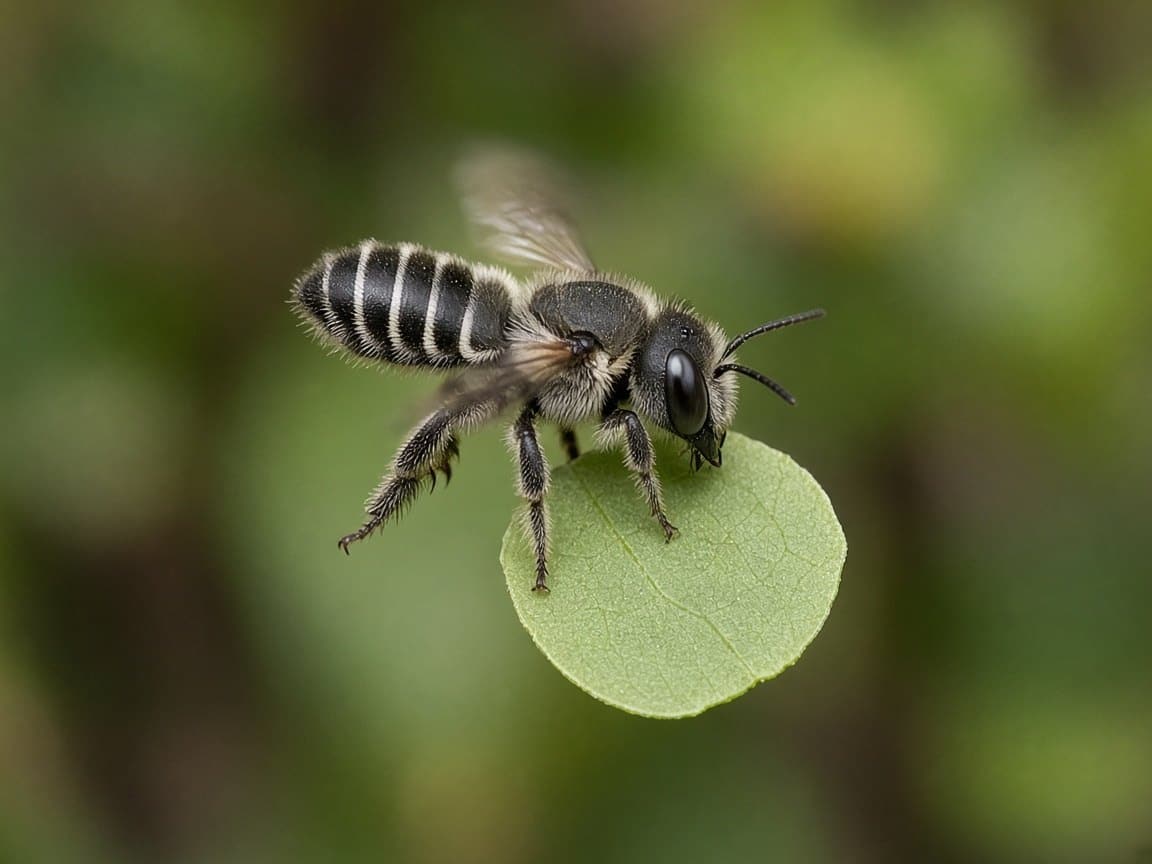
OSU Extension HYG-2143 notes that leafcutting bees look like honeybees but are usually darker, and females have white to yellowish hair under the abdomen. They prefer hollow stems or twigs, and sometimes use rotting logs or old beetle holes. They plug their cells with circular leaf sections. If you see neat, round notches cut from the edges of garden leaves, that’s a good sign leafcutter bees are nearby.
Do They Sting or Damage the House?
- Stings are rare. Oregon State notes mason bees sting only if handled roughly or trapped under clothing. Colorado State University Extension says leafcutter bees aren’t aggressive, and their mild sting is much less painful than a honeybee’s or a yellowjacket’s.
- They don’t bore into sound wood. Mason bees need holes that already exist, and Colorado State says leafcutter bees don’t damage homes or wooden structures.
- They’re solitary. OSU notes most solitary bees sting only if you try to capture or restrain them. Females may nest close together, but each one tends her own nest.
When Do They Need Removal?
Rarely. Because the adults are active for a short season and don’t defend a colony, most mason and leafcutter bees can simply be left alone. If you’d rather they not use a particular gap, wait until they’re done for the season and then seal the hole. If you’re not sure what you have, send a photo. Small dark bees can be confused with sweat bees, mining bees or even small wasps. See sweat bees and mining bees and how to identify wasps, bees and hornets.
Frequently Asked Questions
Do mason bees make honey?
No. Oregon State notes mason bees are solitary and don’t produce honey.
Should I put up a bee house?
It can help if it’s built and cleaned properly. See do bee hotels actually help?
Are these the same as bumblebees?
No. Bumblebees are larger, fuzzier and live in colonies. See Ohio bumblebee species and buzz pollination.
Not Sure What’s Nesting in Your Siding?
Honeybees, bumblebees and native paper wasps are always relocated, never exterminated. Call or text Northwest Ohio Wasp Removal at 419-614-6445, or use our contact page, and send a photo if you can. See humane bumblebee relocation and wasp and hornet nest removal.