Bumblebee Nests Near Your Home: Humane Relocation in Northwest Ohio
Bumblebees are some of the most beloved insects in the garden, until a nest shows up under your deck, beside your front step, or inside a shed wall. If you are searching for bumblebee removal, the good news is that bumblebees are gentle, their colonies are small, and a nest can be relocated without harming the bees. Our company is owned by a beekeeper, and bumblebees are always humanely relocated, never exterminated. Here is what homeowners in Northwest Ohio, East Indiana, and Southern Michigan should know.
Meet Ohio’s Bumblebees
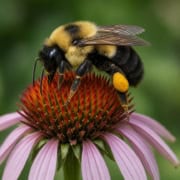
Ohio is home to a number of bumblebee species. The one you are most likely to see around your house is the common eastern bumblebee (Bombus impatiens), which has a fuzzy yellow thorax and a mostly black abdomen. Other species have different patterns of yellow, black, and sometimes orange or rust coloring.
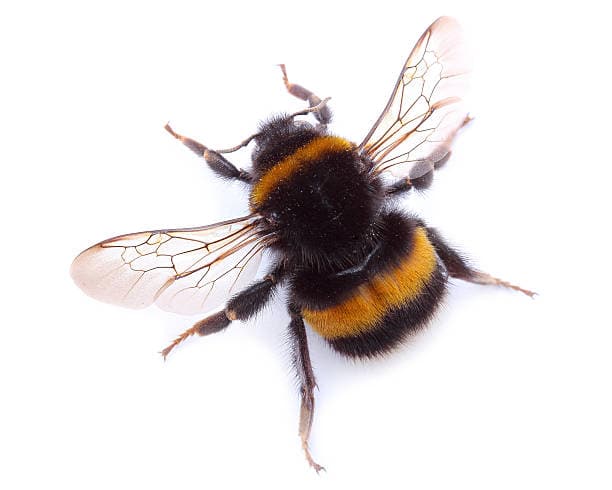
How to recognize a bumblebee:
- Large, round, and very fuzzy, including the abdomen
- Slow, heavy flight with a deep, loud buzz
- Pollen on the hind legs when returning to the nest
Bumblebees are often confused with carpenter bees. Carpenter bees have a shiny, bald black abdomen and drill holes in wood. Our stinging insect identification guide explains the difference.
Why Bumblebees Matter
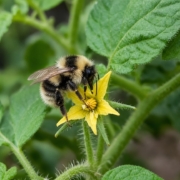
- Powerful pollinators: Bumblebees “buzz pollinate,” vibrating flowers to shake loose pollen. Tomatoes, peppers, blueberries, and many native wildflowers benefit.
- Cold-weather workers: Their fuzzy bodies let them forage in cooler temperatures than many other bees.
- Species in decline: Several North American bumblebees have declined. The rusty patched bumble bee, once common across the Midwest and Northeast, was listed as federally endangered in 2017.
Where Bumblebees Nest
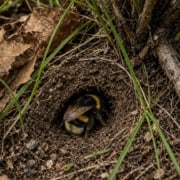
Bumblebee queens look for a dry, insulated cavity. Common nest sites include:
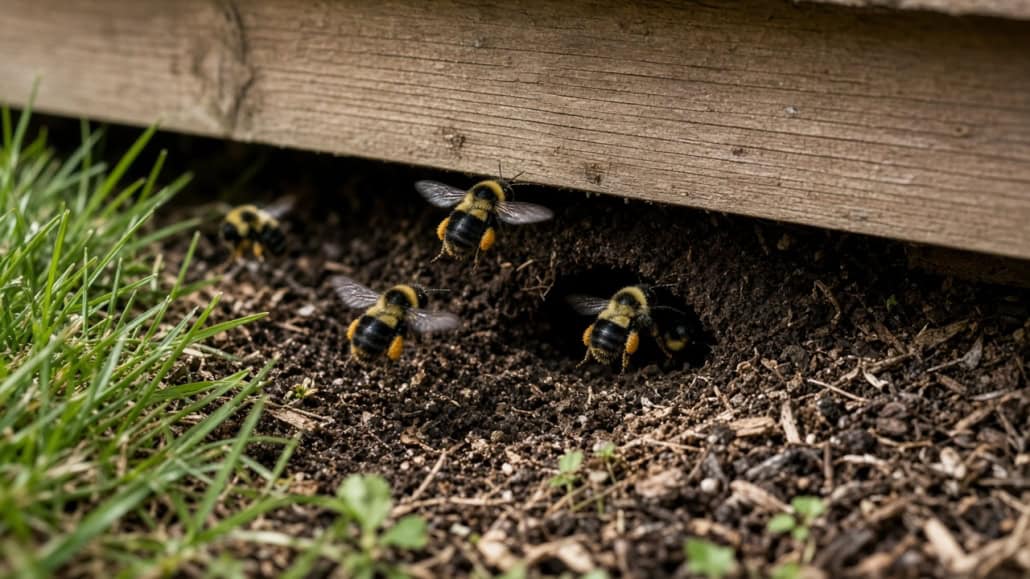
- Abandoned rodent burrows in lawns and flower beds
- Under decks, porches, steps, and sheds
- Inside wall or ceiling insulation, especially near the ground
- Compost piles, brush piles, and thick grass
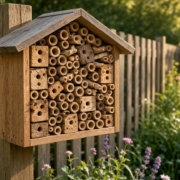
- Bird houses and old furniture cushions stored outside
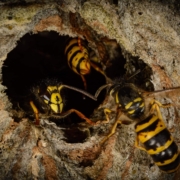
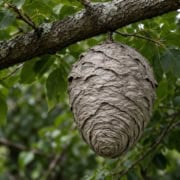
Ground nests are sometimes mistaken for yellowjacket nests. The difference is important: yellowjackets are smooth, fast, and pour out in large numbers when disturbed. Bumblebees are fuzzy, slow, and far fewer. See our guide to yellowjacket ground nests to compare.
The Bumblebee Life Cycle
Bumblebee colonies are annual, much like wasp colonies:
- Spring: A queen that hibernated through the winter emerges, finds a nest site, and raises her first workers on her own.
- Summer: Workers take over foraging and the colony grows. Most bumblebee colonies are small, from a few dozen to a few hundred bees, far fewer than a honeybee or yellowjacket colony.
- Late summer: The colony produces new queens and males.
- Fall: The old queen, workers, and males die. Only the new, mated queens survive by hibernating, usually in soil or leaf litter. The old nest is not reused.
That means a bumblebee nest in a low-traffic spot will end on its own by fall. For nests in problem areas, relocation is the answer.
Are Bumblebees Dangerous?
Bumblebees are among the gentlest stinging insects. Workers are focused on flowers and rarely sting unless the nest is disturbed or a bee is trapped or squeezed. Females can sting more than once, so it is still wise to give a nest space. Male bumblebees cannot sting.
A nest becomes a concern when it is:
- Right next to a door, step, or walkway
- In a lawn area that needs mowing
- Inside a wall or ceiling where bees are finding their way indoors
- Near someone with a known sting allergy
How Humane Bumblebee Removal Works
We never exterminate bumblebees. Instead, the nest is carefully collected and relocated to a safe location away from your home, where the colony can finish its season. Because bumblebee colonies are small and gentle, relocation is a practical way to protect both your family and the bees.
Our methods are pesticide-free, so no chemicals are sprayed around your garden, lawn, or home.
Should You Just Leave the Nest Alone?
Often, yes. Because bumblebee colonies are small, gentle, and naturally end in the fall, a nest in a quiet corner of the yard, behind a shed, or at the edge of a garden bed is usually best left in place. You will get a season of excellent pollination, and the colony will be gone by the time the leaves drop.
Relocation makes the most sense when the nest is somewhere your family cannot avoid, such as beside the front steps, under a deck you use daily, inside a wall where bees are finding their way indoors, or near anyone with a sting allergy. In those cases, moving the nest protects both the people and the bees.
What Not to Do
- Do not pour water, gasoline, or chemicals into the nest.
- Do not plug the entrance. Bees may find another way out, possibly into your home.
- Do not mow directly over the nest until it has been relocated.
Making Your Yard Less Inviting Next Year
- Fill old rodent burrows in early spring.
- Seal ground-level gaps in siding and foundations in the off-season.
- Keep bird houses cleaned out in late winter.
- Consider leaving a wild corner of your property for bumblebees to nest well away from the house.
Frequently Asked Questions
Do you kill bumblebees?
No. Bumblebees are always humanely relocated, along with honeybees and native paper wasps.
Will a bumblebee nest come back next year?
The old nest is not reused. A new queen may choose a similar spot, so sealing gaps and filling burrows helps.
Is it a bumblebee or a carpenter bee?
Look at the abdomen. Bumblebees are fuzzy all over. Carpenter bees have a shiny, hairless black abdomen and are usually seen around wood.
Where do you provide bumblebee removal?
We serve Northwest Ohio, East Indiana, and Southern Michigan.
Bumblebees Too Close for Comfort?
We can relocate the nest so everyone stays safe, including the bees. Visit our contact page to reach Northwest Ohio Wasp Removal.