Cicada Killers in Pavers, Patios and Retaining Walls
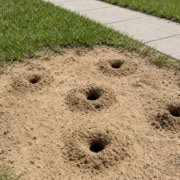
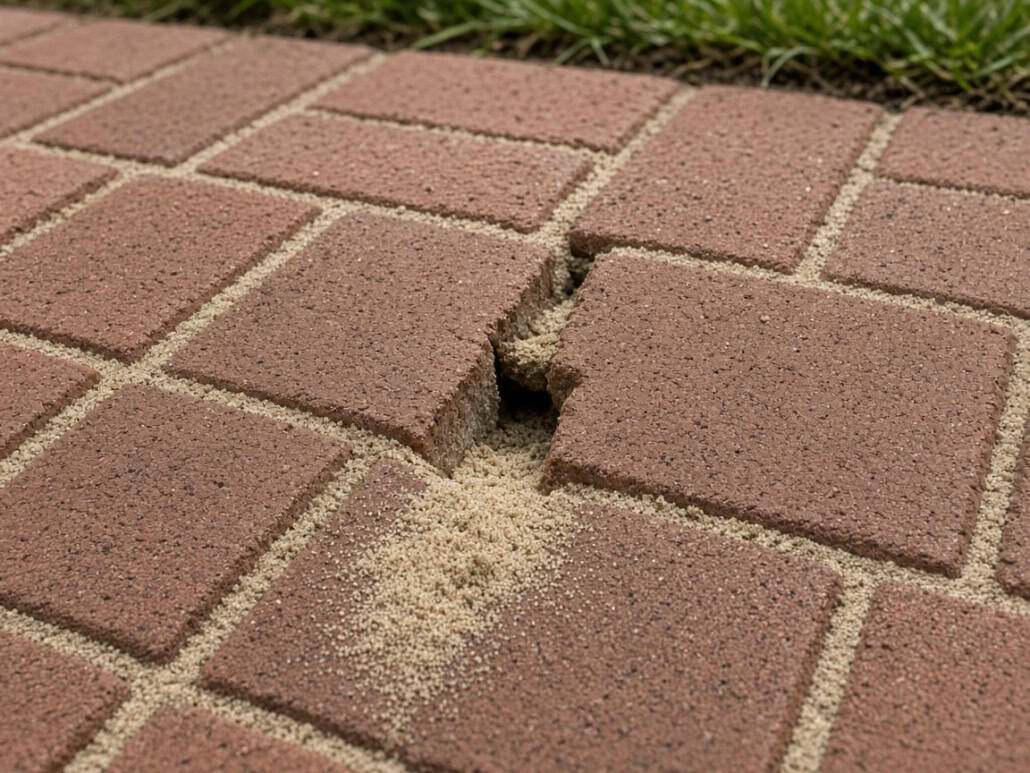
Little piles of sand on the patio every morning, a hole between two bricks, and big wasps cruising low over the pavers. Cicada killers in pavers, patios and retaining walls are a common midsummer complaint, and there’s a simple reason for it. The materials under and between hardscape are exactly what these wasps like to dig.
Why Cicada Killers in Pavers Are So Common
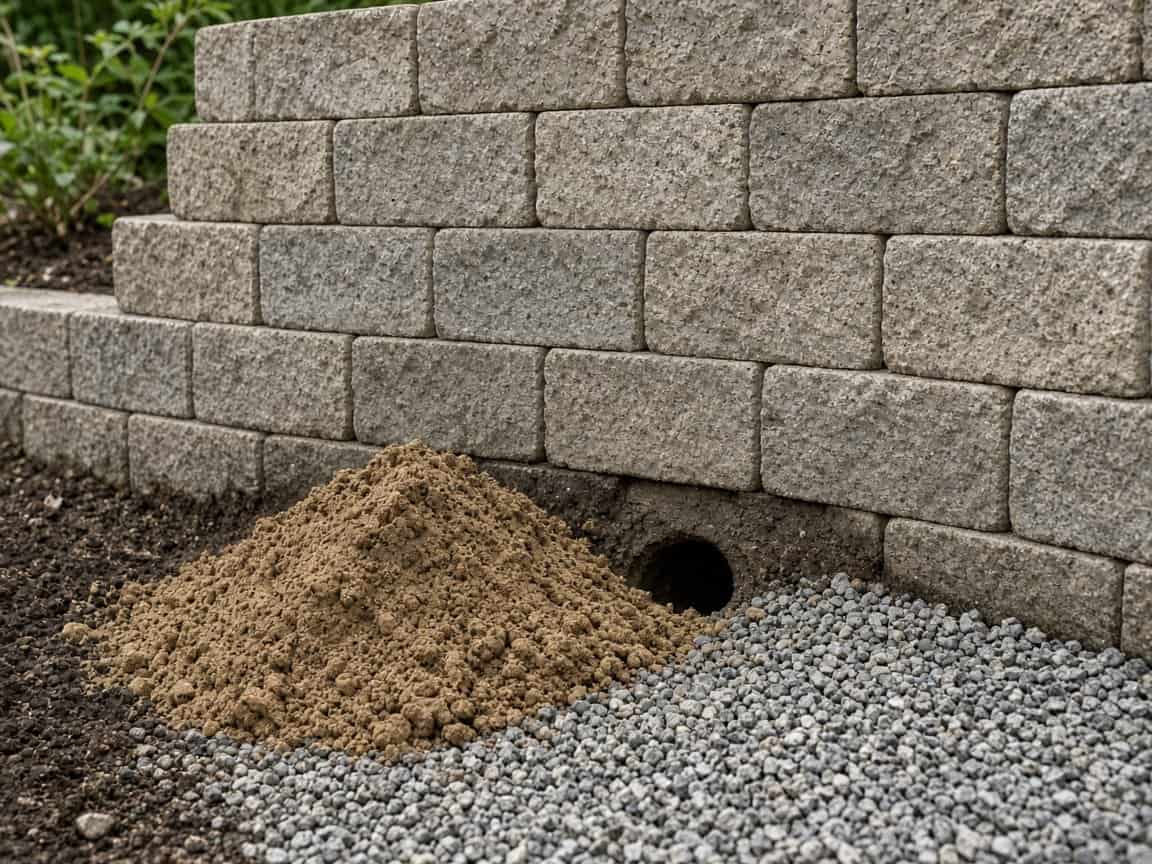
University of Kentucky Entomology says female cicada killers dig burrows in dry, sandy, loose soils. Paver joints and the bedding under pavers are often sand. The backfill behind a retaining wall is usually loose and well drained. These spots are sunny, warm and easy to dig. UKY specifically notes that people often see large piles of sand or loose soil building up near retaining walls.
Our cicada killer relocation page describes the same thing: a bare patch by a sidewalk or a sandy edge can draw them back year after year.
Is It Hurting the Patio?
UKY says the issues from cicada killer digging are mostly aesthetic. The soil piles can smother turf or bother plants, and they’re annoying on a clean patio. Over time, sand pulled out of joints can leave gaps between pavers, so it’s worth refilling joints after the season.
Sting Risk on a Patio
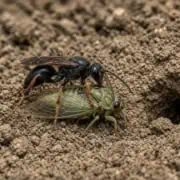
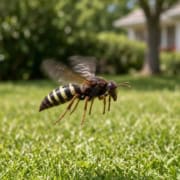
OSU Buckeye Yard and Garden onLine notes the females are not aggressive and stings are extremely rare. The big wasps hovering over the patio are usually males, which can’t sting. See male cicada killers. The real issue is location. A patio is where people walk barefoot, kids play and dogs lie down.
What Helps
- Relocate the active wasps. We move them away from patios and walkways without pouring poison into the joints or soil.
- Refill and firm up joints. Once the season ends, refill open, sandy joints so there’s less loose sand to dig.
- Cover nearby bare soil. UKY notes wood or stone mulch, shade or added irrigation can make them disperse and build elsewhere.
- Don’t flood the holes with chemicals. OSU does not recommend insecticides for cicada killers.
Is It Really Cicada Killers?
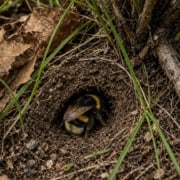
Ants, ground bees and other digger wasps also push sand out of joints. Yellowjackets nest in the ground too, and they’re a very different risk. Watch the hole for a few minutes from a distance. One large wasp coming and going is typical of cicada killers. A steady stream of small wasps is a yellowjacket nest. See cicada killer vs. yellowjacket and ground bees vs. yellowjackets.
Frequently Asked Questions
Will they come back next year?
Often, because their young overwinter in the same soil. See do cicada killers come back?
Can I just sweep the piles away?
Yes. Sweeping won’t stop the digging, but it keeps the patio usable while you plan a fix.
Cicada Killers Digging Up Your Patio?
We relocate cicada killers instead of putting poison into the soil where people and pets walk. Call or text Northwest Ohio Wasp Removal at 419-614-6445, or use our contact page, and send a photo of the wasps or burrows if you can. See cicada killer relocation for how it works.