Ground Bees vs. Yellowjackets: Which One Is Nesting in Your Yard?
You notice insects flying in and out of holes in your lawn, garden bed or along the edge of the driveway. Are they harmless ground bees or a yellowjacket nest waiting for the lawn mower? The answer makes a big difference. Many ground-nesting bees are gentle native pollinators that can simply be left alone, while yellowjackets defend their nests aggressively. Here is how homeowners in Northwest Ohio, Eastern Indiana and Southern Michigan can tell them apart.
What Are Ground Bees?
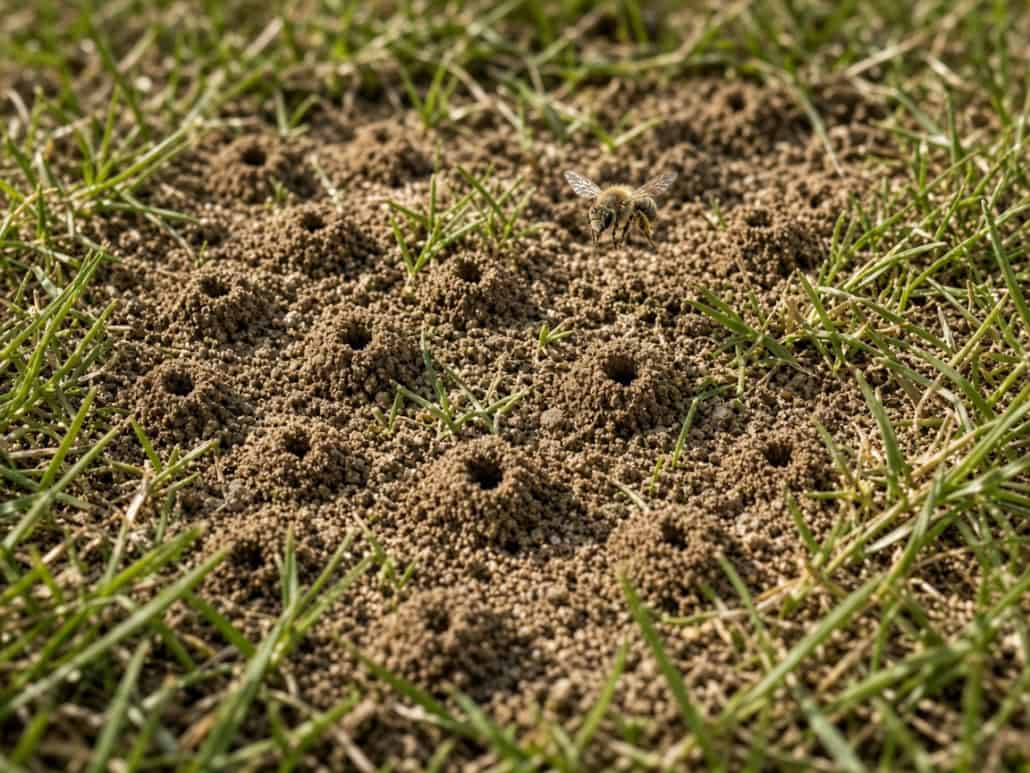
“Ground bees” is a catch-all name for bees that dig their nests in soil. Most are solitary, meaning each female digs and provisions her own small nest. The most common ground bees around homes in our region are:
- Mining bees (Andrena and related genera): Fuzzy, often brownish bees that appear in early spring, often in large numbers in bare or thin patches of lawn.
- Sweat bees (family Halictidae): Small bees, many of them metallic green, that nest in soil and are active from spring through summer.
- Bumblebees: Not true diggers, but they often take over old rodent burrows in the ground.
We cover the first two in detail in our article on sweat bees and mining bees in Ohio.
Ground Bees vs. Yellowjackets: Quick Comparison
1. Look at the Soil Around the Holes
- Ground bees: Many small holes, each often surrounded by a little volcano-shaped mound of loose soil. The holes are usually about the width of a pencil and may be spread across a patch of lawn.
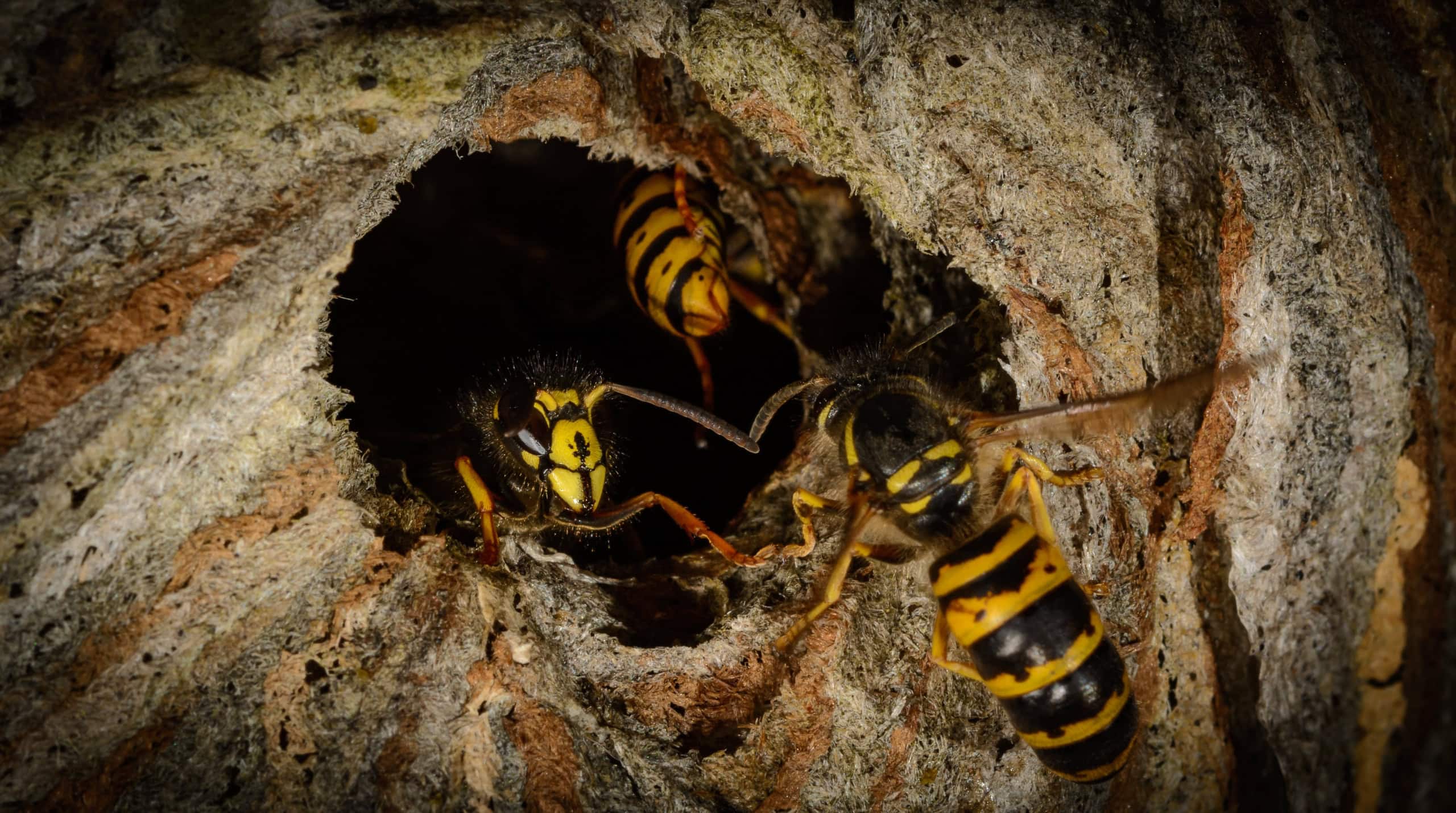
- Yellowjackets: Usually one main entrance hole, often larger, with no neat mound. It may be under a shrub, at the base of a tree, under a deck step or in an old rodent burrow.
2. Look at the Insects
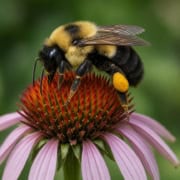
- Bees: Fuzzy, often brown, gray or metallic green. Many are small to medium sized.
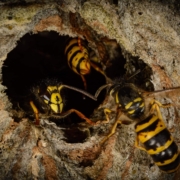
- Yellowjackets: Smooth, shiny, bright yellow and black with a narrow waist. Their flight is fast and direct.
3. Watch the Traffic
- Bees: Each bee comes and goes from its own hole. Males may patrol low over the area in a loose cloud, but they cannot sting.
- Yellowjackets: A steady stream of wasps going in and out of the same hole, sometimes dozens per minute in late summer.
4. Check the Calendar
- Bees: Mining bees are most noticeable in early spring, often March through May. Activity usually fades after a few weeks.
- Yellowjackets: Colonies are small in spring and grow all summer. Ground nests are most noticeable and most dangerous from July into October.
5. Notice How They React to You
- Bees: You can usually walk across the area without being stung. Female ground bees rarely sting and only when handled or stepped on barefoot.
- Yellowjackets: Vibration from footsteps or mowers near the entrance can cause many wasps to pour out and sting.
Other Ground Nesters You Might See
Two large solitary wasps also dig in lawns and gardens. The eastern cicada killer is a very large wasp that digs burrows in sandy soil in midsummer. Great golden digger wasps and great black wasps also dig burrows. All of them look intimidating but are rarely aggressive. See our articles on mud daubers and cicada killers and great black wasps and golden digger wasps.
What to Do About Ground Bees
In most cases, nothing. These bees are important early-season pollinators, they are active for only a few weeks, and they very rarely sting. To live with them:
- Raise your mowing height for a few weeks or skip mowing that patch.
- Wear shoes in the yard while they are active.
- Water the area and overseed thin grass in late summer or fall. Ground bees prefer dry, bare soil, so a thicker lawn can make the spot less attractive next year.
Please do not spray insecticides on ground bee nesting areas. It harms beneficial insects and is not needed.
What to Do About Yellowjackets
A yellowjacket nest in a lawn, garden or under steps is a different story. Colonies can reach thousands of workers by late summer, and a mower pass over the entrance can lead to many stings. Our guide to yellowjacket ground nests explains the warning signs. Until the nest is handled:
- Mark the area and keep kids and pets away.
- Do not mow, trim or walk near the hole.
- Do not pour gasoline, boiling water or chemicals into it.
- Do not plug the hole. The wasps can dig a new exit.
We offer pesticide-free wasp removal for yellowjacket ground nests throughout our service area.
Frequently Asked Questions
Do ground bees sting?
Females can sting, but they rarely do. Males, which are often the ones flying around, cannot sting.
Will ground bees ruin my lawn?
No. The little mounds can look messy for a few weeks, but they do not harm healthy grass. The bees tend to show up where the grass is already thin.
How can I be sure what I have?
Take a photo or short video from a safe distance and text it to us. We can usually tell from the insects and the holes.
Not Sure What Is Nesting in Your Yard?
Call or text a photo to Northwest Ohio Wasp Removal at 419-614-6445 or visit our contact page. We serve Northwest Ohio, Eastern Indiana and Southern Michigan, and we will tell you honestly whether you need removal or can leave them be.