
Honeybee Swarms in Ohio: Why They Happen and Who to Call
It can be startling: one minute your yard is quiet, and the next, thousands of bees are swirling through the air and settling into a buzzing cluster on a tree branch, fence post, or the side of your house. That is a honeybee swarm, and while it looks dramatic, it is one of the most natural and gentle events in the insect world. This guide explains why swarms happen, what to do and not do, and who to call for humane bee removal in Northwest Ohio, East Indiana, and Southern Michigan.
What Is a Honeybee Swarm?
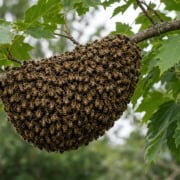
A swarm is how a honeybee colony reproduces. When a colony becomes crowded and healthy enough to divide, the workers raise new queens. Before the new queens emerge, the old queen leaves with a large portion of the worker bees to find a new home. The original colony stays behind with a new queen.
The departing bees fly out in a dramatic cloud, then gather into a tight cluster around their queen, often on a branch, shrub, fence, mailbox, or eave. That cluster is a temporary resting spot, not a nest.
Why Swarms Happen in Ohio
In our region, swarm season is mainly spring into early summer, with the most activity in late spring when colonies are growing fast and nectar is flowing. Swarms can happen later in summer too, but they are less common. Common triggers include:
- Crowding: The colony has run out of room for brood and honey.
- A strong, growing population during spring buildup
- Good weather on warm, calm, sunny days, when most swarms take flight
- Natural instinct: Reproducing by swarming is how honeybee colonies multiply in the wild.
Are Honeybee Swarms Dangerous?
Swarms are usually the calmest honeybees you will ever see. Before leaving, the bees fill up on honey to carry with them, and they have no comb, brood, or stored food to defend. That is why beekeepers can often collect a swarm with very little protective gear.
That said, they are still bees. Give them space, keep children and pets back, and never spray, swat, or throw things at a swarm.
What Happens Next if You Leave It Alone
While the cluster rests, scout bees search for a permanent home: a hollow tree, a cavity in a wall, a soffit, a chimney, or an empty box. The swarm may stay a few hours or a few days. Once scouts agree on a site, the entire cluster lifts off and moves in.
Here is the problem: that “new home” is often inside a house, barn, or shed. Once honeybees move into a wall, they begin building wax comb and storing honey right away, and the job becomes a much bigger structural removal. Our article on honeybees in your walls explains what that involves. Calling early, while bees are still clustered outside, is the easiest outcome for everyone, including the bees.
What to Do if You Find a Swarm
- Stay calm and keep your distance. Keep kids and pets indoors or well away.
- Do not spray it with water, insecticide, or anything else.
- Take a photo from a safe distance and note how high the cluster is and what it is attached to.
- Call a beekeeper as soon as possible. Swarms can move on quickly, so the sooner the better.
Who to Call for Bee Removal When a Swarm Arrives
Do not call an exterminator for a honeybee swarm. Honeybees are vital pollinators for Ohio agriculture and gardens, and a swarm is a healthy colony looking for a home. It deserves to be rescued, not killed.
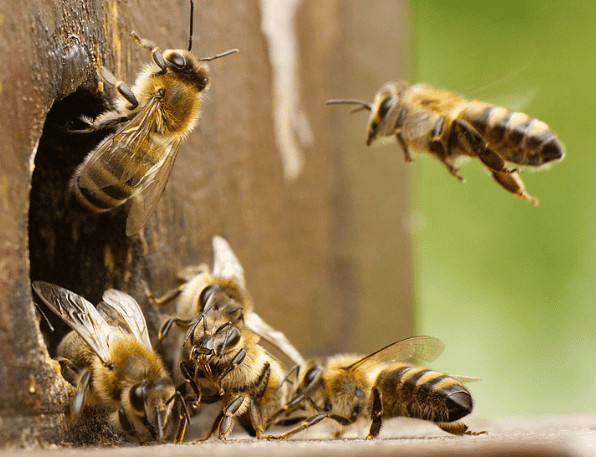
Northwest Ohio Wasp Removal is owned by a beekeeper. Our sister company, The Mindful Beekeeper, specializes in humane honeybee swarm rescue and live bee removal. Honeybees are always relocated, never exterminated. A collected swarm is placed in a hive box and given a new home in a managed apiary where it can thrive.
Is It Really Honeybees?
Swarms are a honeybee behavior, but people sometimes mistake other insects for swarms:
- Honeybee swarm: A dense, hanging cluster of fuzzy, golden-brown bees, often football-sized or larger, out in the open.
- Yellowjackets or hornets: Smooth, shiny, bright yellow and black or black and white wasps, coming and going from a paper nest or a hole, not clustered in the open.
- Bumblebees: Large, fuzzy bees that do not swarm. You may see them coming and going from a ground or deck nest. See our guide to bumblebee nests.
Our identification guide has more help telling them apart.
Preventing Swarms From Moving Into Your Home
- Seal gaps in siding, soffits, and around chimneys and vents in the off-season.
- Cap or screen unused chimneys and vent openings.
- Remove or close up empty boxes, old hive equipment, and hollow items stored outdoors.
- If you see scout bees investigating a gap in spring, call before a swarm arrives.
Frequently Asked Questions
How long will a honeybee swarm stay in my tree?
Anywhere from a few hours to a few days. It depends on how quickly scout bees find a new home, so it is best to call a beekeeper right away.
Will a swarm sting me?
Swarms are generally very docile because they have no nest to defend. Still, keep your distance and do not disturb them.
Should I spray a swarm with water to make it leave?
No. Spraying can agitate the bees and may push them into your house or another structure. Let a beekeeper collect them.
Where do you provide bee removal for swarms?
We serve Northwest Ohio, East Indiana, and Southern Michigan.
Found a Swarm? Let a Beekeeper Help
If honeybees have landed in your yard, contact us right away so they can be collected and relocated alive. Visit our contact page, or learn more about honeybee rescue at The Mindful Beekeeper.