Native Paper Wasps vs. European Paper Wasps: Why We Relocate Native Species
Paper wasps are some of the most familiar stinging insects in Ohio. Their small, open, umbrella-shaped nests show up under eaves, porch ceilings, deck railings, and grill lids every summer. But not all paper wasps are the same. Our region has native paper wasps that play a valuable role in the garden and an introduced European species that has spread rapidly. This guide explains how to tell them apart and why our approach to paper wasp removal always includes relocating native species across Northwest Ohio, East Indiana, and Southern Michigan.
What Paper Wasps Look Like
All paper wasps (genus Polistes) share a few features:
- Slender bodies with a very thin waist
- Long legs that dangle below them in flight
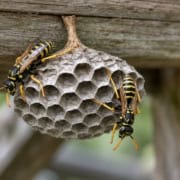
- Open nests made of a single, umbrella-shaped paper comb hanging from a short stalk, with the cells visible from below and no outer paper envelope
- Smaller colonies than yellowjackets or hornets, usually dozens of wasps rather than thousands
If you see a nest wrapped in a gray paper shell, that is not a paper wasp. It is more likely a bald-faced hornet or yellowjacket. Our stinging insect identification guide can help you sort it out.
Native Paper Wasps in Ohio
Ohio’s native paper wasps include the northern paper wasp (Polistes fuscatus) and the ringed paper wasp (Polistes annularis), along with several other species. Native paper wasps tend to be darker in color: shades of brown, black, and reddish-brown, often with thin yellow bands or markings. A few are almost entirely reddish.

Native paper wasps are generally less defensive than yellowjackets. They will sting if their nest is bumped or threatened, but they are not usually interested in people, picnics, or garbage.
Why native paper wasps are valuable
- Natural pest control: They hunt caterpillars and other soft-bodied insects to feed their larvae, including many garden and crop pests.
- Pollination: Adults visit flowers for nectar and move some pollen along the way.
- Local ecosystems: They are part of Ohio’s native insect community, and some have become harder to find as the European species spread.
The European Paper Wasp
The European paper wasp (Polistes dominula) was accidentally introduced to North America and first reported near Boston in 1978. It has since spread across much of the United States and southern Canada. Ohio State University Extension notes that it rose to become the dominant paper wasp in Ohio during the 2000s, and Penn State Extension reports that in parts of Michigan it has completely replaced the native northern paper wasp.
How to recognize a European paper wasp
- Bright yellow and black coloring that looks a lot like a yellowjacket
- Orange antennae, which is the easiest field mark
- The paper wasp body shape: a thin waist and dangling legs, unlike a stocky yellowjacket
Why it matters
European paper wasps compete with native species for food and nesting sites. They often start colonies earlier in spring, will feed on a wider range of prey, and frequently nest in large numbers around houses, in grills, mailboxes, railings, and siding. Because they look like yellowjackets, they are often mistaken for a more dangerous problem.
Quick Comparison
- Native paper wasps: Usually brown, black, or reddish with thinner yellow markings. Darker antennae. Native species we always relocate.
- European paper wasps: Bright yellow and black, orange antennae. Introduced species that competes with native wasps.
- Yellowjackets: Stocky, short-legged, black antennae, enclosed nests in the ground or in walls. See our guide to yellowjacket ground nests.
Why We Relocate Native Paper Wasps
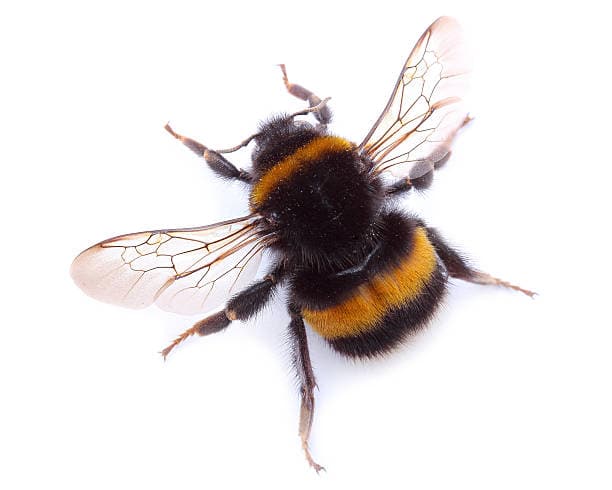
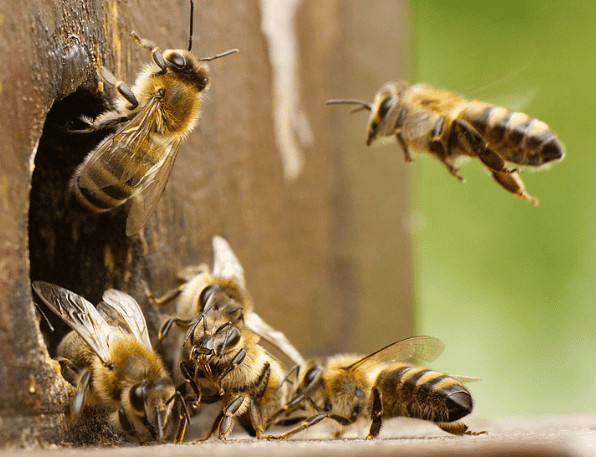
Northwest Ohio Wasp Removal is a Mindful Beekeeper company, owned by a beekeeper. Our policy is simple: honeybees, bumblebees, and native paper wasps are always humanely relocated, never exterminated.
For native paper wasps, that means the nest is carefully moved away from your doors, windows, and walkways rather than destroyed. Because paper wasp colonies are small and the nest is a single open comb, relocation is practical in a way it is not for a yellowjacket colony of thousands. You get your porch back, and the garden keeps one of its best caterpillar hunters.
European paper wasps are a different situation. They are a non-native species that has displaced native wasps, so nests in problem areas around your home can be removed, using our pesticide-free methods.
Paper Wasp Removal: When It Makes Sense
A paper wasp nest is worth addressing when:
- It is next to a door, window, or walkway where people pass daily.
- It is on a grill, mailbox, or railing you use.
- Someone in the household has a sting allergy.
- There are multiple nests clustered on your house.
Nests in out-of-the-way spots can often be left alone. Our article on why wasps build under eaves, decks, and grills has tips for making those spots less attractive.
Frequently Asked Questions
Are paper wasps aggressive?
Native paper wasps are generally mild unless the nest is bumped. European paper wasps can be more numerous around homes, which leads to more run-ins, but most stings happen when a nest is disturbed.
How do I tell a European paper wasp from a yellowjacket?
Look at the antennae and legs. European paper wasps have orange antennae and long, dangling legs. Yellowjackets have black antennae and tuck their legs up in flight.
Do you kill native paper wasps?
No. Native paper wasps are always relocated by our team, along with honeybees and bumblebees.
Where do you provide paper wasp removal?
We serve Northwest Ohio, East Indiana, and Southern Michigan.
Paper Wasps Too Close to Home?
We can identify the species and relocate or remove the nest accordingly. Visit our contact page to reach Northwest Ohio Wasp Removal.