Late-Season Wasp Nest: Remove It Now or Let the Freeze Finish It?
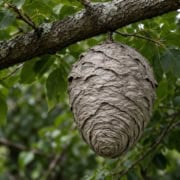
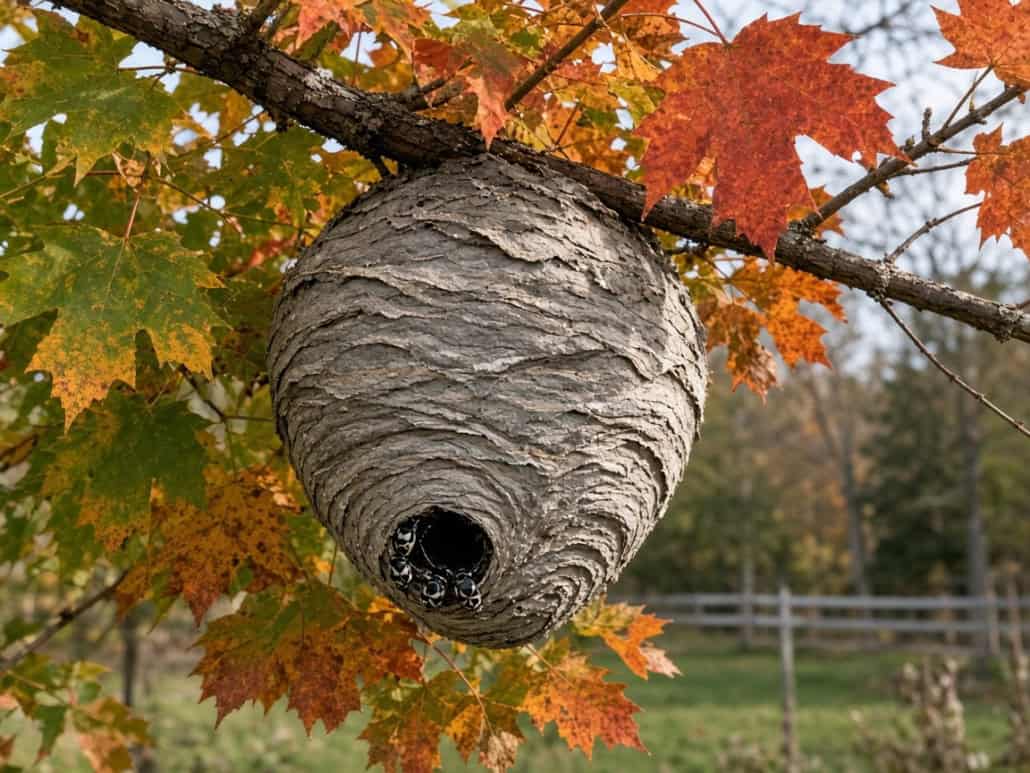
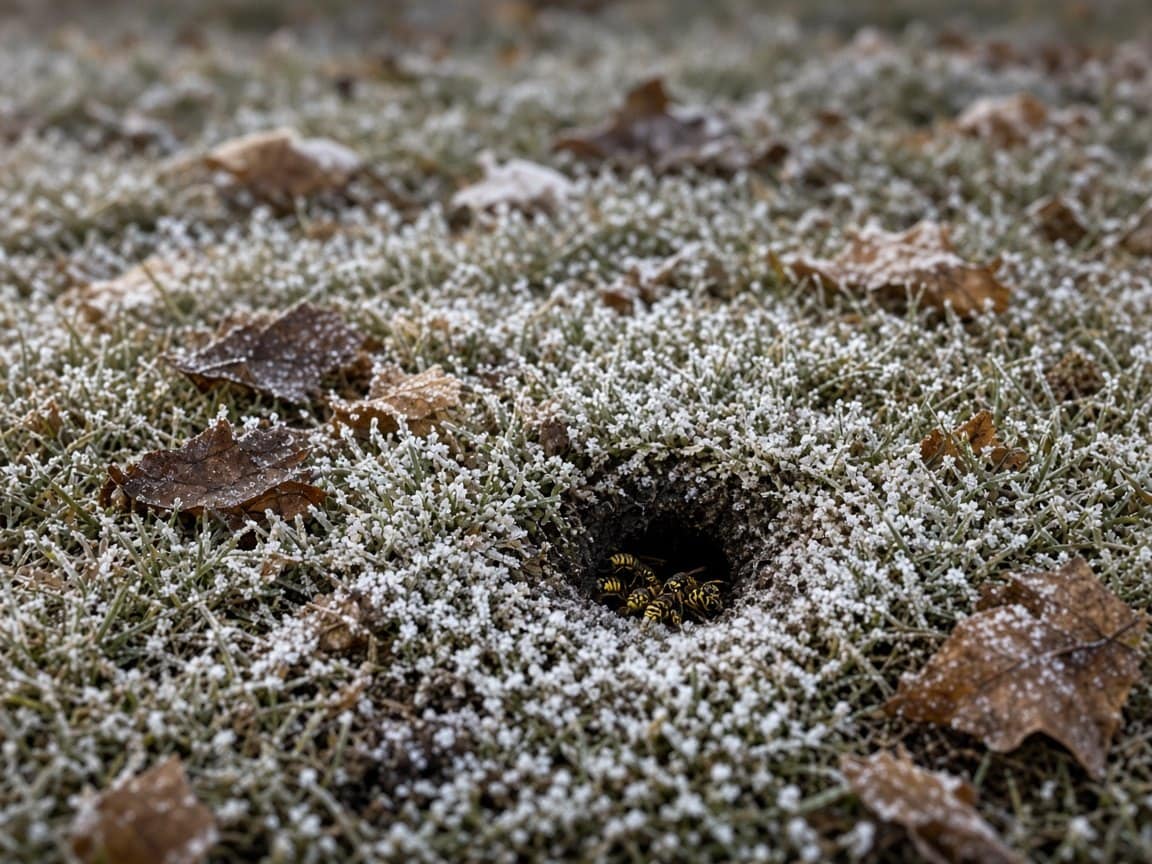
When the leaves come down, a lot of people finally notice the big gray nest in the maple or the steady line of yellowjackets going into the lawn. The question we hear most in October and November is simple: is a late-season wasp nest still worth removing, or will winter take care of it? The honest answer is that it depends on where the nest is and who is around it. This guide walks through how the end of the wasp season works and how to decide.
What Happens to a Late-Season Wasp Nest
Yellowjackets, bald-faced hornets and paper wasps all live in annual colonies in Ohio. Ohio State University Extension explains that the workers, the males and the old queen die once cold temperatures arrive. Only newly mated queens survive the winter, and they shelter for the winter in protected places such as hollow logs, under loose bark and in soil cavities (OSU Extension, Yellowjackets HYG-2075).
OSU entomologists also point out that wasp nests are never used for more than one season in Ohio (OSU Buckeye Yard & Garden onLine). Once the colony dies, that nest is finished. Our article on wasp nests in winter covers the empty-nest side of the story.
The catch is timing. A colony does not shut down on a set date. Workers keep flying on mild afternoons, and the nest stays defended until the cold actually kills the colony. Late-season colonies are also at their largest. OSU notes that yellowjacket nests quickly reach about 4,000 to 5,000 workers by August and late September.
Why Fall Wasps Feel More Aggressive
In late summer and fall, yellowjackets switch from hunting protein to looking for sugar. OSU Extension describes them as persistent, unwelcome guests at picnics and outdoor events from August through October, drawn to garbage cans, sweet drinks and fruit. That is when many people get stung, and it is why fall nests feel like a bigger problem than spring ones. We explain the behavior in why wasps get aggressive in late summer and fall.
When the Nest Should Still Come Out
Waiting for a freeze is reasonable for some nests. For others it is a gamble with somebody’s safety. We recommend removal now when:
- The nest is next to a door, walkway, deck or play area. A few more weeks of daily traffic past an active nest is a few more weeks of sting risk.
- Someone in the home is allergic to stings or has had a strong reaction before. OSU’s yard and garden team puts it bluntly: a mass attack is not a good time to learn whether you are allergic to wasp venom.
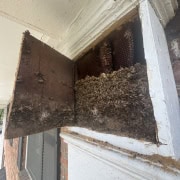
- The nest is inside a wall, soffit or attic. OSU Extension notes that yellowjackets often build nests in attic and wall voids, and a nest you cannot see is hard to keep people away from. See yellowjackets in walls.
- The nest is in the ground where kids, pets or a mower will cross it. Ground nests are easy to step on and hard to see.
- It is a working building such as a barn, rental, church or business with people coming and going.
When It Is Reasonable to Let the Freeze Finish It
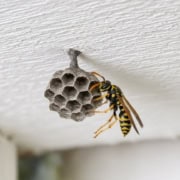
Some nests are simply not in anyone’s way. OSU’s yard and garden specialists describe paper wasps, yellowjackets and bald-faced hornets as beneficial insects, both pollinators and predators of soft-bodied pests like caterpillars, while noting that a nest that threatens human safety should be eliminated by a professional (OSU BYGL). Waiting usually makes sense when:
- The nest is high in a tree, at the back of the property or on an outbuilding nobody uses.
- You can keep people and pets away from it until cold weather settles in.
- Nobody in the household has a sting allergy.
If you decide to wait, do not poke, spray or knock the nest down to “help it along.” Disturbing it is the fastest way to get stung, and our article on DIY wasp spray mistakes explains why sprays often backfire.
Make Sure It Is a Wasp Nest
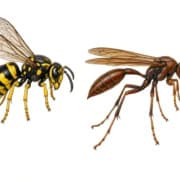
Before deciding anything, confirm what you are looking at. Honeybees do not die off in fall. A honeybee colony in a wall or tree stays alive all winter, and it will not leave on its own. Honeybees, bumblebees and native paper wasps are always relocated by our team, never destroyed. If the insects are fuzzy and golden-brown rather than shiny yellow and black, read our guide to identifying wasps, bees and hornets, or send us a photo.
How Our Late-Season Removal Works
Our wasp and hornet nest removal is pesticide-free. Dangerous nests are taken out by hand or by vacuum rather than sprayed, so nothing is left to rot in a wall or the ground, and native paper wasps are relocated. A photo taken from a safe distance is usually enough for us to tell you whether a nest needs to come out now or can wait for the weather.
Frequently Asked Questions
Will the wasps come back to the same nest next year?
No. Ohio wasp nests are used for one season only. New queens start fresh nests in spring, sometimes in a similar sheltered spot, which is why sealing gaps over the winter helps. Our wasp prevention guide covers what to seal.
Can I take the nest down after it freezes?
Once the colony has died, an empty nest is harmless. Give it time after several hard freezes, and check that no wasps are flying on a warm afternoon before you touch it.
Is November too late to call?
Not if the nest is somewhere people use. As long as wasps are flying, the nest can still sting.
Not Sure About Your Nest?
Call or text Northwest Ohio Wasp Removal at 419-614-6445 with a photo, or visit our contact page. We serve Northwest Ohio, Eastern Indiana and Southern Michigan from our Main Office in Loudon Township and our Bryan, OH Office.