Male Cicada Killer vs Female: Why the Ones Buzzing You Can’t Sting
You step into the yard and a huge wasp zips up to eye level, hovers, and darts at you. Then another. It feels like an attack, but it’s almost always a male cicada killer, and males have no stinger. Here’s what’s going on and how to tell the sexes apart.
What a Male Cicada Killer Is Doing
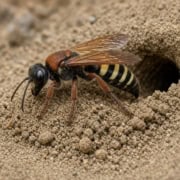
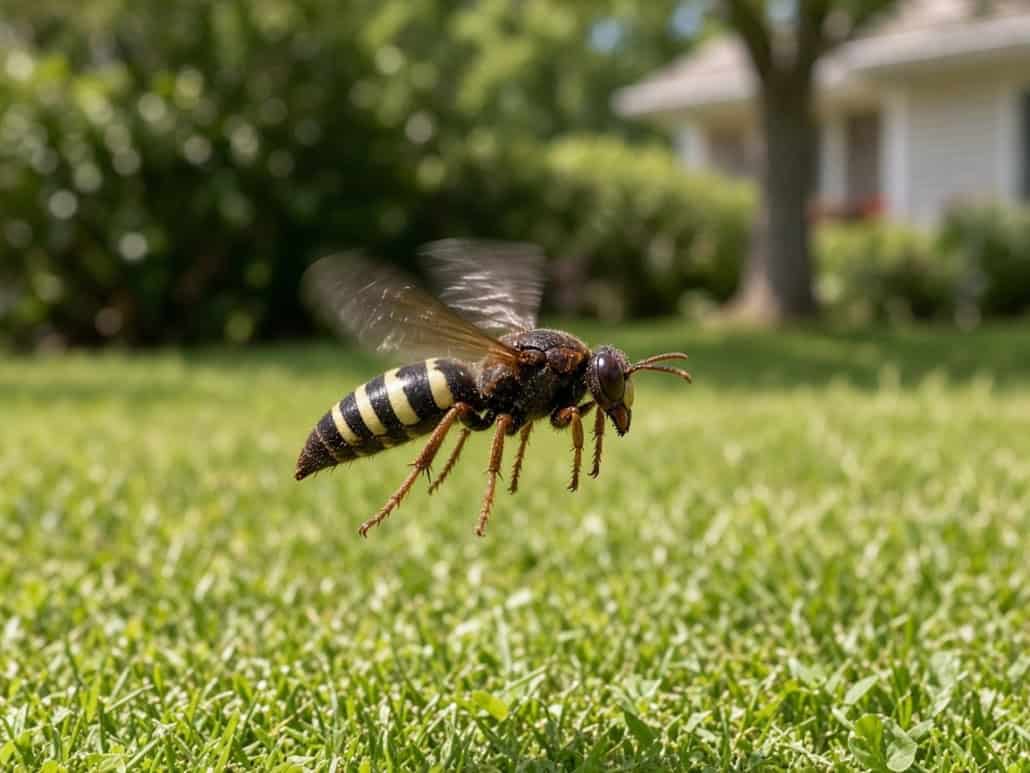
University of Kentucky Entomology explains that males emerge before females and stake out areas where they expect females to appear. The big wasps hovering in the air are usually the first thing people notice. UKY says males will “inspect” people, hovering at eye level to size you up. OSU Extension ENT-0102 adds that males hover protectively near nests and even dive-bomb passersby, but they are incapable of stinging.
It’s territorial behavior, not hunting. A male has nothing to gain from stinging you, and he has no stinger to do it with. He’s checking whether you’re a rival or a mate.
Timing tells you a lot, too. UKY notes males begin emerging in late June and July and wait for females to arrive. So the early, bold fliers at the start of the season are especially likely to be males.

Male vs Female Cicada Killer
- Size. UKY says females range from about 1.5 to nearly 2 inches long, while males are up to about 1.5 inches.
- Stinger. Females have a stinger, which they use to paralyze cicadas. UKY notes males have a non-stinging pseudostinger instead.
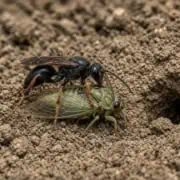
- Behavior. Males hover, patrol and chase. Females spend their time digging burrows and flying cicadas back to them.
- Look. Both have dark abdomens with light yellow markings and orange-tinged legs and wings, so behavior is the easier clue.
What About the Females?
OSU Buckeye Yard and Garden onLine says the females are not aggressive and stinging encounters are extremely rare. UKY notes cicada killers aren’t considered stinging hazards unless directly disturbed, such as being stepped on barefoot or grabbed. That’s why kids, pets and bare feet are the main reasons to move them. See cicada killers and dogs.
How to Handle the Dive-Bombing
- Don’t swat. Swinging at a male won’t help, and grabbing at big wasps is how the rare sting from a female happens.
- Walk through calmly. A male will usually break off once you’re past his patch.
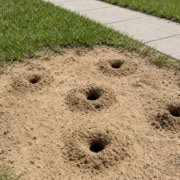
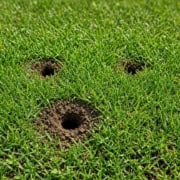
- Wear shoes on lawns and paths where burrows are active.
- Change the spot. UKY notes mulch, shade or extra irrigation can make them nest elsewhere. See do cicada killers come back?
Frequently Asked Questions
Are males more common?
They’re more noticeable early in the season, because UKY notes they emerge first and patrol before the females arrive.
Is a male cicada killer a hornet?
No, though OSU notes they’re often mistaken for European hornets. See European hornets.
Do I need to do anything?
Often no. UKY says management is generally unnecessary. If burrows are by a door, patio or play area, relocation helps.
Big Wasps Patrolling Your Yard?
We relocate cicada killers instead of putting poison into the soil where people and pets walk. Call or text Northwest Ohio Wasp Removal at 419-614-6445, or use our contact page, and send a photo of the wasps or burrows if you can. See cicada killer relocation for how it works.