
German Yellowjacket vs. Eastern: Ohio’s Two Most Common Yellowjackets
Most people don’t care which yellowjacket stung them. But if you’re trying to figure out where a nest is, the species matters. Ohio’s two most common yellowjackets are the native eastern yellowjacket and the German yellowjacket, a newcomer that has taken over much of the state. They look nearly identical at a glance, but they tend to nest in different places.
Meet the Two Species
Ohio State University Extension lists the German yellowjacket (Vespula germanica), the eastern yellowjacket (Vespula maculifrons) and the common yellowjacket (Vespula vulgaris) among Ohio’s yellowjackets. OSU notes the German yellowjacket first appeared in Ohio in 1975 and is now the dominant species in the state, while the others are natives (OSU Extension HYG-2075).
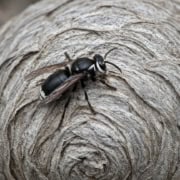
Both are about 1/2 inch long with black and yellow bands. OSU explains that the black and yellow patterns on the abdomen help separate species, but those details are hard to see on a moving wasp, and you shouldn’t get close enough to try.
Where They Nest
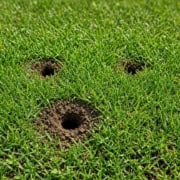
Eastern yellowjacket: Clemson Extension notes the queen normally picks a soil cavity, such as an abandoned mouse nest, or a hollow tree, though attics, porches, eaves and sheds are also possible (Clemson HGIC). This is the classic yellowjacket nest in the lawn or garden bed. See yellowjacket ground nests.
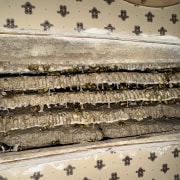
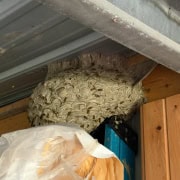
German yellowjacket: OSU says the German yellowjacket frequently builds nests in the walls of structures. The University of California IPM program reports the same pattern, noting it frequently nests in houses (UC IPM). Wasps going in and out of a siding gap, soffit or crack in the wall are often this species. See yellowjackets in walls.

Why the German Yellowjacket Matters for Homeowners
- Nests can be inside the house structure. That means a hidden nest, a risk of wasps finding their way indoors, and no easy way to see how big it is. OSU warns not to plug a wall-nest entrance, because disturbed wasps may enter the building.
- Store-bought traps may not help. OSU notes most commercial traps aren’t attractive to German yellowjackets, the most common nuisance yellowjackets in Ohio. UC IPM adds that the common trap lure mainly attracts a western species, while meat bait may improve catches of German yellowjackets. See fake nests, traps and peppermint oil.
- Colonies get big. OSU reports yellowjacket nests can reach roughly 4,000 to 5,000 workers by late summer.
Frequently Asked Questions
Does the species change how you remove it?
It changes where we look and how we reach it. Both are removed by hand or vacuum, with no pesticides.
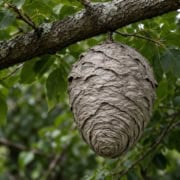
What about the gray nest in my tree?
That’s more likely a bald-faced hornet. See bald-faced hornet vs. yellowjacket.
Why are they worse in late summer?
OSU notes their food preferences shift to sweets from August to October. See aggressive wasps in late summer and fall.
Wall or Ground, Send a Photo
Call or text Northwest Ohio Wasp Removal at 419-614-6445, or reach us on our contact page. More on our wasp and hornet nest removal. Please don’t spray, plug or mow over the nest before we arrive.