Potter Wasp vs. Mason Wasp: Ohio’s Tiny Clay-Pot Builders
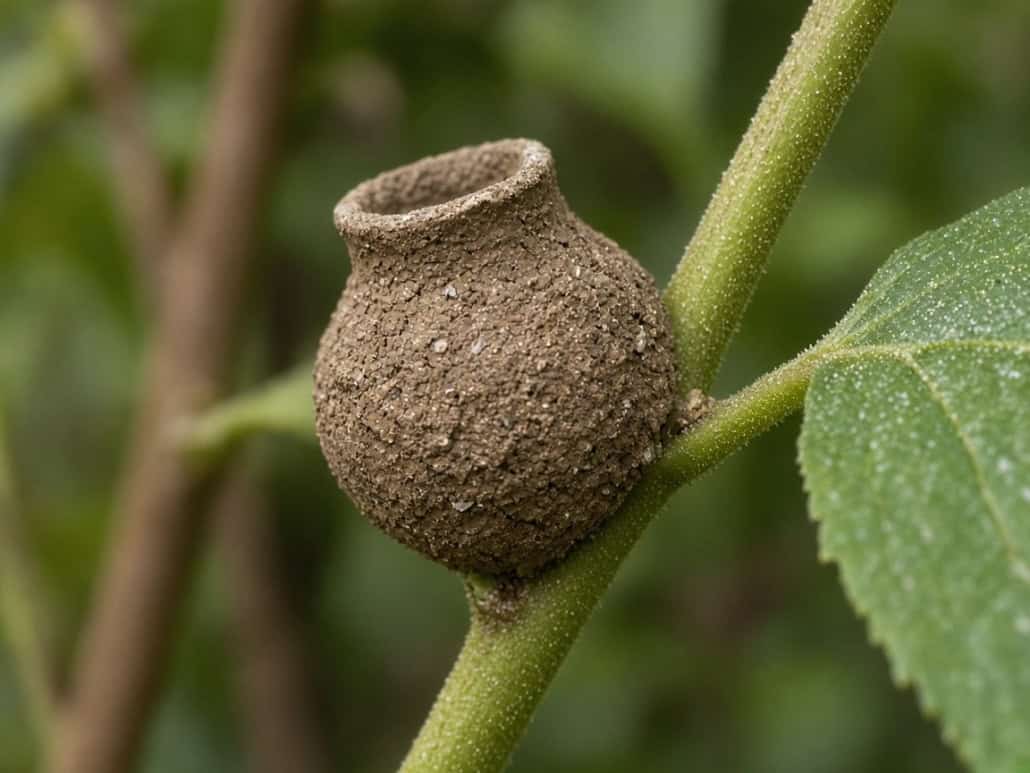
Every so often someone sends us a photo of something that looks like a tiny clay jug, smaller than a marble, glued to a twig, a window screen or the side of the house. That’s almost certainly the work of a potter wasp. These solitary wasps are some of the gentlest insects we get asked about, and in nearly every case the right answer is to leave them alone.
What Is a Potter Wasp?
Potter wasps belong to the same family as yellowjackets and hornets, Vespidae, but they live very different lives. The Maryland Department of Natural Resources notes that while social vespids like bald-faced hornets and yellowjackets are known for defending their colonies, potter wasps are non-aggressive and solitary (Maryland DNR). There’s no colony, no workers and no nest to defend.
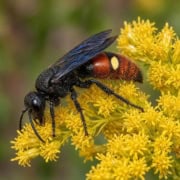
One widespread species, Eumenes fraternus, is found throughout the eastern United States and Canada. Maryland DNR describes it as less than an inch long with shiny, dark blue wings and a black-and-white banded body with a narrow waist. The University of Florida reports adults of this genus are about 1/2 to 2/3 inch long (UF/IFAS).
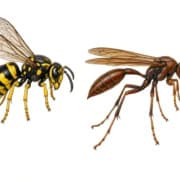
Potter Wasp vs. Mason Wasp
Clemson Extension groups potter and mason wasps together in their own subfamily within Vespidae (Clemson HGIC). Many of them nest in existing holes, such as nail holes, drill holes or old beetle exit holes in wood, building little mud chambers inside. Eumenes potter wasps are the ones known for free-standing, jug-shaped pots. Clemson notes they’re different from mud daubers, which are in other wasp families and stock their nests with spiders. See mud daubers and cicada killers.
Those Little Clay Pots
UF/IFAS says the jug-like pots of Eumenes are found on buildings, windowsills, screens and shrubs around the home, and aren’t easily confused with other wasp nests. Maryland DNR explains that the female sculpts mud into a tiny pot, a job that takes one to two hours, then stocks it with paralyzed caterpillars and other soft-bodied prey, lays an egg suspended above them and seals it. She then moves on to build more.

Do Potter Wasps Sting?
They can, but rarely do. Maryland DNR notes that females don’t defend their nests and often sting only if touched. UF/IFAS points out that only immature wasps are inside the mud nests, so there’s no danger of a sting from the pot itself.
Should You Remove a Potter Wasp Nest?
Almost never. Clemson notes that in most situations potter and mason wasps are beneficial, since they prey on insects that eat plants. If they’re nesting in holes in outdoor wooden furniture you’d rather keep clear, Clemson suggests cleaning the item and sealing the holes with wood putty or polyurethane. If you’d like to see more of them, Maryland DNR suggests planting goldenrods and other asters as nectar sources.
Frequently Asked Questions
How do I know it’s not a yellowjacket?
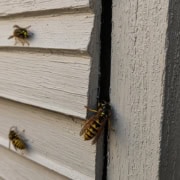
A single wasp visiting flowers and a tiny mud pot is very different from steady traffic at a hole. See yellowjacket vs. paper wasp and our Ohio ID guide.
Are there other harmless wasps like this?
Yes. See ichneumon wasps, blue-winged wasps and great black and golden digger wasps.
Not Sure What You Found?
Text a photo to Northwest Ohio Wasp Removal at 419-614-6445, or use our contact page. We’ll tell you honestly if it needs our nest removal service or can be left alone.