
Wasp Season in Northwest Ohio, Indiana, and Michigan: A Month-by-Month Guide
Wasp problems follow a predictable calendar. Knowing what stinging insects are doing each month helps you spot nests early, avoid painful surprises, and know when wasp removal is most important. This month-by-month guide is written for homeowners in Northwest Ohio, East Indiana, and Southern Michigan. Exact timing shifts a bit with the weather each year, and Southern Michigan often runs slightly behind Ohio and Indiana in spring.
How the Wasp Year Works
Yellowjackets, bald-faced hornets, European hornets, and paper wasps all follow an annual cycle in our region:
- Only mated queens survive the winter, tucked into sheltered spots.
- Each queen starts a brand-new nest in spring.
- The colony grows all summer and peaks in late summer.
- New queens and males are produced, and the colony dies off after hard frosts.
- Old nests are not reused.
Honeybees are the exception. Their colonies survive the winter as a cluster and can live in the same cavity for years.
Wasp Removal Season: Month by Month

January and February
Wasp colonies are gone. Overwintering queens are dormant under bark, in leaf litter, in wall voids, or in attics. You may occasionally see a sluggish queen indoors on a warm day. Honeybee colonies are clustered inside their hives or cavities.
What to do: This is a good time to plan off-season repairs. Empty paper nests from last year can be removed safely.
March
On warmer days, honeybees fly to forage and take cleansing flights. Wasp queens may begin to stir late in the month.
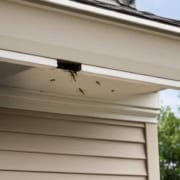
What to do: Inspect soffits, vents, siding, and rooflines for gaps, and seal them while no colonies are active.
April
Wasp and bumblebee queens emerge and begin searching for nest sites. Carpenter bees become active around wood trim and decks. Early honeybee swarms are possible.
What to do: Watch for large single queens investigating eaves and gaps. Fresh, round holes in bare wood trim are a sign of carpenter bees.
May
Queens build small starter nests, often only a few cells or the size of a golf ball. Paper wasps start combs under eaves, railings, and grills. Honeybee swarm season is in full swing.
What to do: Walk your property. Small nests are easy to spot and far less defensive. If you see a cluster of honeybees, see our guide to honeybee swarms.
June
The first workers emerge and take over foraging and nest building. Colonies begin to grow faster. Swarms continue into early summer.
What to do: Check grills, playsets, mailboxes, and sheds. Our article on nests under eaves, decks, and grills covers common spots.
July
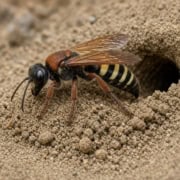
Colony growth accelerates. Yellowjacket ground nests and wall nests become more noticeable. Bald-faced hornet nests grow quickly in trees and shrubs. Cicada killers appear and start digging burrows in bare soil.
What to do: Pay attention when mowing and trimming. Watch for steady traffic into holes in the lawn or gaps in siding.
August
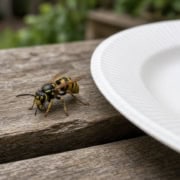
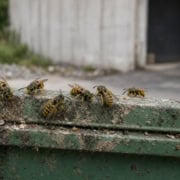
Peak season begins. Yellowjacket colonies can number in the thousands, and they increasingly scavenge sweets and proteins at picnics, trash cans, and outdoor events. Defensive behavior is high. European hornets are active at night around lights.
What to do: This is when most stings and removal calls happen. Do not let a nest near a door, walkway, or play area go. See our guide to yellowjacket ground nests.
September
Nests are at or near their largest. Colonies produce new queens and males. Yellowjackets are especially persistent around food and drinks.
What to do: Keep trash covered and drinks lidded. Have nests in high-traffic areas or inside structures removed promptly.
October
Colonies begin to decline. Workers become fewer, but nests can remain active until hard frosts. New queens leave to find winter shelter, sometimes in attics and wall voids. Leaf drop reveals bald-faced hornet nests that were hidden all summer.
What to do: If a nest is still very active and close to people, it may still be worth removing. Otherwise, cold weather will end the colony.
November and December
Wasp colonies have died off. Queens are dormant. Honeybee colonies, including any in walls, are clustered for winter.
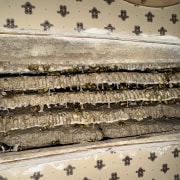
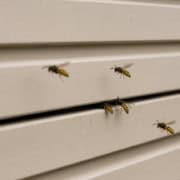
What to do: Seal gaps and repair vents now. Bees seen flying from a wall on a warm winter day are almost certainly honeybees, which need a live removal. See our article on honeybees in walls.
Your Seasonal Checklist
- Winter: Seal gaps, repair vents, and remove old empty nests.
- Spring: Inspect eaves, decks, grills, and lawns for small starter nests and watch for swarms.
- Summer: Mow and trim with care, and watch for steady traffic into holes and gaps.
- Late summer and fall: Cover food and trash, and have high-risk nests removed promptly.
Regional Differences Across Our Service Area
- Northwest Ohio and East Indiana tend to see spring activity and peak season on a similar schedule.
- Southern Michigan can run a little later in spring, and first hard frosts may arrive a bit earlier in fall.
- Weather matters every year. A warm spring brings earlier colonies, and a warm, dry late summer can mean especially large yellowjacket populations.
Frequently Asked Questions
When are wasps most aggressive in Ohio?
Late summer into early fall, typically August and September, when colonies are largest and workers are actively defending nests and scavenging for food.
Do wasps die in winter?
Workers and males die after hard frosts. Only mated queens survive the winter, and they start new nests in spring.
When is the best time for wasp removal?
The best time to deal with a nest is as soon as it becomes a risk to people. Early nests are small, but late-summer nests in high-traffic areas are the most urgent.
What areas do you serve?
We serve Northwest Ohio, East Indiana, and Southern Michigan.
Planning for Wasp Season?
Whether it is peak season or you are getting ahead of next year, visit our contact page to reach Northwest Ohio Wasp Removal.