Wasps at Dumpsters, Gas Stations and Car Washes: A Business Owner’s Guide
Every August the calls start the same way: customers getting stung by the trash corral, at the pumps or in the wash bay. Wasps at dumpsters, gas stations and car washes are almost always yellowjackets, and they’re there for one reason: sugar. Here’s why it happens late in the season and a checklist that cuts the problem down.
Why Wasps at Dumpsters Peak in Late Summer
OSU Extension HYG-2075 explains that yellowjackets switch their food preference from proteins to sweets in late summer, roughly August through October. By then, OSU says, nests reach about 4,000 to 5,000 workers. UC IPM adds that in fall, foraging yellowjackets are mainly scavengers and show up around garbage cans, picnics and barbecues, at pet food left outside and wherever overripe fruit is available. UC IPM notes the number of scavenging wasps can be quite large at certain times and places.
A dumpster full of soda cups, a sticky pump island or a recycling bin of cans is the business version of a picnic table. Car washes add their own hot spots: vacuum stations and the trash cans beside them, where customers empty cups, cans and food wrappers while cleaning out their cars.

Sanitation and Lid Checklist
- Keep lids closed. UC IPM advises keeping garbage in sealed containers and emptying it regularly.
- Bag sweet trash. Ask staff to bag cups, cans and food waste before it goes in the dumpster.
- Hose the pad. Rinse spills and drips around dumpsters, recycling bins and pump-side trash cans.
- Empty outdoor cans often, especially by doors, vacuums and pumps.
- Cover drinks on staff breaks. UC IPM says to cover soda cans outdoors so wasps don’t crawl in.
- Clean up workspaces. CDC NIOSH notes social wasps thrive where food is discarded.
Traps: Placement Matters
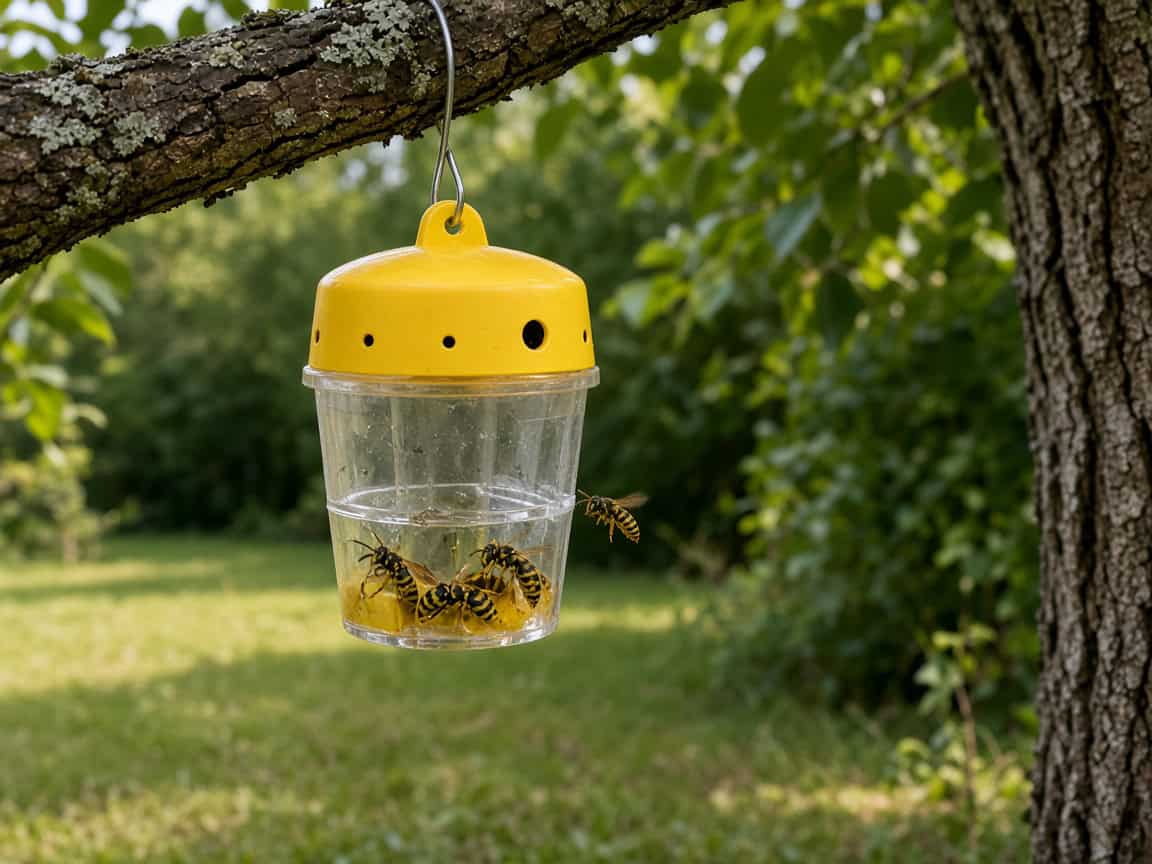
UC IPM notes that yellow lure traps hung around the edge of a property can reduce foraging by some species near patios and picnic areas, and that traps should go away from where people gather. For a business, that means not next to the door or the pump.
When It’s a Nest, Not Just Foragers
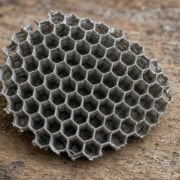
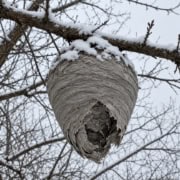
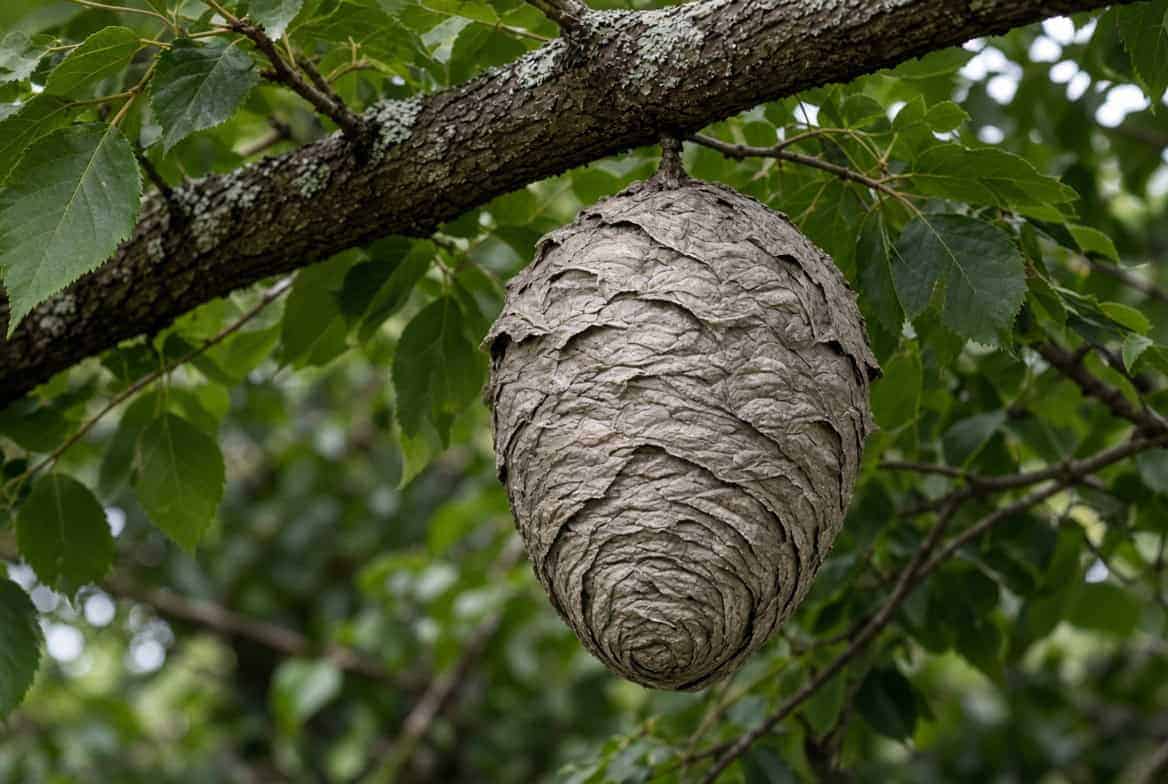
Foragers can come from a long way off. But if you see a steady line of wasps into one spot, such as a gap in a block wall, the ground by a curb, a sign cabinet or a light pole base, there’s probably a nest on site. OSU notes yellowjackets can sting repeatedly, often near the nest. That’s when to call. See yellowjacket ground nest removal and yellowjackets in walls.
Frequently Asked Questions
Will spraying the dumpster help?
Not for long. The draw is the food. Clean, closed containers do more than spraying an area where customers walk.
Is it a customer safety issue?
It can be, especially for anyone with a sting allergy. See sting allergies.
Do you work with businesses?
Yes. See farm and commercial wasp and bee removal and stinging insect safety for workers.
Nest on Your Property?
Native paper wasps are relocated, and yellowjacket, hornet and European paper wasp nests are removed without pesticides. Call or text Northwest Ohio Wasp Removal at 419-614-6445, or use our contact page, and send a photo if you can. See wasp and hornet nest removal.