Ohio Bumblebee Species: Common Eastern, Two-Spotted and Brown-Belted Bumblebees
If you have big, fuzzy bees buzzing around a hole under your deck or in an old birdhouse, you are probably looking at one of the common Ohio bumblebee species. Bumblebees are some of the most important native pollinators in Northwest Ohio, Eastern Indiana and Southern Michigan, and they are gentle unless their nest is disturbed. As a beekeeper-owned company, we never exterminate bumblebees. When a nest is in a bad spot, we humanely relocate it. Here is how to recognize the bumblebees you are most likely to see and what to do if they move in close to your home.
How to Recognize a Bumblebee
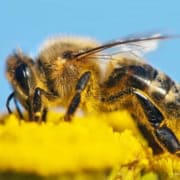
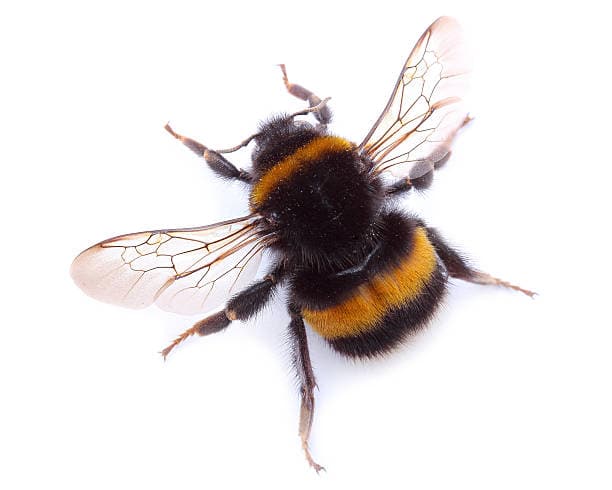
Bumblebees are large, round and covered in dense hair, including the abdomen. They carry pollen in “baskets” on their hind legs, which often look like bright yellow or orange lumps. They fly with a deep, low buzz and visit flowers from early spring until frost.
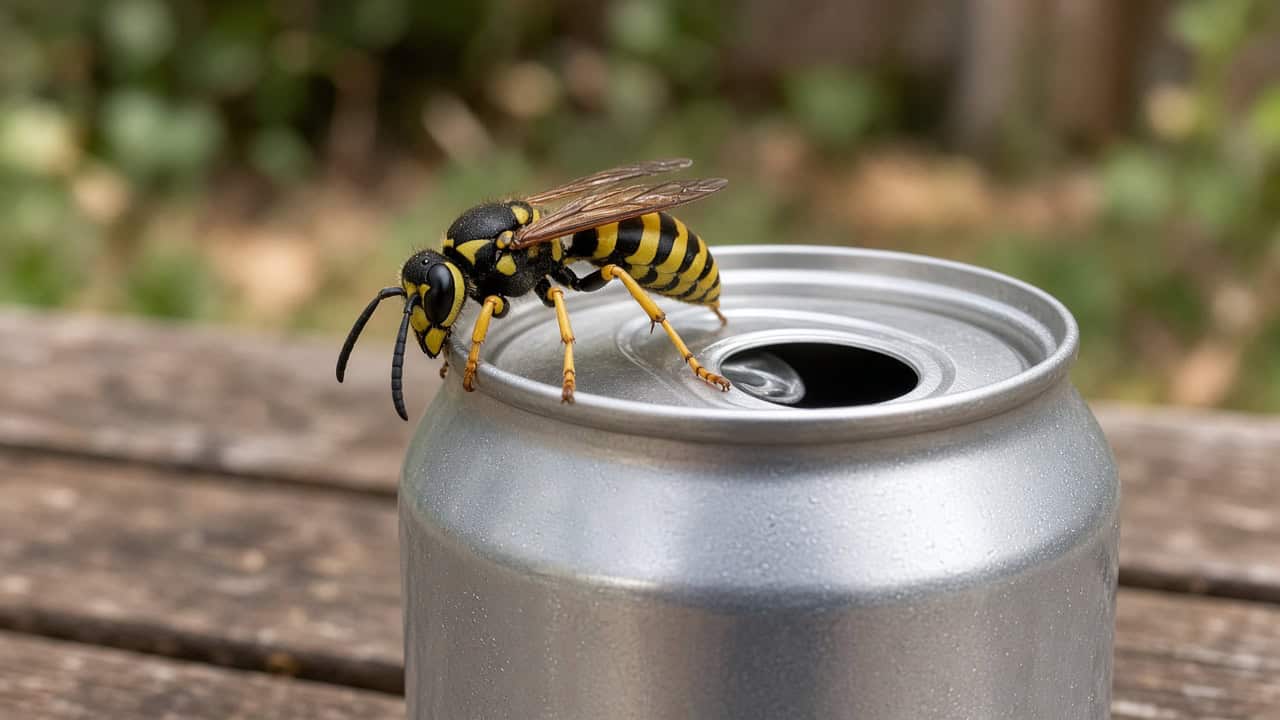
People sometimes confuse bumblebees with yellowjackets or with other large bees. Yellowjackets are smooth, shiny and slender with a pinched waist. Bumblebees are fuzzy from head to tail. If you are not sure what you are seeing, our guide to identifying wasps, bees and hornets in Ohio walks through the differences.
Common Ohio Bumblebee Species
Ohio is home to a number of bumblebee species. Telling them apart takes a close look at the color pattern on the thorax and the first few bands of the abdomen. These three are the ones homeowners in our area meet most often.
Common Eastern Bumblebee (Bombus impatiens)
This is the bumblebee you are most likely to find in a yard, garden or under a deck. Look for:
- A fuzzy yellow thorax (the middle section behind the head)
- Only the first band of the abdomen yellow, with the rest of the abdomen black
- A black face and head
Common eastern bumblebees adapt well to suburbs and farms, and they often nest in old rodent burrows, under decks, in wall insulation and in compost or brush piles. They are also used commercially to pollinate greenhouse crops.

Two-Spotted Bumblebee (Bombus bimaculatus)
The two-spotted bumblebee looks similar at first glance, but the second band of its abdomen has a yellow patch that often looks like two spots or a short “W” shape. It is one of the first bumblebees out in spring and is common around flowering shrubs, fruit trees and gardens. Colonies tend to wrap up earlier in the summer than common eastern bumblebee colonies.
Brown-Belted Bumblebee (Bombus griseocollis)
The brown-belted bumblebee has short, neat hair and a yellow thorax, often with a small dark spot in the center. Its key feature is a brownish or orange-brown band across the second segment of the abdomen, the “belt.” It is common in fields, roadsides and gardens in our region and frequently nests at or near ground level.
Other Bumblebees You Might See
- American bumblebee (Bombus pensylvanicus): A large bee with lots of yellow on the abdomen. It has declined across much of its range.
- Golden northern bumblebee (Bombus fervidus): Mostly golden yellow, often found in meadows and grassy areas.
- Black and gold bumblebee (Bombus auricomus): A big bee of open fields and prairies.
- Rusty patched bumblebee (Bombus affinis): Federally listed as endangered. It has disappeared from much of its former range, which is one more reason we protect every bumblebee colony we encounter.
How a Bumblebee Colony Works
Bumblebee colonies last only one season. Each spring, a queen that spent the winter alone in the soil wakes up, finds a nest site and starts a colony from scratch. She builds small wax pots for nectar and pollen and raises the first workers herself. Through the summer, the colony grows to anywhere from a few dozen to a few hundred bees, depending on the species. In late summer and fall, the colony produces new queens and males. The old queen, workers and males die off with cold weather, and only the newly mated queens survive the winter, each in a separate spot. The old nest is not reused.
That short life cycle matters for homeowners. A bumblebee nest in an out-of-the-way spot will end on its own by fall, and the bees will not come back to that same nest.
Are Bumblebees Dangerous?
Bumblebees are generally calm and focused on flowers. Female bumblebees can sting, and unlike honeybees they can sting more than once, but they rarely do so away from the nest. Males cannot sting at all. Problems usually start when someone mows over a ground nest, steps near the entrance, or a pet digs at it. Anyone with a known bee sting allergy should treat any nest near a door or walkway seriously. Our article on sting allergies and emergency removal explains when to act fast.
Where Bumblebees Nest Around Homes
- Under decks, porches, sheds and concrete steps
- In abandoned mouse or chipmunk burrows
- Inside old birdhouses and nest boxes
- In wall voids and fiberglass insulation, often behind siding
- In compost piles, brush piles, and thick grass clumps
Bee Removal for Bumblebees: Always Humane Relocation
Because bumblebees are vital pollinators and many species are in decline, we never spray them. When a bumblebee nest is too close to people or pets, our bee removal approach is to carefully collect the colony and move it to a safer location. You can read more about how that works in our guide to humane bumblebee removal. If you are not sure whether you have bumblebees or ground-nesting wasps, see ground bees vs. yellowjackets.
Until we arrive:
- Keep kids and pets away from the entrance.
- Do not pour water, gasoline or spray into the hole.
- Do not seal the entrance. The bees may dig a new exit, sometimes into your home.
- Skip mowing or trimming right next to the nest.
Frequently Asked Questions
Do bumblebees make honey?
They store small amounts of nectar in wax pots, but nothing like a honeybee hive. A bumblebee nest is small, messy and short-lived.
Will bumblebees come back next year?
The old nest dies out in fall and is not reused. A new queen may choose a similar spot the next spring if it offers the same shelter.
Can I just leave a bumblebee nest alone?
Often, yes. If the nest is away from doors, play areas and mowing paths, leaving it is great for your garden. If it is in a high-traffic spot, call us for relocation.
Bumblebees Too Close for Comfort?
Call or text Northwest Ohio Wasp Removal at 419-614-6445 or visit our contact page. We humanely relocate bumblebees across Northwest Ohio, Eastern Indiana and Southern Michigan.