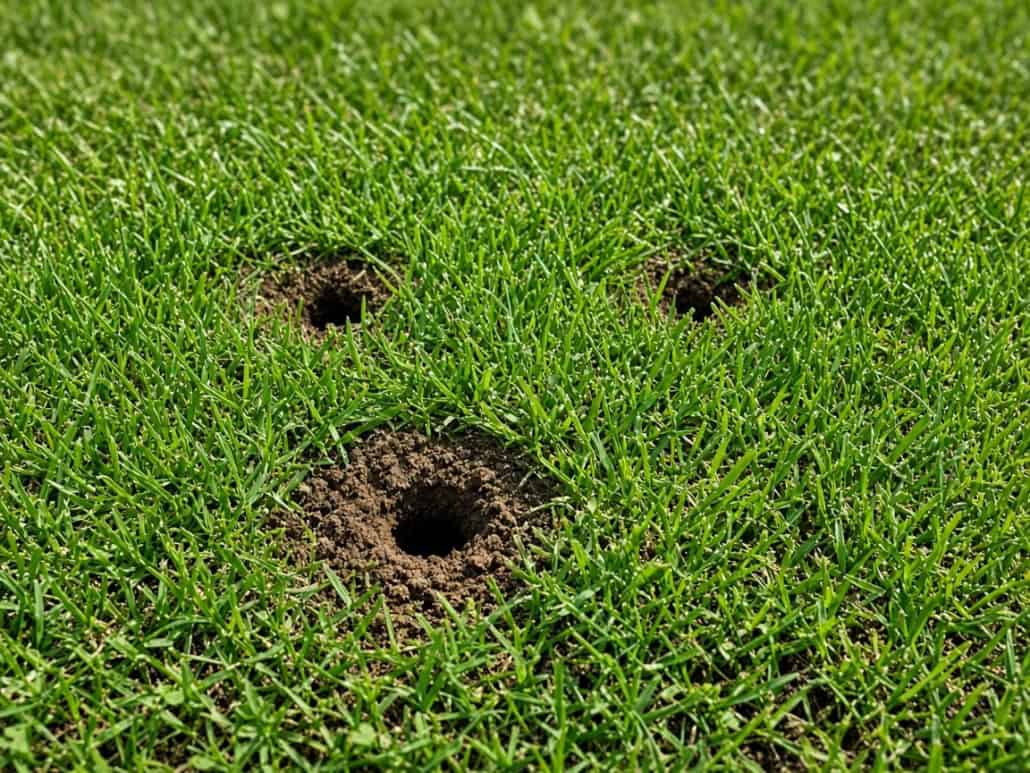
Myth: Every Hole in the Lawn Is a Yellowjacket Nest. How to ID Holes in the Lawn
You find a hole in the grass and assume the worst. But holes in the lawn come from many animals, and most of them aren’t yellowjackets. Before anyone grabs a can of spray or a garden hose, spend a few minutes watching from a safe distance. What goes in and out tells you nearly everything.
Holes in the Lawn: A Quick ID Guide
Yellowjackets: one busy hole, steady traffic
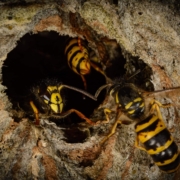
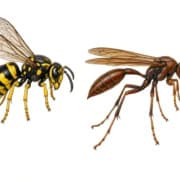
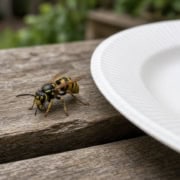
Yellowjacket ground nests usually have a single entrance with a steady stream of wasps flying in and out. Ohio State University Extension warns that nests may be at ground level in grassy areas and mulched beds (OSU HYG-2075). This is the one to take seriously. See yellowjacket ground nests.
Cicada killers: big wasps, sandy soil, midsummer
The University of Kentucky describes cicada killers as large wasps, with females nearly 2 inches long, that dig burrows in dry, sandy, loose soil. Tunnels can be 12 to 15 inches deep. They are not considered stinging hazards unless directly disturbed, and males have no stinger at all (UK ENTFACT-004). See cicada killer relocation.
Ground bees: many small mounds in thin turf
OSU describes ground or digger bees as solitary bees about half an inch long that often nest in groups. Females throw up a soil pile about an inch high and three to four inches across, with the opening in the middle, usually where there’s little plant cover (OSU HYG-2143). See ground bees vs. yellowjackets and sweat bees and mining bees.

Crayfish: mud chimneys in wet spots
Burrowing crayfish build mud chimneys that can rise 3 to 8 inches above the soil, mostly in poorly drained ground near streams or ditches, according to OSU’s Buckeye Yard and Garden onLine. Don’t pour toxins down the holes. Knock the chimneys down before mowing (OSU BYGL).
Chipmunks: a clean 2-inch hole, no dirt pile
Penn State Extension says chipmunk burrow entrances are about 2 inches across with no mound of dirt, usually hidden near objects or buildings (Penn State Extension).
Other diggers
OSU also notes that many solitary digger wasps prefer open, sandy or light soil and nest where turf is thin with soil showing through. Thin, patchy turf in a sunny spot tends to collect several kinds of ground nesters at once. Thickening the turf is a long-term fix worth talking to a lawn professional about.
What to Do Next
- Watch, don’t poke. No sticks, hoses or sprays into the hole.
- Mark it. A flag keeps the mower and the kids away. See keeping kids and pets safe.
- Take a photo or short video of what flies in and out.
Frequently Asked Questions
Should I flood the hole?
No. Flooding or spraying a yellowjacket nest can send angry wasps straight at you. See DIY wasp spray mistakes.
Are ground bees dangerous?
OSU notes most solitary ground nesters only sting if you capture or restrain them. Social bumblebees will defend their nests.
Could it be bumblebees?
Yes. Bumblebees often nest in old rodent burrows. See bumblebee nest in the ground.
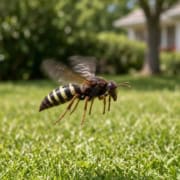
What about big blue wasps over the grass?
See blue-winged wasps over the lawn.
Still Not Sure?
Send us a photo. Call or text Northwest Ohio Wasp Removal at 419-614-6445, or use our contact page. We handle wasp and hornet nest removal and cicada killer relocation, and bumblebees are always relocated.
Sources
- Ohio State University Extension HYG-2075: Yellowjackets
- Ohio State University Extension HYG-2143: Bumble Bees and Solitary Bees and Wasps in Urban Landscapes
- University of Kentucky ENTFACT-004: Cicada Killer Wasps
- OSU Buckeye Yard and Garden onLine: Burrowing Crayfish Chimneys
- Penn State Extension: Chipmunks