Honeybee vs. Yellowjacket: The Quick Way to Tell Who’s at Your Soda Can
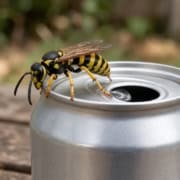
Something black and yellow is crawling around the rim of your soda can. Is it a bee or a wasp? It matters more than you might think. Honeybee vs yellowjacket is the most common mix-up we see, and the answer decides whether you need a beekeeper to relocate a colony or a nest removal. Here’s how to tell them apart quickly.
The Quick Check
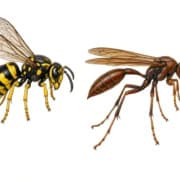
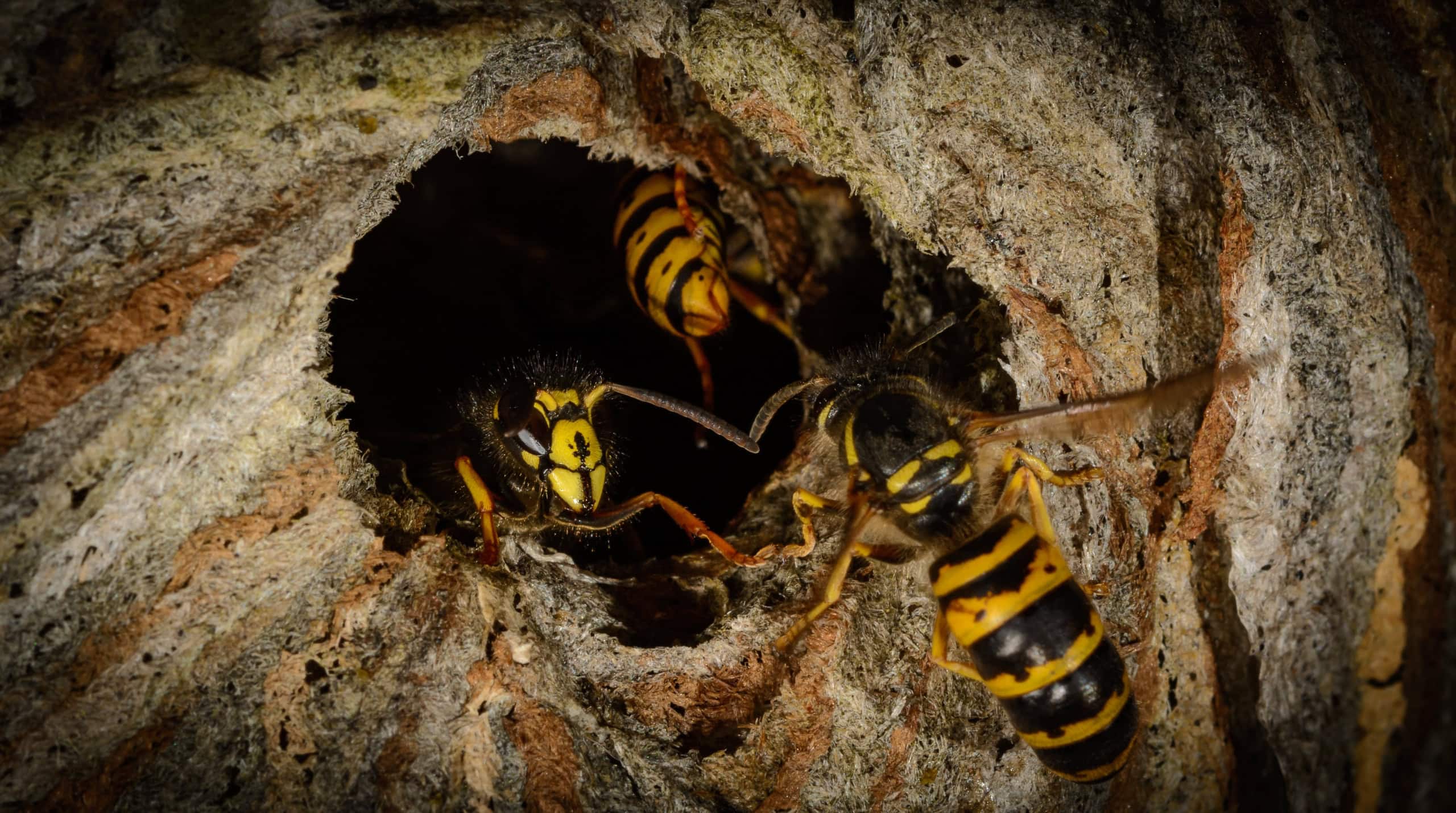
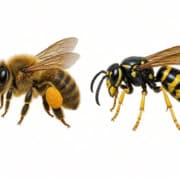
- Fuzzy or shiny? Ohio State University Extension notes honeybees are covered with dense hair, while yellowjackets have hard, shiny, mostly hairless bodies (OSU Extension HYG-2075).
- Color: The University of California IPM program says honeybees are less brightly striped than yellowjackets (UC IPM). Think golden-brown versus bright, jagged yellow and black.
- Pollen on the legs? OSU says honeybees have flattened, hairy hind legs used to carry pollen. Clemson Extension notes foraging honeybees often carry a ball of yellow or green pollen in the pollen baskets on their rear legs (Clemson HGIC).

Honeybee vs Yellowjacket Behavior
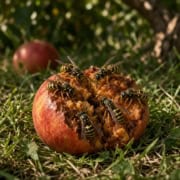
At your food. UC IPM notes honeybees usually aren’t attracted to food, though they may go to sweets, while yellowjackets scavenge on food. OSU explains that yellowjackets switch from proteins to sweets in late summer, from August to October, which is when they show up at picnics. Meat on the grill is a yellowjacket draw, not a honeybee one.
Wings at rest. OSU notes wasps tend to fold their wings lengthwise while resting, while honeybees often fan their wings out slightly while feeding.
Stinging. Clemson explains that a yellowjacket has a smooth stinger it can use multiple times, while a honeybee’s barbed stinger can be used only once. UC IPM adds that honeybees are unlikely to sting unless trapped or stepped on.
Nests
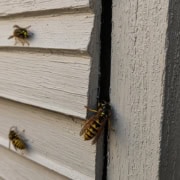
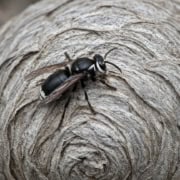
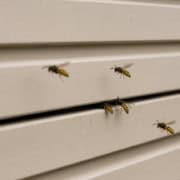
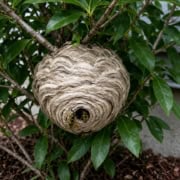
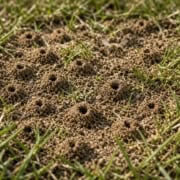
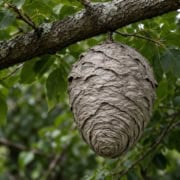
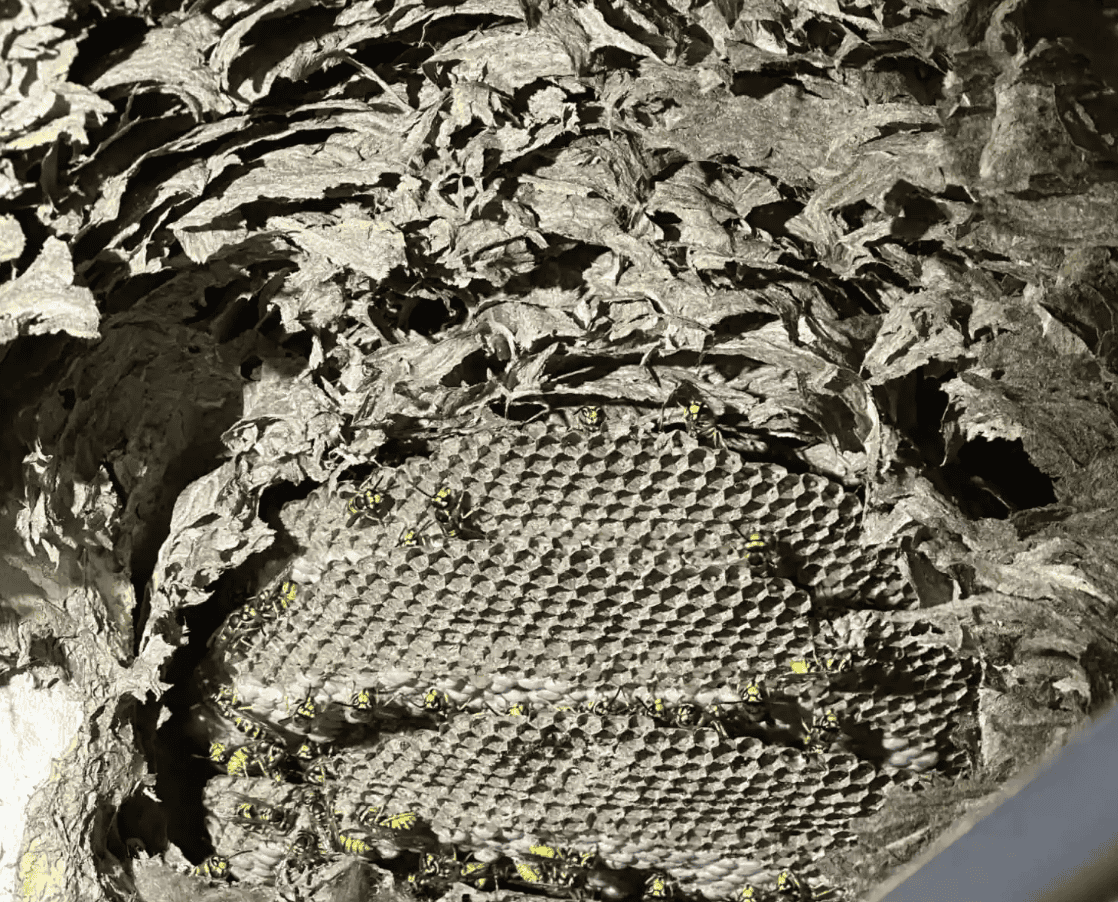
UC IPM notes honeybees often nest inside cavities in trees or houses. Yellowjackets nest in the ground, in wall voids or in enclosed gray paper nests. So “insects going in and out of my wall” could be either one, and that’s exactly when an ID matters. Our Ohio identification guide and ground bees vs. yellowjackets can help.
Why It Decides Who You Call
Honeybees are always relocated, never exterminated. Swarms and colonies go to The Mindful Beekeeper, pass through an inspection station, and then join the apiary in Loudon Township. Exposed swarm removal is free through The Mindful Beekeeper. Honeybee relocation from walls and other structures is being scheduled for Spring 2027. See humane honeybee removal and relocation, honeybee swarms and honeybees in walls.
Yellowjackets are removed by hand or vacuum, with no pesticides. See our wasp and hornet nest removal.
Back to That Soda Can
Whichever insect it is, don’t swat it. Ohio State University Extension recommends simply walking away from a yellowjacket and checking open cans before you sip, since a wasp may have crawled inside. Covered cups and lids keep both bees and wasps out of your drink. For more everyday habits, see how to avoid wasp stings and what attracts wasps to your yard.
Frequently Asked Questions
Why not just spray bees?
Read why beekeepers never exterminate honeybees.
What about bumblebees?
Bumblebees are big, fuzzy and always relocated. See bumblebee relocation.
How do yellowjackets compare with paper wasps?
See yellowjacket vs. paper wasp.
Send Us a Photo
Call or text Northwest Ohio Wasp Removal at 419-614-6445, or use our contact page. We’ll tell you whether it’s bees or wasps and what comes next.